

Weird wealth is money that arrives through a door nobody pointed you to. Not a salary, not index funds, not a normal business — income from renting your backyard to strangers’ dogs, licensing your voice to an AI company, getting paid for your opinion of a banking app, or cashing settlement cheques for products you bought years ago. None of it fits the career-and-compound-interest script, and all of it is real, documented, and growing.
It is also a phrase drowning in hype. Search it and you’ll find two brands built on the term, a pile of listicles repeating each other’s numbers, and “secret website” lists that are affiliate marketing in a trench coat. This guide does the boring, useful thing instead: it defines the term, checks the two Weird Wealth sites everyone lands on, and walks through the examples with the actual rates — including the part where the headline number and the typical number are very different things.
What Is Weird Wealth?
The definition
Weird wealth is income or asset value generated from unconventional sources — things outside regular employment, mainstream investing, and conventional business. The common thread is not strangeness for its own sake. It’s that the asset being sold is something the owner already had and never thought of as an asset: spare land, a spare hour, a voice, a body that qualifies for a study, a closet full of clothes, a decade of gaming skill. Weird wealth is what happens when a platform appears that lets a stranger pay you for one of those things.
Weird wealth vs a side hustle
The two overlap, but they aren’t the same idea. A side hustle asks you to start something: a service, a shop, a channel — new work, built from zero, in your spare hours. Weird wealth starts from inventory. You audit what you already own, know, or are, and find the buyer who wants it. Renting a fenced yard by the hour is weird wealth; starting a dog-walking route is a side hustle. Licensing a recording of your voice is weird wealth; narrating audiobooks for clients is a side hustle. The distinction matters because the startup cost is completely different — one begins with a listing, the other with a business.
Why it’s growing now
Three engines are pushing it. First, platforms keep slicing life into smaller rentable units — not just your spare room (Airbnb) but your yard, your parking space, your storage corner, your camping field. Second, resale went mainstream: according to ThredUp’s 2026 Resale Report, produced with GlobalData, the global secondhand apparel market is projected to reach $393 billion by 2030 — about 10% of all apparel spending — and 59% of US consumers shopped secondhand in 2025. Third, and newest: AI companies have become bulk buyers of things only humans can supply — voices, judgment, feedback, and training data. That third engine gets its own section below, because in 2026 it’s the fastest-growing source of genuinely weird income.
The Two Weird Wealth Sites Everyone Finds First
Search “weird wealth” in the US and the top of Google is not an article — it’s two different businesses with nearly the same name. Since a large share of the searches for this term are people trying to work out what these sites are, here they are.
WeirdWealth.co — the social brand
WeirdWealth.co ranks first, with the sitelinks to prove it. Its pitch is “discover unique ways to make money online,” and the operation is social-first: the site itself is thin, pointing visitors to its Instagram, X, and YouTube presence, and its Instagram page ranks as a separate result right beneath it. Think of it less as a website and more as a content brand about unusual income ideas, distributed where the audience already scrolls.
WeirdWealth.io — the guide site
WeirdWealth.io is the heavier property — a full WordPress content site (Semrush puts its authority score at 79, with 700+ referring domains) founded by two digital entrepreneurs, Sam Sami and Ayesha Mansha. It publishes beginner guides on unconventional income: digital service arbitrage, micro-assets, AI-powered businesses and the like, plus a “what’s your weird wealth strategy” quiz and a weekly tips newsletter. Where .co is a brand with a website attached, .io is a publishing business that has made this exact term its niche.
Are they legit?
Short answer: as content and education businesses, yes — with the standard caveat that “legit website” and “you will make money” are different claims. WeirdWealth.io’s own FAQ is unusually straight about this: it describes itself as an educational platform, states plainly that it does not guarantee income, and notes that results depend on effort, skills, and demand. That is the honest posture, and it’s the one to judge both sites by. Neither property, on inspection, shows the classic scam furniture — no paid unlock for a “secret list,” no deposit-first gigs, no fabricated earnings screenshots doing the selling. What they sell is attention and education about the ideas in the rest of this article. The ideas themselves are where the legit check actually matters, and it’s the one the next sections do properly.
Real Weird Wealth Examples — With Numbers That Check Out
Every example below carries the rate we could verify, and the catch that comes with it. When a platform’s own marketing number is the source, it’s labelled as such.

Renting out what you already own
The cleanest weird wealth there is: someone pays for access to a thing sitting idle. Sniffspot lets dog owners rent private yards by the hour — hosts charge around $15 per dog per hour on average (listings range from about $4 to $50), the platform takes a 22% fee plus processing, and hosts keep roughly 73% of what guests pay. Sniffspot says its top hosts earn $3,000 or more a month; the typical host with an ordinary yard in an ordinary suburb should expect a few hundred. Hipcamp runs the same play for land — campers book pitches on private property — and storage and parking platforms (Neighbor, JustPark) do it for garage corners and driveways. The pattern to notice: the money is real but it is rent, and rent scales with location and demand, not effort.
Your time and body, within the rules
Plasma is the heavyweight here. US centres such as CSL Plasma and BioLife typically pay $30–$70 per donation, federal rules cap you at two donations in any seven-day period, and new-donor promotions at the big chains can add up to $1,000 or more across the first month. A committed regular is looking at a few hundred dollars a month for six to ten hours in the chair — unglamorous, regulated, and about as reliable as weird income gets. Paid research studies sit at the spikier end: most pay modestly, while long or demanding studies pay thousands. And then there is the internet’s favourite example, stool donation for fecal transplants. The now-closed OpenBiome paid $40 per sample — worth roughly $13,000 a year to someone donating five times a week — while HumanMicrobes advertises $500 per stool. That $500 figure is genuinely on their site; what you won’t find is independent proof of donors collecting the “$180,000 a year” the arithmetic implies, and the program accepts only exceptionally healthy, athletic applicants after heavy screening. Hold both facts at once, because that gap — advertised rate versus attainable rate — is the entire weird wealth story in miniature.
Collectibles and resale
Flipping used goods is the oldest weird wealth on this list, and the market data says it stopped being a niche years ago — the ThredUp and GlobalData projection above ($393 billion globally by 2030, growing twice as fast as the overall apparel market) is the receipts. Within it, the weird end is where the margins hide: vintage and rare items, misprints, discontinued products, and oddities like long untreated hair, which sells on specialist marketplaces for a few hundred dollars. The honest shape of resale income is a grind of small, knowledgeable trades — the people who do well know one category deeply and buy below value a few times a week, not once a year.
Digital oddities
Two specimens. First, class-action settlements: when companies settle consumer, privacy, or product lawsuits, the money sits in a fund waiting for claims, and many settlements require no proof of purchase — you attest that you bought the product or used the service, and a cheque or deposit eventually arrives. Typical payouts are small, tens of dollars, occasionally a few hundred; aggregators like Top Class Actions list what’s open. It will never be an income stream, but it is genuinely free money for fifteen minutes of form-filling a few times a year. Second, game economies. Roblox paid its creators $922.8 million in 2024 through its Developer Exchange, and over $1 billion in the twelve months to March 2025. That sounds like a gold rush until you see the distribution: the median creator who cashed out in 2024 took home about $1,575, while the top thousand averaged around $820,000. Digital weird wealth pays like entertainment, because it is entertainment — a few hits, a very long tail.
The AI Slice: Where Weird Wealth Runs in 2026
The newest category exists because AI companies need things that can’t be scraped or synthesised — and they pay retail for them.

Selling your voice
ElevenLabs runs a Voice Library where anyone with a clean recording setup can publish a professional voice clone and earn when paying users generate audio with it. The default reward works out to roughly $0.03 per 1,000 characters generated — about a minute and a half of speech — paid via Stripe once your balance passes $10. Run the arithmetic and the honest picture appears: at the default rate you need serious usage before it’s serious money, which is why the voices that earn are distinctive ones (a specific accent, an older narrator’s timbre) rather than pleasant generics. It costs a few hours of recording to find out which one yours is.
Selling your judgment
The largest new market. AI labs train models on human preference and expertise, and platforms like DataAnnotation sit between them and the crowd. DataAnnotation’s published starting rates run from around $25–$30 an hour for general projects — rating chatbot answers, fact-checking, writing — with coding and specialist work advertised far higher. The catches are structural: entry is gated by an assessment many applicants never hear back from, work arrives in waves with empty queues between them, and accounts can be deactivated without much explanation. Prolific is the steadier, smaller sibling — academic and AI research studies with an $8-an-hour minimum rate. Neither is a job. Both are real money for judgment that, five years ago, nobody was buying at all.
Selling your feedback and attention
Companies pay for watched, narrated opinions of their products. UserTesting’s published guidance puts short recorded tests at $4 and standard ones at $10, with live moderated conversations paying $30–$120 depending on length — PayPal, roughly two weeks later. The rate per test is fair; the invisible cost is the screening questionnaires, most of which reject you unpaid. Treat it as found money that arrives in bursts, not a schedule.
AI-built micro-businesses
The last slice is using AI to manufacture the asset instead of being the asset: digital templates, niche tools, print-on-demand designs, faceless content channels. This is also where the hype is thickest, because the tool is real and the distribution is the hard part. AI image and writing tools (we put one popular option through its paces in our Gramhir Pro review) have collapsed the cost of producing a sellable digital product to nearly zero — which means the scarce skill is no longer making the thing, it’s knowing what strangers will pay for and getting it in front of them. Zero production cost, unchanged marketing problem.
“Secret Websites to Make Money” — Real or Clickbait?
This phrase pulls thousands of searches a month, so it deserves a straight answer: the websites are real, and the secrecy is fake. Every platform named in this article — Sniffspot, DataAnnotation, UserTesting, Prolific, the ElevenLabs Voice Library, the settlement aggregators — is a public website with a sign-up page. None of them is hidden, invite-only in any meaningful sense, or known to a chosen few. What the “secret” framing actually sells is the list itself: a blog post, a video, or a paid PDF that collects public links and presents the collecting as the valuable part. Sometimes there’s an affiliate commission underneath, which is why the same twelve sites appear in every list. The practical takeaway cuts both ways — you never need to pay anyone to reveal these platforms, and any list worth reading is the one that tells you the rates and the catches, not just the URLs.

Weird Ways to Make Money, Ranked by Realism
| Idea | Realistic pay | Who qualifies | The catch |
|---|---|---|---|
| Plasma donation | $30–$70 per visit; a few hundred a month | Adults meeting health and weight minimums, near a centre | Twice a week maximum; hours in the chair |
| AI training and feedback work | ~$25–$30/hr starting rates on DataAnnotation; $8/hr floor on Prolific | Strong writers and specialists who pass assessments | Work arrives in waves; accounts can vanish |
| Website and app testing | $4–$10 per recorded test; $30–$120 live | Almost anyone with a microphone and opinions | Most screeners reject you, unpaid |
| Yard and space rental | A few hundred a month typical; $3,000+ for top Sniffspot hosts | Homeowners with a yard, land, parking, or storage | Location decides almost everything |
| Resale and collectibles | Varies — a knowledgeable side income, rarely a salary | Anyone willing to learn one category deeply | Slow grind of small trades; stock ties up cash |
| Voice licensing | ~$0.03 per 1,000 characters at default rates | People with a distinctive voice and clean audio | Needs heavy usage before it adds up |
| Class-action claims | Tens of dollars per claim, occasionally a few hundred | Anyone who bought the product or used the service | Sporadic; never predictable income |
| Game creation (Roblox and similar) | Median creator cashed out ~$1,575 in 2024; top 1,000 averaged ~$820,000 | Builders with games people actually play | Entertainment economics — a few hits, a long tail |
| Stool donation | $40/sample historically (OpenBiome); $500 advertised (HumanMicrobes) | Exceptionally healthy, athletic, heavily screened donors | Acceptance is rare; the big number is a ceiling, not a wage |
Read the table top to bottom and you have the whole thesis: the weirder the offer sounds, the wider the gap between its advertised number and its typical one.
The Risks Nobody Puts in the Listicle
Scams wearing the costume
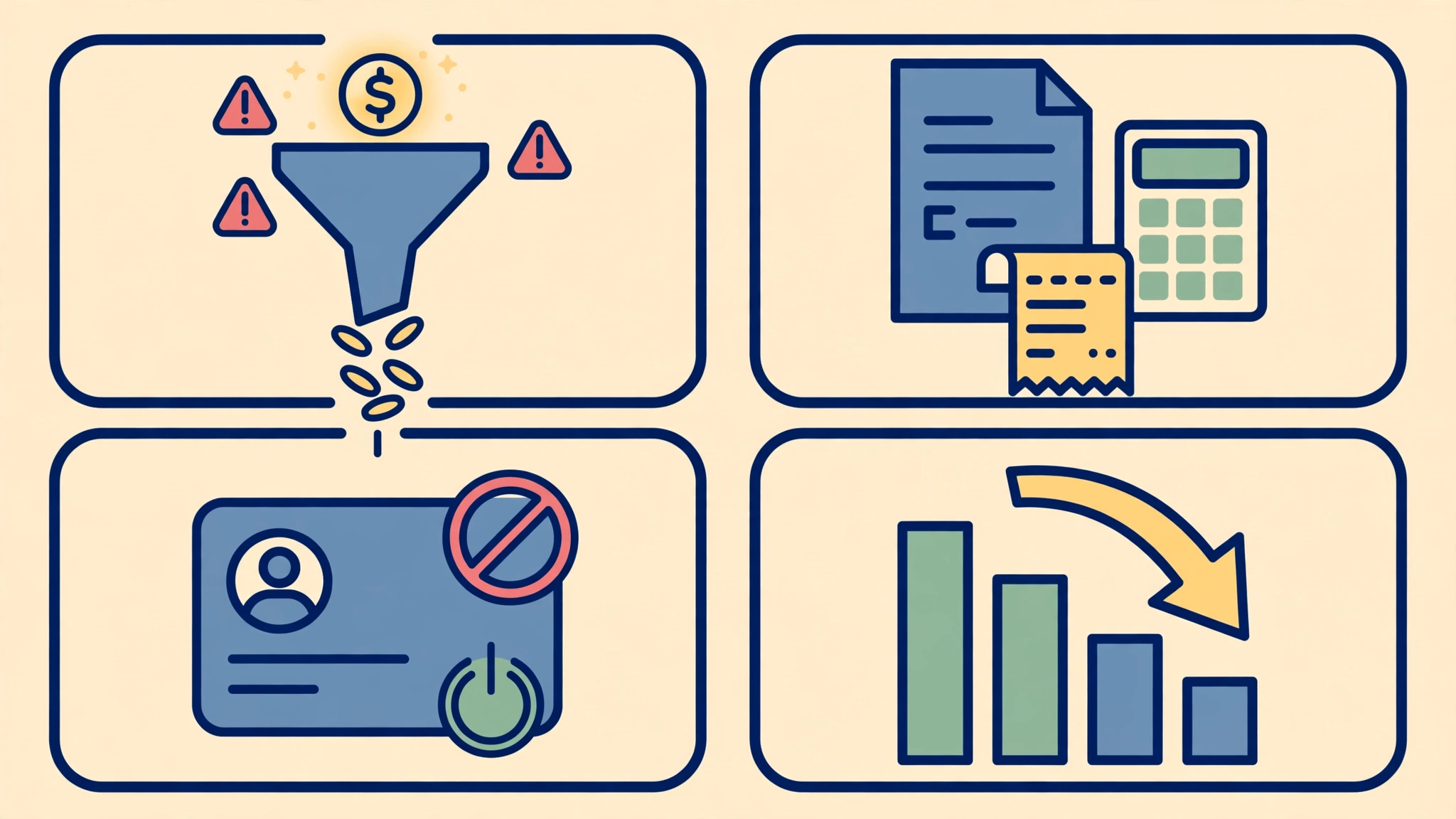
A popular weird-income headline is the perfect delivery vehicle for fraud, because the reader has already accepted that strange things pay. The standard shapes: a “secret list” sold for a fee that contains public websites; gig offers that require a deposit, a starter kit, or crypto sent upfront; and fake versions of real platforms — lookalike DataAnnotation and testing-site pages built to harvest personal data or an “application fee.” The rule that filters nearly all of it: legitimate platforms in this article charge you nothing to start. Money flows toward the worker or it isn’t a job, it’s a funnel.
Tax, bans, and collapsing rates
Three quieter risks. The income is taxable — plasma money, rental income, platform payouts, all of it counts, and most platforms report it. Platform income is also rented land: testing and AI-feedback accounts get deactivated, resale categories get flooded, and voice-library rates can be repriced, so anything you build on one platform can be switched off by that platform. And rates collapse under their own publicity — every weird income in this article pays what it pays partly because few people do it; a viral video about any one of them is the beginning of the end of its rate.
Where “weird” crosses into “dirty”
A neighbouring set of searches — “dirty ways to make money,” “unethical ways to make money” — pulls real volume, so it’s worth answering directly instead of pretending it isn’t there. Most of what sits behind those terms is one of three things: outright illegal (fraud, theft-by-app tricks, selling things you have no right to sell), legal-but-extractive schemes that move the loss onto someone else, or ordinary gig work wearing an edgy costume for clicks. The genuinely legal items on those lists — the plasma, the studies, the resale, the testing — are already in this article, without the branding. If an idea’s profit depends on a victim, a loophole that closes accounts, or a rule you’re hoping nobody enforces, it isn’t weird wealth. It’s a countdown.
How to Start Without Getting Burned
Five steps, in order. First, inventory what you already have: a yard, a voice, expertise, a closet, an hour a day — the asset decides the category, not the other way round. Second, confirm the buyer exists on a named platform with published rates, the way every example above does; if you can’t find who pays and how much, there is no opportunity yet. Third, check eligibility before investing anything — country restrictions quietly kill more of these than skill does, since many platforms pay only in specific regions. Fourth, start with exactly one channel and give it a fixed trial, a month of evenings rather than a weekend of enthusiasm. Fifth, track your real hourly rate including the unpaid parts — screening questionnaires, listing time, travel to the centre — and drop anything that lands below what your time is worth elsewhere. Weird income rewards the accountant’s mindset, not the gambler’s.
FAQs
What is weird wealth in simple terms?
Money earned from unconventional sources — renting out things you own, selling your voice or feedback to AI companies, flipping collectibles, claiming settlements. If the asset was already sitting in your life and a platform found a buyer for it, it’s weird wealth.
Is weird wealth legit?
The concept is, and so are the major platforms named here — they pay published rates to large numbers of people. What isn’t legit is any version that charges you to start, guarantees income, or quotes you a ceiling rate as if it were typical. Legitimacy lives in the specific platform and the specific number, not the category.
What is WeirdWealth.co — and is it the same as WeirdWealth.io?
No, they’re separate businesses with confusingly similar names. WeirdWealth.co is a social-first brand about unusual money ideas; WeirdWealth.io is a guide-publishing site that has built its whole niche on the term. Neither is the “official” anything — “weird wealth” is a concept, not a company.
Weird wealth vs side hustle — what’s the difference?
A side hustle is new work you build, like freelancing or a shop. Weird wealth monetises what you already have — assets, traits, time, and knowledge that were sitting idle. Plenty of people run both, but the starting move differs: build something versus list something.
How much money can you actually make from weird wealth?
For most people, a realistic range is a few hundred dollars a month from one or two channels combined — plasma, testing, feedback work, a yard listing. Four figures a month exists (top rental hosts, in-demand AI specialists, hit game creators) but it is the tail of the distribution, not the middle. Anyone quoting you the tail as the expectation is selling something.
Is weird wealth income taxable?
Yes, in the US and most other countries — platform payouts, rental income, and even plasma compensation count as income, and larger platforms report payments to tax authorities. Keep records from the first payout, not the first tax letter.
Bottom Line
Weird wealth is real, and it is smaller than its headlines. Underneath the branding — two websites, a social account, and an army of listicles — sits a genuine shift: platforms now let ordinary people sell slices of their property, time, voice, judgment, and expertise that had no market a decade ago, and AI’s appetite for human input has widened that market further. The money follows a pattern that never changes, though. The boring entries pay steadily, the spectacular entries pay almost nobody, and the distance between the advertised rate and the typical rate is where every disappointment in this space is born. Treat weird wealth as a way to make idle assets earn — with the rates checked, the catches priced in, and nothing paid upfront — and it’s a legitimate extra few hundred a month. Treat it as a shortcut and you’ll fund someone else’s.