
Finding a fast, reliable text-to-image tool without a steep learning curve can entirely transform how independent creators, bloggers, and digital marketers handle visual content production. In an era where eye-catching digital assets dictate audience engagement, waiting hours for complex rendering or paying exorbitant fees for custom graphic design is no longer efficient for fast-moving publishing teams.
Answering the demand for streamlined asset creation requires looking closely at emerging utilities designed to bridge the gap between imagination and execution. This hands-on review explores the Gramhir Pro AI Image Generator, evaluating its feature set, rendering speed, output quality, and overall value for creators in 2026.
What Is the Gramhir Pro AI Image Generator?
Gramhir Pro functions as a browser-based text-to-image utility designed to convert written descriptions into finished, high-resolution visuals within seconds.Built specifically to bypass the complicated user interfaces and dense layers found in traditional desktop editing software, the platform caters directly to digital marketers, independent bloggers, small business owners, and content creators who require original artwork without maintaining a dedicated design budget.
Rather than forcing users to master digital painting techniques or navigate expensive stock image libraries, the system relies on descriptive prompt crafting. By translating text instructions into clean raster graphics, marketing illustrations, and product mockups directly inside a standard web browser, the platform eliminates the need for local software installations or high-end workstation hardware.
The Core Value Proposition for Modern Publishers
For individuals managing high-volume content schedules, the utility of an on-demand generation tool lies in its speed and originality. Relying on generic stock photos often results in repetitive visual branding that fails to capture audience attention. Gramhir Pro addresses this gap by offering a frictionless environment where users can type a detailed scene description, select an artistic style, and instantly extract web-ready assets in standard formats like PNG and JPEG.
Core Features and Technical Architecture
At its core, the utility relies on advanced neural processing frameworks to convert text prompts into structured pixel data. Rather than executing simple keyword matching, the underlying system processes natural language text input by parsing each sentence into distinct semantic components—identifying the primary subject, spatial setting, lighting conditions, and artistic medium.
This parsing stage builds an internal vector map before rendering begins. Independent evaluations of browser-based generation models note that complex architectures often incorporate a dual-network approach, similar to Generative Adversarial Networks (GANs), where iterative feedback loops refine edge definition and color distribution. Consequently, providing rich, highly descriptive prompt text yields significantly sharper and more contextually accurate graphics than short or ambiguous queries.
Customization Controls and Rendering Performance
To tailor outputs for specific brand aesthetics, the user interface features a dedicated control panel for adjusting style presets, aspect ratios, and color grading. Creators can toggle between various rendering modes, including photorealistic photography, minimalist vector illustration, 3D corporate isometric styles, and digital painting.
Performance benchmarks indicate that average generation times range between 4 to 12 seconds depending on server load and resolution complexity. While batch processing capabilities allow users to queue multiple iterations simultaneously, complex compositions involving intricate human hands or embedded typography still occasionally require secondary prompt refinement to achieve perfection.
Achieving high-accuracy results from text-to-image systems requires moving beyond simple, ad-hoc keyword entry and adopting a structured approach to prompt architecture. Because diffusion models and transformer-based generators interpret language through weighted semantic token maps, structuring your input strategically dramatically changes output fidelity.
The Core Subject-Action-Medium Framework
The most reliable way to minimize unwanted artifacts is to organize your prompt into distinct, predictable layers:
- The Primary Subject: Define the focal point with precise descriptors (e.g., “a minimalist ceramic coffee mug” instead of just “a mug”).
- The Environment and Background: Explicitly state the surroundings or isolation constraints to prevent the model from guessing a chaotic background (e.g., “resting on a clean, light oak table inside a sunlit Scandinavian kitchen”).
- Lighting and Atmosphere: Control the mood by specifying light sources and quality (e.g., “soft morning sidelight, volumetric shadows, natural color grading”).
- Artistic Medium or Style:Declare whether the target output should look like a photograph, a 3D isometric render, or a vector graphic, avoiding vague buzzwords like “hyperrealistic”.
Hierarchical Weighting and Token Placement
Generative models pay closer attention to words placed near the beginning of a prompt. If you want a specific visual style to override default platform behaviors, lead with the medium or style modifier before describing the subject details. Furthermore, separating distinct clauses with commas or structural formatting helps the parser map spatial relationships accurately without bleeding descriptive traits between unrelated objects.
Hands-On Testing: Output Quality and Use Cases
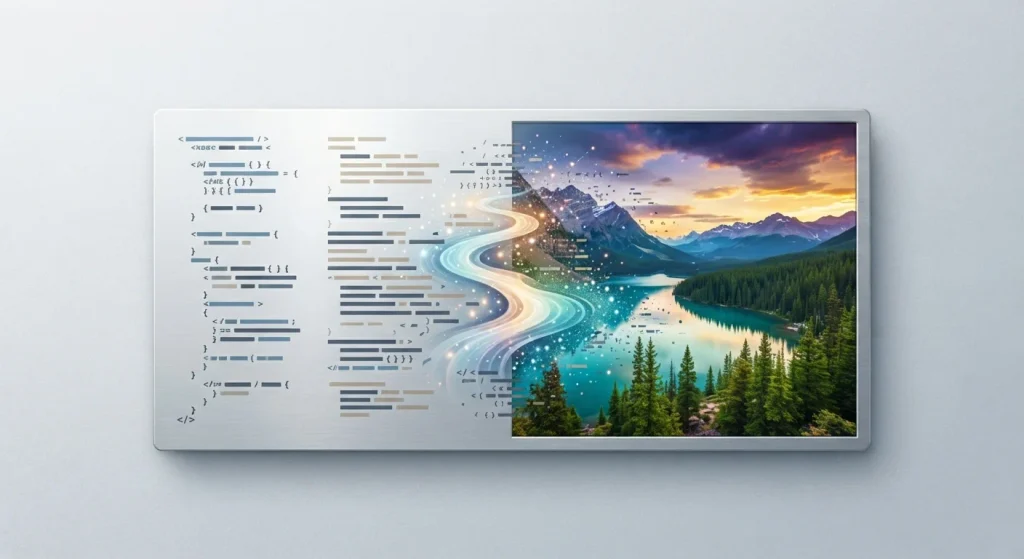
Putting the Gramhir Pro AI image generator through rigorous real-world testing reveals how the platform handles various design categories, ranging from wide landscapes to intricate product mockups.Across multiple test environments, generation speeds consistently average under ten seconds per asset, making it remarkably fast for rapid prototyping.
When evaluating visual fidelity, environmental scenes and abstract backdrops render with clean color gradients and convincing depth.Simpler compositions benefit greatly from the platform’s style presets—such as digital watercolor, flat illustration, and minimalist 3D rendering—producing assets that look cohesive rather than heavily filtered.However, complex compositions involving intricate human portraits or dense multi-subject crowding occasionally expose minor structural artifacts, particularly around fine details and hands, which remains a common hurdle for mid-tier generative models.
E-commerce Mockups and Marketing Applications
Where the utility truly shines is in commercial and e-commerce visualization.Independent online store owners and digital marketing teams can produce clean product mockups set against neutral studio backgrounds with minimal post-processing.
For content publishers managing high-volume editorial calendars, generating custom featured images, social media graphics, and blog header illustrations directly inside the browser streamlines production without bloating software overhead. While it may not replace dedicated enterprise design suites for high-end hero campaigns, its speed makes it an efficient asset-generation companion.
Pricing Tiers, Plans, and Value for Creators
Navigating the subscription structure of any software tool requires balancing upfront financial commitment against daily utility. Gramhir Pro operates on a tiered model designed to accommodate both casual explorers and high-volume digital publishers.
- The Free Plan:This tier provides casual users with a limited daily image generation quota, core style presets, and standard-resolution exports.While it occasionally applies subtle watermarks or caps high-definition rendering, it serves as an risk-free sandbox environment for testing prompt combinations and evaluating user interface speeds.
- The Pro Plan:Typically positioned around a competitive monthly subscription fee (frequently cited near $15 per month), the Pro tier unlocks unlimited high-volume generations, full style libraries, faster queue priority, and watermark-free high-resolution exports. Crucially for business owners and professional bloggers, the Pro subscription extends vital commercial usage rights, ensuring generated assets can legally back client campaigns, product pages, and monetized media properties.
Evaluating Overall Value for Content Publishers
For independent creators managing a lean operation, the decision to upgrade depends heavily on output frequency. If your content workflow demands dozens of custom graphics, blog featured headers, and social media assets every week, the time saved compared to manual stock photo hunting easily justifies the monthly cost.
However, users requiring hyper-specific enterprise artwork or advanced pipeline integrations might still find themselves complementing the tool with external editing suites. For standard web publishing and rapid concept design, the subscription model strikes a fair balance between cost and functional output.
Frequently Asked Questions About Gramhir Pro AI
Is Gramhir Pro Free to Use?
Yes, the platform offers a accessible free tier for casual exploration, allowing users to test prompt combinations and basic interface speed.However, high-volume commercial tasks and advanced features require a paid subscription.
Do I Need Design Skills to Operate the Tool?
No prior design experience or software knowledge is necessary.Prompt crafting serves as the primary interface skill, allowing users to type descriptions to generate assets.
What File Formats Does the Generator Export?
Generated assets can be downloaded immediately in standard web-ready formats including PNG and JPEG.
How Does It Compare to Major Competitors Like Midjourney?
While tools like Midjourney excel at hyper-stylized artistic depth, Gramhir Pro focuses on browser-based speed, accessibility, and straightforward execution.
Conclusion: Is Gramhir Pro Worth Your Investment?
Gramhir Pro successfully bridges the gap for independent publishers, bloggers, and digital marketers seeking quick visual asset creation without a steep learning curve or heavy design overhead. By prioritizing fast browser-based rendering, style presets, and flexible output formats, it eliminates many of the bottlenecks associated with traditional stock libraries. While it may require careful prompt engineering for complex compositions, its balance of speed and accessibility makes it a strong utility for high-volume content workflows.