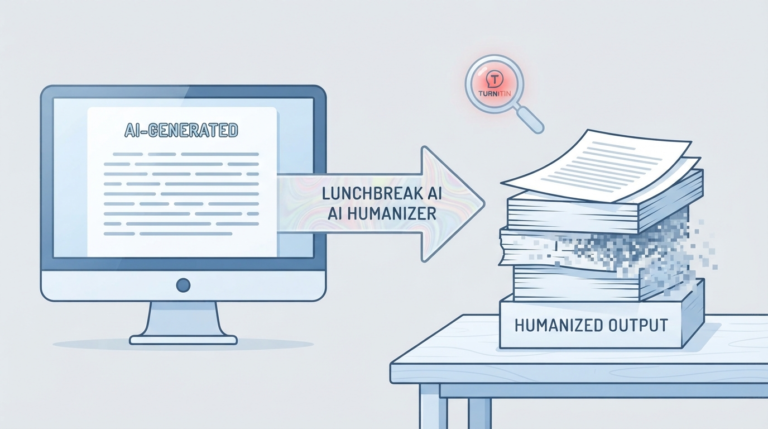
Type “AI humanizer” into a search engine and you’ll find dozens of “best tools” rankings, most citing suspiciously precise bypass rates — 87% here, 98% there — as if evading an AI detector were a fixed, measurable property of a piece of software rather than a moving target both sides are actively fighting over. Actually testing these tools against real detectors tells a considerably messier story than any of those rankings admit, and the honest answer to whether AI humanizers work is: inconsistently, unreliably, and in a way that’s actively getting worse for the tools, not better.
What an AI Humanizer Actually Does

Modern AI detectors work by measuring two core statistical signals in a piece of text. Perplexity measures how predictable each word choice is — AI language models tend to select the statistically most likely next word repeatedly, producing text that’s measurably more predictable than typical human writing. Burstiness measures variation in sentence length and structure — human writing naturally mixes short, punchy sentences with longer, more complex ones, while AI-generated text tends toward more uniform sentence length. AI humanizers work by deliberately manipulating both signals: introducing more “surprising” word choices, varying sentence length artificially, and stripping out AI writing’s characteristic overuse of transition phrases like “furthermore,” “moreover,” and “in conclusion.”
That’s the theory. In practice, this creates a genuine arms race, and arms races don’t produce permanent winners.
The Real Test Results Are Genuinely Inconsistent
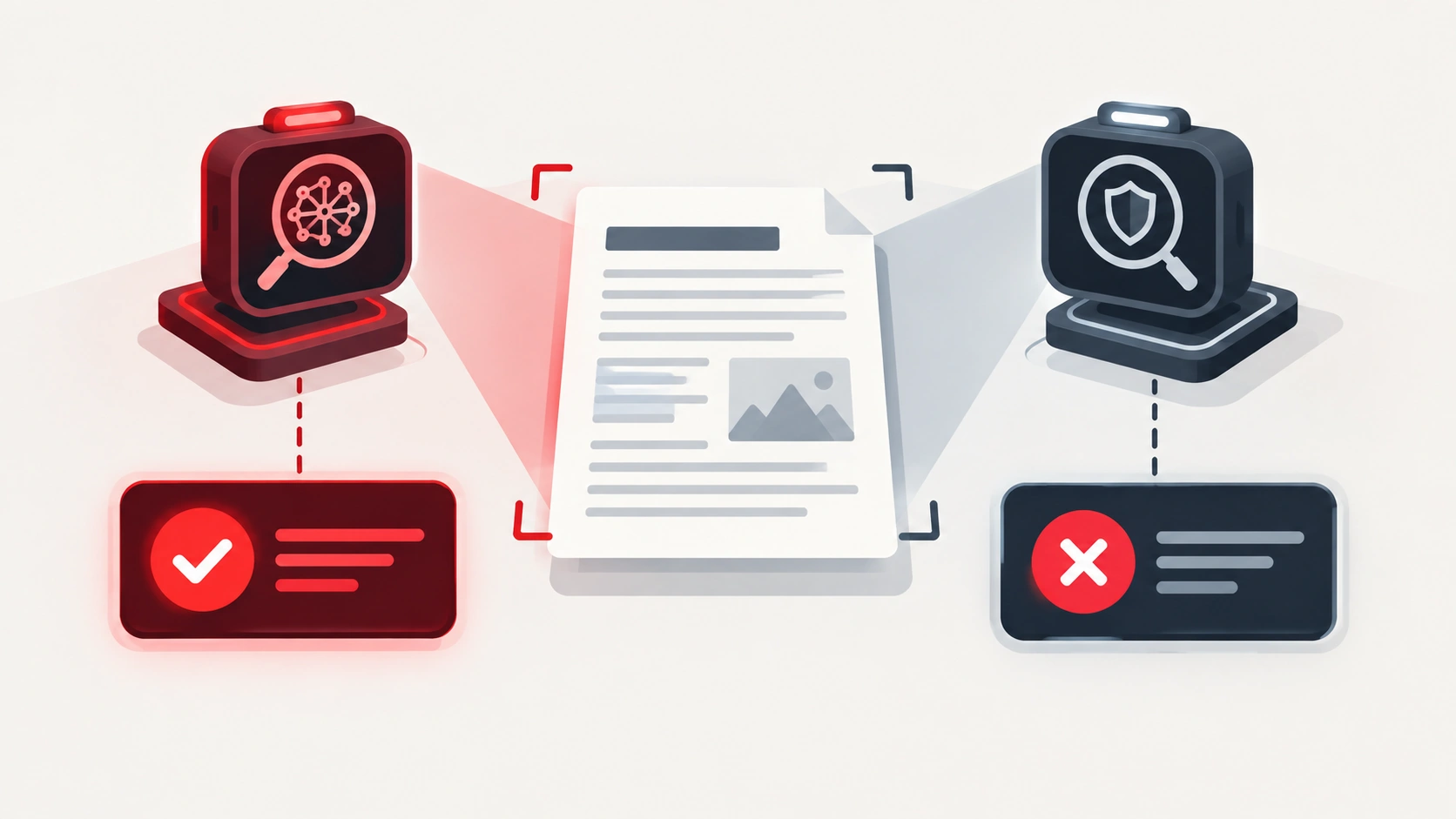
This is the part that “best AI humanizer” rankings consistently gloss over. Independent testing comparing multiple humanizer tools against multiple detectors — not a single tool against a single detector, which is how most vendor-published numbers get generated — finds results that vary dramatically by tool, by detector, and by how many times text gets run through the humanizing process. One independent tester running four leading humanizers against two separate detectors (Pangram Labs and Quetext) found results were, in their own words, “surprisingly inconsistent” — no tool reliably beat both detectors, and the same tool that bypassed one detector easily got flagged immediately by the other.
A separate six-detector test found an even more revealing pattern: some detectors (Pangram Labs, Originality AI) held up even against text that had been humanized once, while others — QuillBot’s own detector, ironically — dropped to a 0% AI-detection score after a single humanization pass, making that particular detector essentially useless as a check. The tester’s own conclusion is worth quoting directly in spirit rather than paraphrasing away: no AI detector in their test remained reliable after text had been run through humanization repeatedly. That’s not “humanizers work” or “humanizers don’t work” — it’s a genuinely unstable equilibrium where the answer depends entirely on which specific tool meets which specific detector on which specific day.
Why “Guaranteed Bypass” Claims Don’t Hold Up
Several humanizer products market bypass guarantees in exactly the language independent testers have shown doesn’t hold up: “Bypass AI Detection Guaranteed,” “98% human score.” The problem isn’t that these numbers are always fabricated — some genuinely reflect a real test against a real detector at a specific point in time. The problem is that both sides of this fight are actively iterating against each other. Detection systems are continuously retrained specifically to catch the patterns current humanizers rely on, which means a bypass rate measured in January can be meaningfully out of date by June. One developer who tested five popular humanizers directly summarized this dynamic bluntly: “Tools update, detectors update — what worked last month might not work today.” A guarantee attached to a moving target isn’t really a guarantee at all; it’s a snapshot being sold as a permanent property.
The Quality Problem Nobody’s Guarantee Mentions
Even when a humanizer does successfully evade detection, it frequently introduces a second, quieter problem: degraded content quality. Cheap humanizers that simply swap words for synonyms get caught almost instantly by any competent detector, so more sophisticated tools instead restructure entire paragraphs and alter word choice more aggressively to chase both perplexity and burstiness targets simultaneously. That aggressive rewriting has a real cost — testing has documented cases where heavy humanization introduces what’s sometimes called semantic drift: precise, technical language getting replaced with vaguer, more generic phrasing specifically because vague language scores better on perplexity metrics than accurate technical terminology does. A biology paper run through aggressive humanization can come out reading as though the writer didn’t actually understand their own subject — a strictly worse outcome than the original AI draft, not a neutral trade-off for evading detection.
The Detection Side Has Its Own, Different Problem
It’s worth being fair to the other side of this fight too, since it complicates the picture further rather than simplifying it. AI detectors themselves are far from perfectly reliable — published false positive rates on leading platforms sit in the range of 4% to 9%, and one study found a 61.3% false positive rate specifically on essays written by non-native English speakers, compared to just 5.1% for native speakers — a genuinely serious equity problem that has led more than 25 major universities, including Yale, MIT, and UC Berkeley, to restrict or disable AI detection tools entirely rather than risk falsely accusing students. This matters for evaluating humanizer claims specifically: a humanizer “successfully” evading an unreliable detector isn’t proof the tool works well — it may just mean it evaded a system that was already producing questionable results in both directions.
The Deeper Issue Detection-Bypass Framing Misses Entirely
Stepping back from the technical arms race for a moment: even a perfectly effective AI humanizer wouldn’t actually resolve the underlying question most people using these tools are trying to sidestep. If the actual use case is submitting AI-generated academic work as your own, successfully evading detection software doesn’t change whether that constitutes academic dishonesty under your institution’s policy — it just means the attempt to evade the check didn’t get caught, which is a different claim entirely from the underlying conduct being fine. This is the same distinction worth making about Lunch Break AI specifically, a humanizer marketed heavily toward exactly this academic use case — the tool’s technical reliability and the ethical question of what it’s being used for are two separate issues, and a marketing page conflating “bypasses detection” with “solves your problem” is worth reading skeptically either way.
What the Evidence Actually Supports
Pulling this together honestly: AI humanizers are not reliable, guaranteed detection-bypass tools, regardless of what their marketing claims — independent, multi-tool, multi-detector testing consistently shows inconsistent results that vary by tool, detector, and how aggressively the text has been rewritten. Where they do have a legitimate, defensible use is improving the readability and flow of AI-assisted drafts — reducing repetitive phrasing and awkward transitions — which is a genuinely different claim from “undetectable,” even though marketing copy for these tools consistently blurs the two together. And even a technically successful bypass doesn’t resolve the actual ethical or policy question underneath most of the searches driving this entire product category in the first place.
Frequently Asked Questions
Do any AI humanizers actually work at bypassing detection?
Inconsistently, and unreliably over time. Independent testing shows results vary significantly by which specific tool is tested against which specific detector, and detection systems are continuously updated specifically to catch the patterns current humanizers produce — meaning a tool’s bypass rate today isn’t a reliable predictor of its bypass rate in a few months.
Why do some AI detectors disagree with each other on the same text?
Because different detectors use different underlying models and thresholds for measuring perplexity and burstiness, meaning the same paragraph can score as “human-written” on one detector and “AI-generated” on another — a genuine reliability problem on the detection side, not just the humanizing side.
Does using an AI humanizer guarantee my content won’t be flagged?
No reputable evidence supports a guarantee — bypass success depends on the specific detector used, and detectors are actively updated to close the gaps current humanizers exploit. Marketing claims using words like “guaranteed” should be read with real skepticism given the arms-race dynamic both sides are locked in.
Can heavy AI humanization actually make writing worse?
Yes — aggressive rewriting aimed at evading detection can replace precise or technical language with vaguer phrasing (sometimes called semantic drift), which can make content less accurate, not just differently worded than the original AI draft.
Why have some universities stopped using AI detection tools entirely?
Because of documented false positive rates — as high as 61.3% for non-native English speakers in one study — that created a real risk of falsely accusing students of academic dishonesty, leading institutions like Yale, MIT, and UC Berkeley to restrict or disable detection tools rather than rely on unreliable results.
The honest takeaway isn’t that AI humanizers are useless — some genuinely improve how AI-assisted text reads. It’s that the specific promise most of them are actually selling — guaranteed, permanent detection evasion — isn’t something the current evidence supports, and betting on it is a bet against detection systems that are, by design, built to keep closing exactly that gap.