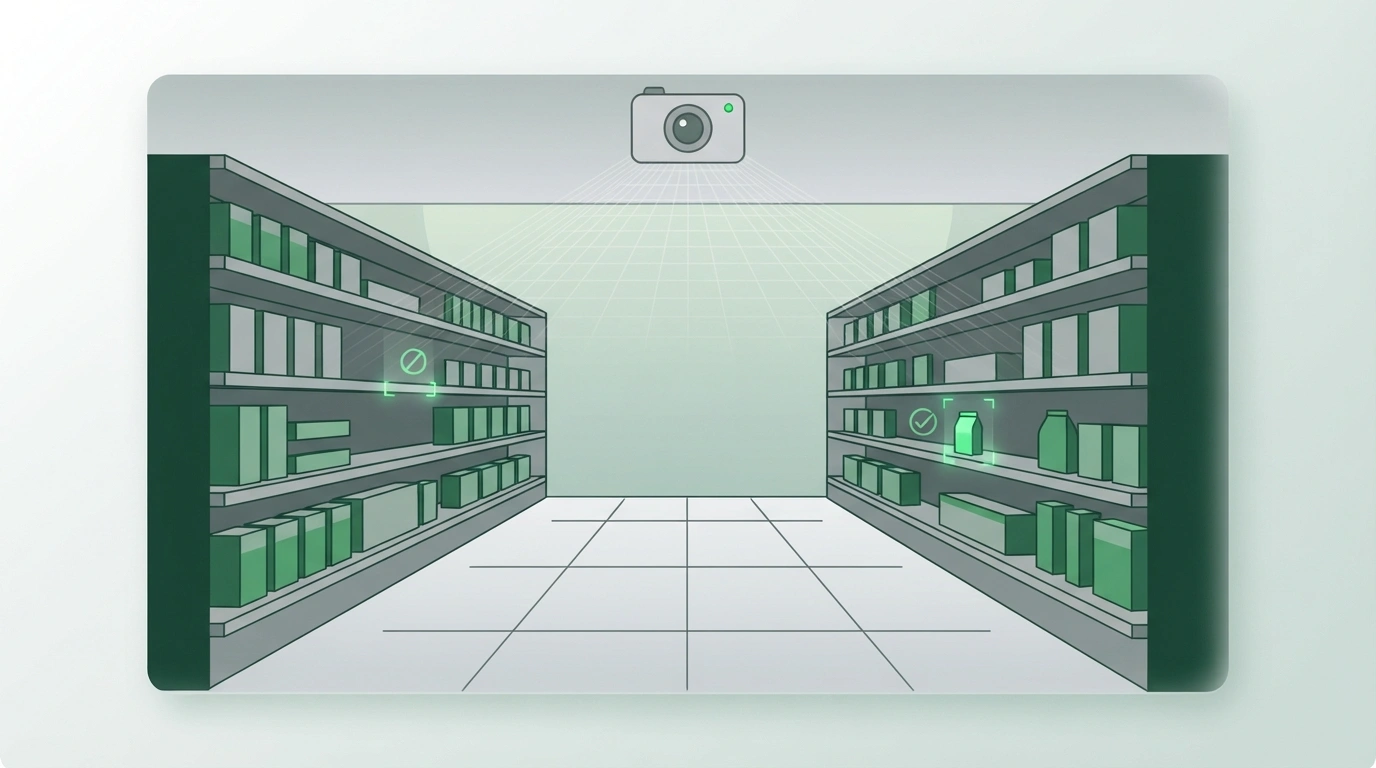
Walk into a Morrisons in the UK and somewhere between 400 and 600 cameras are quietly watching the shelves, not the shoppers — flagging empty spots and automatically triggering restocking tasks for the store’s 70,000 frontline staff. That’s not a pilot program or a trade-show demo. It’s a live, operational system, and it’s one small piece of a much bigger shift: retailers turning cameras they already own into an active decision-making layer, rather than passive footage nobody watches until something goes wrong.
Here’s what retail AI vision automation actually does in practice, which retailers are running it at real scale, and the parts of this technology that are genuinely harder than the sales pitch suggests.
What “Retail AI Vision Automation” Actually Means
At its core, this is a system where cameras feed video to an AI model trained to recognize specific patterns — a missing item on a shelf, a shopper lingering near the exit, an unscanned item at self-checkout — and that recognition triggers a real action: an alert to staff, a task in an inventory system, a flag for a manager. It converts camera infrastructure retailers already have into what one industry analysis calls “a real-time operational intelligence layer” — the value isn’t the video itself, it’s the structured signal extracted from it and delivered to a system that can actually act on it.
The Core Use Cases Already Running at Scale
Loss Prevention
This is the highest-pressure use case, for an obvious reason: shrinkage — inventory lost to theft, error, or fraud — is estimated to cost U.S. retailers well over $100 billion annually. Traditional security relies on a small team watching a fraction of available camera feeds, which scales poorly and misses subtle, systematic patterns. Vision-based systems instead watch continuously for specific behavioral signals — sweeping items past a scanner without ringing them up, ticket-switching, a customer showing unusually evasive body language at a return desk — and alert staff while there’s still time to intervene, rather than discovering the loss during a periodic inventory count. Target and Lowe’s have both deployed computer-vision-driven loss prevention across large store footprints; smaller chains increasingly access the same capability as a SaaS product rather than building it in-house.
Shelf Monitoring and Out-of-Stock Detection
Cameras continuously scan shelves against expected stock levels and flag gaps for restocking — Walmart runs this at scale, and reported figures across the industry put out-of-stock reduction in the range of 20-25% for retailers running mature shelf-monitoring systems. This directly addresses one of retail’s most persistent, quietly expensive problems: a product that’s sold out doesn’t just lose that one sale, it erodes a shopper’s trust that the store reliably has what they came for.
Planogram Compliance
Beyond simple restocking, vision systems can verify that shelf layouts match a retailer’s approved planogram — flagging misplaced products, incorrect promotional displays, or pricing signage that doesn’t match what’s actually on the shelf. This is a use case many retail technology discussions underestimate, since it’s less dramatic than theft detection but directly affects both sales performance and brand consistency across hundreds of stores that a human auditor could never physically check often enough.
Autonomous and Frictionless Checkout
Amazon’s Just Walk Out technology is the best-known example: cameras and shelf sensors track what a shopper picks up, puts back, or carries out, letting them skip a traditional checkout lane entirely. This is genuinely the most technically demanding use case on this list — it requires dense camera coverage, careful calibration, and a serious real-time data pipeline, which is exactly why the sensible rollout pattern is proving the concept in one format or a few high-traffic locations before expanding chain-wide, not launching everywhere at once.
Customer Behavior and Footfall Analytics
The same camera infrastructure watching shelves can also generate heatmaps of where shoppers walk, pause, and linger — data that feeds into store layout decisions, staffing schedules, and conversion-rate analysis (comparing total visits against actual purchases). Multiple vendors package this specifically as a standalone analytics product, separate from loss prevention or checkout.
Real Deployment Numbers Worth Knowing
Retailers running integrated systems that combine computer vision, transaction analysis, and automated reconciliation have reported shrinkage rates below 1.1% in early 2026 results — for a $10 billion operator, that kind of reduction translates to roughly $80 million in recovered value. Adoption is also shifting: the largest retailers (Walmart, Target, Kroger) have run these systems for years, but 2026’s real growth wave is mid-market — regional chains with 30 to 200 stores deploying this technology for the first time, as the underlying tools have matured and become more accessible outside the biggest players.
The Architecture Question: Edge vs. Cloud
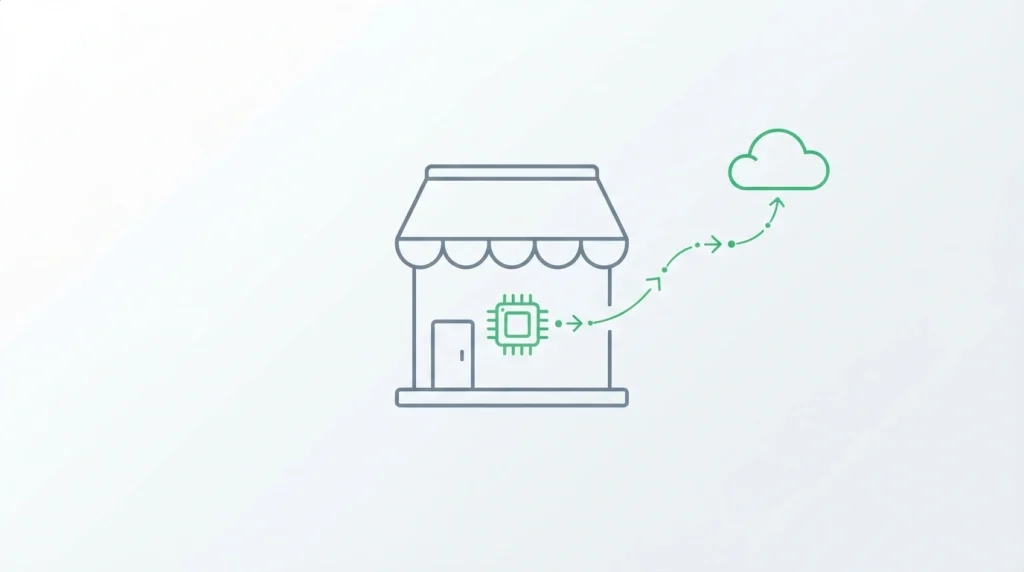
Time-sensitive use cases — theft detection, real-time checkout validation, queue alerts — need edge inference, meaning the AI model runs on hardware physically inside or near the store (commonly devices like NVIDIA Jetson boards), not in a distant cloud data center. A cloud-only architecture introduces latency that makes real-time alerting unreliable, which is a critical failure mode specifically for loss prevention, where the entire value proposition depends on catching an event while staff can still act on it. The typical mature deployment pattern pairs edge inference for real-time decisions with cloud processing for broader analytics, trend reporting, and retraining the underlying models over time.
Where This Gets Genuinely Harder Than the Sales Pitch Suggests
Integration Is the Real Work, Not the AI Model
Across independent analyses of retail deployments, the same honest observation shows up repeatedly: the computer vision model itself is rarely the hard part anymore. Getting its detections to reliably write into a retailer’s existing point-of-sale, inventory, and workforce management systems is where most of the actual engineering effort goes — and it’s the part that off-the-shelf, generic products tend to handle worst, since every retailer’s existing tech stack is different.
Privacy and Governance Aren’t an Afterthought
This deserves direct treatment rather than a footnote, since a meaningful share of vendor content on this topic glosses over it. These cameras record real people, not just shelves — customer behavior tracking, in particular, is described by industry sources as the most legally sensitive use case in the entire category, requiring careful handling of privacy law, union agreements where applicable, and customer trust before any rollout, not after a problem surfaces. Responsible deployment means anonymizing data wherever the use case allows, following recognized data-protection controls, and getting a retailer’s own legal and security teams to sign off before go-live — not treating this as a compliance checkbox to handle later.
Cost Sequencing Matters More Than Ambition
Cameras, edge compute hardware, and the integration work required are a genuine investment even when a retailer already owns the camera infrastructure. The pattern that tends to actually work: prove one high-value use case first, use its measured return to fund the next phase, and avoid attempting a chain-wide rollout before a single store location has demonstrated payback. A single point solution rarely covers shelf monitoring, loss prevention, and checkout simultaneously — retailers attempting to do everything at once tend to underestimate both the cost and the integration complexity involved.
Frequently Asked Questions
What is the biggest retail AI vision use case by adoption?
Loss prevention and shelf/out-of-stock monitoring are currently the most widely deployed use cases, largely because they connect most directly and measurably to sales, margin, and shrinkage metrics that retailers already track closely.
Do retail vision systems use facial recognition?
Not universally — many deployments focus specifically on behavior and object detection (an unscanned item, an empty shelf slot) rather than identifying individual shoppers, precisely because facial recognition introduces significantly heavier privacy and legal obligations that many retailers choose to avoid entirely.
How much does retail AI vision automation typically cost to deploy?
Costs vary widely based on existing camera infrastructure, the number of use cases targeted, and integration complexity with existing retail systems — the more consistent industry guidance is to prove value in one use case and store format before expanding, rather than expecting a fixed, predictable chain-wide price point.
Is autonomous checkout technology like Amazon’s Just Walk Out common yet?
Not broadly — it remains one of the most technically demanding use cases in this category, requiring dense camera coverage and careful calibration, and most retailers pursuing it are still proving the concept in select high-traffic locations rather than deploying it chain-wide.
What’s the difference between edge and cloud processing in this context?
Edge processing runs the AI model on hardware physically near the cameras for low-latency, real-time decisions — essential for time-sensitive alerts like theft detection. Cloud processing handles broader analytics, trend reporting, and model retraining, where a small delay doesn’t undermine the use case.
The shift underway isn’t really about smarter cameras — it’s about retailers deciding, use case by use case, which store decisions are worth automating, measuring, and tying directly to a number they already care about. The ones getting real value aren’t the ones with the most cameras; they’re the ones who proved one thing worked before betting the budget on everything at once.