
Growth navigate startup tools are the software platforms founders use to steer an early-stage company toward growth — CRM, analytics, marketing automation, workflow automation, collaboration, and finance tools, chosen deliberately instead of collected randomly. The phrase describes both a mindset and a stack: navigate first (know what problem you’re solving), then grow (pick the tool that solves it).
Here’s the uncomfortable truth most tool roundups skip: tools don’t create growth. They remove the friction hiding it. A startup with a great product and a chaotic stack grows in spite of its tools. A startup with ten subscriptions and no customers just has a well-organized way to burn money.
This guide is for founders from pre-seed to Series A who want a stack that scales — what to buy, in what order, at your stage, and what it should cost. No fifty-tool directories. Seventeen tools that matter, three stage stacks, and the funding half nobody talks about.
What growth navigate startup tools actually are
Strip away the buzzwords and the category breaks down into six practical jobs. Every startup needs each one handled somewhere — by software, by a person, or by luck. Luck doesn’t scale.
Customer relationship management keeps every lead, deal, and conversation out of scattered inboxes and inside one system your whole team can see. Analytics and product intelligence show what users actually do inside your product, not what you assume they do. Marketing automation runs campaigns, emails, and follow-ups without someone doing it all by hand. Workflow automation connects your apps so data moves between them on its own instead of being copied and pasted. Collaboration keeps a small team’s work visible as headcount grows. Finance and runway visibility tells you your burn rate before it becomes a crisis — the least glamorous job on this list and the one that kills the most startups when it’s missing.
Here’s the test worth running on your company this week: for each of the six jobs, name the tool doing it. If you can’t name one, it’s not handled — it’s hoped for. Most early-stage chaos isn’t a strategy problem or a talent problem. It’s two or three of these jobs running on hope, usually the finance one.
The founders who navigate growth well share one habit: they assign every job before they feel the pain of it missing. Not enterprise software on day one — just a named tool, even a free one, per job. That discipline is the entire difference between a stack and a pile of subscriptions.
The 17 tools that matter in 2026
Forget fifty-tool directories. These are the platforms that show up in real startup stacks, with an honest verdict on each — what it’s for, who should use it, and when to skip it.
CRM — HubSpot, Attio
HubSpot’s free CRM remains the default starting point: contact management, deal pipelines, and meeting scheduling at no cost, with paid tiers when you need sequences and automation. Attio is the modern alternative — flexible, fast, and built for teams that find HubSpot clunky. Pick HubSpot if you want the safe, well-documented path; pick Attio if your sales process doesn’t fit a template. Skip both only if you have no sales motion at all yet — then a spreadsheet is fine, temporarily.
Analytics — PostHog, Mixpanel
PostHog is the 2026 favorite for product-led startups: generous free tier, product analytics plus session replay in one place, and you can self-host it. Mixpanel goes deeper on funnels and retention analysis for teams that live in their data. Start with PostHog’s free tier; move to Mixpanel when your questions get sophisticated enough that event volume caps start biting.
Marketing automation — ActiveCampaign
ActiveCampaign earns its keep the moment you have repeatable outreach — onboarding sequences, nurture campaigns, re-engagement flows. Before that point it’s an expensive way to send emails nobody asked for. The rule: no automation until you’ve sent the emails manually and they worked.
Outreach and lead gen — Apollo.io, Closely
Apollo combines a 275M+ contact database with sequencing, which is why lean teams use it as data provider and outreach tool in one. Closely focuses on LinkedIn prospecting. The unsexy truth both vendors agree on: data quality beats sequence cleverness. A thousand emails to a bad list is deliverability damage, not outreach. Skip these until you know your ideal customer precisely.
SEO — Ahrefs, Semrush
Both are excellent and both are overkill on day one. Start with their free offerings — Ahrefs Webmaster Tools and Google Search Console cost nothing and cover technical health. Pay for either when SEO is an actual channel with traffic worth optimizing, not before.
Automation — Zapier, Make
Zapier connects thousands of apps with no code; Make does the same with more control per dollar. Either one is the nervous system of a growing stack — but only connect a process that already works manually. Automating chaos just produces faster chaos.
Workspace — Notion, Slack
Notion is your docs hub, wiki, and lightweight project tracker in one. Slack is team communication that stays out of email. One of each, not three overlapping tools. If your team debates Notion vs. Asana vs. ClickUp for a month, you’ve already lost more than any of them would save.
Finance — Stripe, Carta
Stripe handles payments with no monthly fee — you pay per transaction, which is perfect for early revenue. Carta manages your cap table from the first priced round, before it becomes a spreadsheet nightmare. Finance tools are boring until the week you need them, and then they’re everything.
AI assistants — ChatGPT, Claude
The 2026 layer nobody’s competitors cover properly: AI assistants now handle first drafts of copy, data cleanup, meeting summaries, and customer reply triage. They’re force multipliers on every category above, not a separate department. Use them daily; budget for them like infrastructure, not experiments.
| Tool | Category | Free tier? | Best for | Skip if |
|---|---|---|---|---|
| HubSpot | CRM | Yes, generous | Safe default, all-in-one growth | You hate rigid templates (try Attio) |
| Attio | CRM | Yes, limited seats | Flexible, modern sales process | You want maximum documentation |
| PostHog | Analytics | Yes, generous | Product-led startups, early stage | You need deep enterprise reporting |
| Mixpanel | Analytics | Yes, event-capped | Funnel and retention depth | PostHog’s free tier covers you |
| ActiveCampaign | Marketing automation | Trial only | Repeatable email outreach | No proven outreach yet |
| Apollo.io | Outreach/data | Yes, limited | Lean prospecting + sequencing | ICP still undefined |
| Closely | Outreach | Trial only | LinkedIn-heavy prospecting | Email-first motion |
| Ahrefs | SEO | Webmaster Tools free | Serious SEO channel | No organic traffic yet |
| Semrush | SEO | Trial only | SEO + content marketing combo | No organic traffic yet |
| Zapier | Automation | Yes, limited tasks | No-code app connections | Process not proven manually |
| Make | Automation | Yes, limited ops | More control per dollar than Zapier | Zapier already covers your flows |
| Notion | Workspace | Yes | Docs, wiki, light projects | Team already settled elsewhere |
| Slack | Communication | Yes | Team chat, integrations | Async-first tiny team (email works) |
| Stripe | Finance | Pay-as-you-go | Online payments | No revenue yet |
| Carta | Finance | Startup pricing | Cap table from first round | Pre-incorporation |
| ChatGPT | AI assistant | Yes, limited | Drafts, data cleanup, summaries | No regular content or data work |
| Claude | AI assistant | Yes, limited | Long docs, careful reasoning tasks | You already pay for ChatGPT |
Build your stack by stage
This is the step most comparisons skip, and it’s the one that saves you money. Don’t buy the Series A stack at pre-seed. Here’s what each stage actually needs — named tools, real costs, and what to measure before moving up.

| Stage | Your stack | Approx. monthly cost | What to measure |
|---|---|---|---|
| Pre-seed / validation | Notion, GA4, HubSpot CRM (free) | $0 | Are people signing up? Where do they come from? |
| Seed / early traction | Add PostHog, Apollo.io, Zapier | ~$50–150 | Activation rate, which channels convert, CAC |
| Series A / scaling | Add ActiveCampaign, Mixpanel or Amplitude, Carta, Slack paid | ~$300–800 | LTV:CAC ratio, churn, burn rate, runway |
Pre-seed: stay lean
You’re proving demand, not optimizing it. Notion organizes your thinking, GA4 shows where visitors come from, and HubSpot’s free CRM keeps early conversations out of your inbox. That’s the whole stack. Anything more is procrastination dressed as infrastructure.
Seed: start tracking
Customers are arriving, so behavior matters now. PostHog shows what users actually do inside the product. Apollo gives you a prospecting database without hiring researchers. Zapier connects the pieces once manual handoffs start breaking. This is the stage where data starts guiding decisions instead of decorating them.
Series A: automate and govern
With repeatable revenue, ActiveCampaign runs the outreach you’ve already proven manually, Mixpanel or Amplitude goes deeper on retention, and Carta keeps the cap table clean before the next round makes it complicated. Finance tooling stops being optional here — investors will ask about burn and runway, and “roughly” isn’t an answer.
The rule underneath all three stages: let a real problem pull a tool into your stack. When leads slip through cracks, that’s the CRM’s invitation. When nobody knows why users churn, that’s analytics calling. Buy on breakage, not on blog recommendations — including this one.
The free-tier playbook
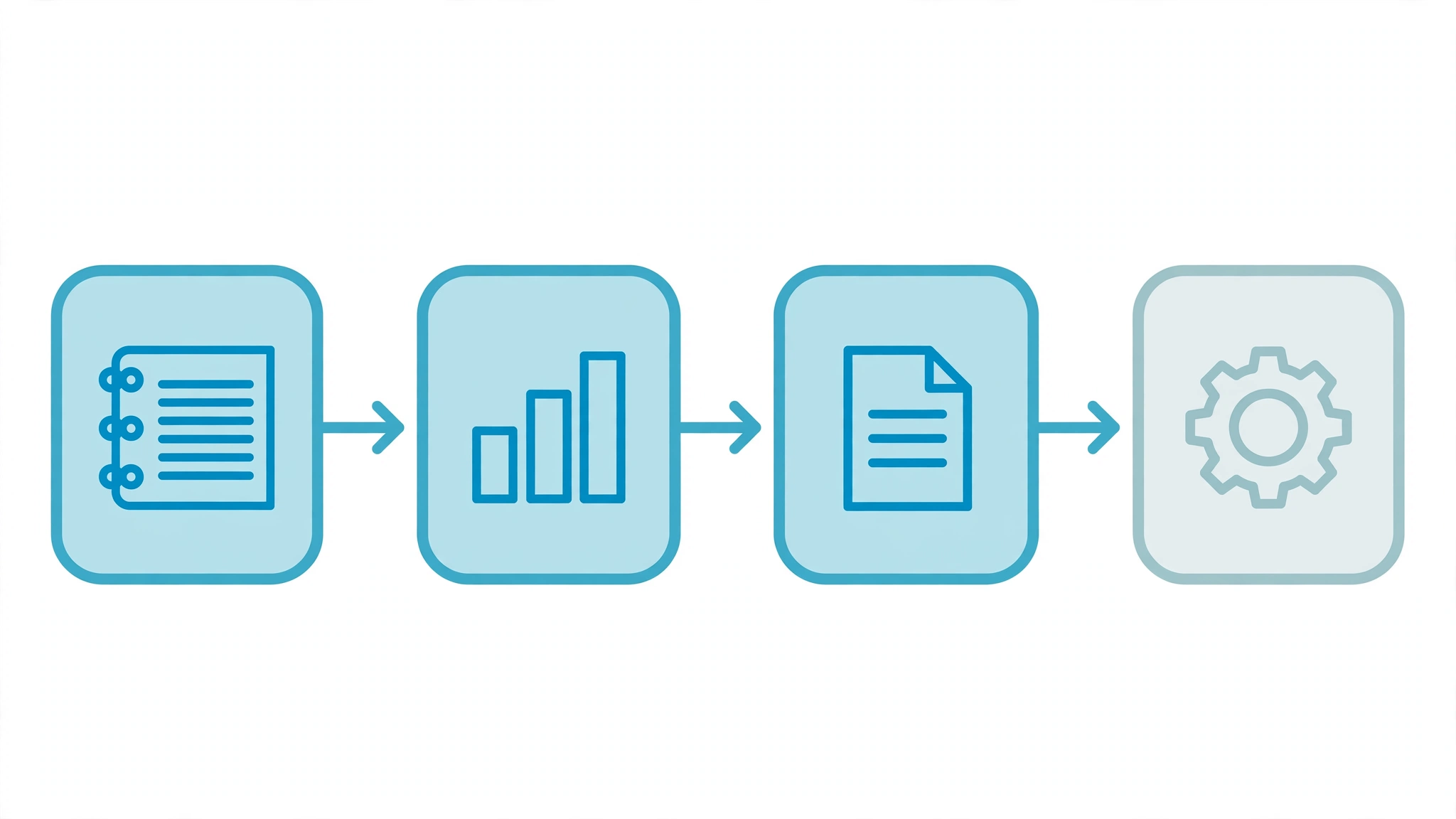
You can run a real startup stack for $0 a month. The trick isn’t knowing which tools are free — it’s knowing the order to adopt them, so each one earns the next.
Step one: CRM.
HubSpot’s free tier gives you contact management, deal tracking, and meeting scheduling with unlimited users. Adopt it the week you start having sales conversations worth remembering. Cost: $0.
Step two: analytics.
PostHog’s free tier is generous enough for most early-stage products, and GA4 costs nothing for web traffic. Turn these on before you need them — you can’t analyze last month’s user behavior if you weren’t tracking it. Cost: $0.
Step three: docs hub.
Notion’s free tier covers a single founder or tiny team. This is where decisions, plans, and knowledge live instead of scattered chat messages. Cost: $0.
Step four: automation — but only when two tools need to talk on their own.
Zapier’s free tier handles around 100 tasks a month, enough to prove the concept. If you’re automating a process that doesn’t work manually yet, stop. Fix the process first.
What to hold off on: paid SEO tools and marketing automation. Ahrefs and Semrush are excellent, but paying for them before organic search is a real channel is paying for a dashboard you’ll open twice. Same for ActiveCampaign — automate the outreach you’ve proven by hand, not the outreach you hope to have.
Then the discipline that matters more than any tool: audit the stack every quarter. Open your subscriptions, check what nobody touched in 30 days, and cancel it. Founders who skip this end up paying for the graveyard — five tools at $20 to $50 a month each, quietly billing while the team uses two of them. A fifteen-minute review, four times a year, is the highest-ROI habit in this entire guide.
Growth navigate funding — the half nobody covers
Every competitor ranking for this keyword writes about software and stops. But “growth navigate funding” gets 14,800 searches a month, and none of the tool guides touch it. That’s the gap this section closes — because navigating growth without a funding plan is like buying a map and no fuel.
The concept is simple: tie every raise to a milestone, not to runway panic. Most founders raise when cash runs low, which puts them in the weakest possible negotiating position. Milestone-linked fundraising flips it — you raise to prove something specific, and you can show investors exactly what the money buys.
- Pre-seed: the milestone is validation. Fund it with founder savings, friends and family, or a small angel check. What you’re proving: people want this.
- Seed: the milestone is repeatable revenue. Angels and seed VCs fund this round. What you’re proving: the machine works, not just the prototype.
- Series A and beyond: the milestone is scale. Institutional VC, and increasingly revenue-based financing for companies with predictable cash flow. What you’re proving: this gets big.

The tools matter here too. Carta keeps your cap table clean from the first priced round — messy equity records kill deals in diligence. Crunchbase and Dealroom are your investor research database: who funds your sector, at your stage, in your geography. AngelList remains the meeting ground for early-stage angels and rolling funds.
One honest note: not every startup needs external funding, and the best-funded startups aren’t always the winners. Bootstrapping on revenue is a legitimate strategy that preserves ownership and forces discipline. The point isn’t to raise — it’s to decide deliberately, with the numbers in front of you, instead of drifting into a raise because the bank account demanded it.
5 costly mistakes (with the bill attached)
Every guide lists these mistakes. None of them tells you what they cost. Here are the bills.
1. Tool sprawl: ~$1,000+/month. The classic failure looks like this: HubSpot paid tier, Mixpanel paid tier, ActiveCampaign, Apollo, Ahrefs, Zapier paid, Notion paid, Slack paid, plus three tools nobody remembers buying. Twelve subscriptions, four actually used. At seed stage, that’s a full month of runway evaporating every year into software the team forgot about.

2. Enterprise software before product-market fit: $1,500+/month wasted. Buying Salesforce or Outreach at seed because “we’ll grow into it.” You won’t — you’ll pay enterprise prices for eighteen months while three people use 5% of the features. Start with the tool that fits this stage, not the next one.
3. Automation before process: weeks of confusion. Zapier can’t fix a broken workflow; it just runs the broken workflow faster and more reliably. Every automated mess takes longer to untangle than the manual mess did. Prove it by hand first, then automate.
4. Vanity metrics as goals: the cost is strategic. Signups without activation, pageviews without conversion — dashboards full of numbers going up while the business goes nowhere. The bill here isn’t a subscription; it’s six months of optimizing the wrong thing.
5. Never auditing: $200–600/month in zombie subscriptions. The graveyard every startup has: the SEO tool from the content experiment that ended, the design tool one contractor used, the analytics platform replaced eight months ago. Still billing. The quarterly fifteen-minute audit from the free-tier playbook kills this one permanently.
How to choose: the 6-question framework
Before any tool enters your stack, run it through these six questions. A “no” on any of them is a reason to wait, not a reason to negotiate with yourself.
1. Does it solve a named problem? Not “we might need analytics someday” — a specific pain, happening now, with someone’s name on it. “Leads are slipping through cracks and Sara spends Fridays reconciling spreadsheets” is a named problem. Everything else is shopping.
2. Does it integrate? A tool that can’t talk to your CRM, your analytics, or your billing creates a data silo you’ll pay someone to bridge later. Check the integration list before the feature list — features are marketing, integrations are architecture.
3. Can the team learn it this week? If onboarding takes a month, the tool owns you. The best startup tools are usable on day one and deep on day one hundred. Complexity you can’t absorb now is a tax on everything else.
4. Does it fit this stage — not the next one? Buying for the company you hope to become is how seed startups end up with enterprise contracts. Choose for the team and revenue you have. You can always upgrade; you can’t unspend.
5. Can it scale 10×? This is the counterweight to question four. The tool should fit today and survive a year of growth without a painful migration. Free tiers that collapse at 50 users aren’t free — they’re deferred migration projects.
6. What’s the exit cost? Every tool should be evaluated on how hard it is to leave. Data export, contract terms, how deeply it embeds into your workflows. The tools that are hardest to quit are rarely the best — they’re just the stickiest. Know the difference before you commit.
Frequently asked questions
What is growth navigate?
Growth navigate is a practical approach to managing startup growth: decide what problem you’re solving first, then pick the tools and funding that solve it — instead of collecting software and hoping growth follows. It covers strategy, customer acquisition, operations, and funding as one connected discipline.
What are growth navigate startup tools?
Software platforms that handle the six jobs every startup needs: CRM, analytics, marketing automation, workflow automation, collaboration, and finance. The defining trait isn’t the category — it’s that each tool is chosen for a named problem at your current stage.
Is Growth Navigate a software company?
No. It’s not a single product — it’s a methodology plus the ecosystem of tools that support it. Be wary of any site selling you “the” Growth Navigate platform; the concept is about how you choose tools, not which brand you buy.
What are the best free tools for startups?
HubSpot CRM (free tier), PostHog (free tier), GA4, and Notion cover pipeline, analytics, traffic, and documentation at $0. That combination alone carries most startups through validation. Add Zapier’s free tier once two tools need to pass data automatically.
How many tools does a startup actually need?
Fewer than you think. One per core job: a CRM, an analytics tool, a docs hub, and a comms channel is a complete pre-seed stack. Most founders who struggle built a twelve-tool stack in month one and spent more time managing integrations than building product. Add on breakage, not on optimism.
Does every startup need external funding?
No. Bootstrapping on revenue preserves ownership and forces discipline — it’s a legitimate strategy, not a consolation prize. External funding makes sense when you have a milestone worth accelerating toward: validated demand, repeatable revenue, a market to capture. Raise deliberately or don’t raise at all.
When should a startup start paying for tools?
When you hit a real limit on a free tier that constrains actual work — event caps blocking analysis, seat limits blocking hires, automation caps blocking a proven workflow. “Might need it later” is never the trigger. The bill should always trail the pain, not lead it.
Conclusion
Your stack is a hypothesis about how your company works. Every tool in it claims something: that leads need tracking this way, that users behave that way, that this workflow is worth automating. Hypotheses get tested. Yours should be too — quarterly, with the cancel button ready.
Start with four free tools. Add a fifth when something breaks. Review everything every three months and cut what nobody touches. That’s the whole philosophy: navigate first, grow second, and never pay for the map when you’re still deciding where to go.