As modern engineering projects grow in scale and complexity, the demand for structured, reliable lifecycle management has never been more critical. Fragmented coding practices, vague architectural requirements, and skipped testing phases frequently lead to severe project bottlenecks, security vulnerabilities, and costly delays. To ensure long-term stability and performance, development teams increasingly rely on rigorous, standardized methodologies that govern every phase of a technical application’s lifecycle from initial conceptualization to final deployment.
Understanding the mechanics behind these frameworks is essential for any technical team or software architect aiming to streamline production. Whether managing large-scale enterprise applications or specialized technical environments, establishing a clear, repeatable roadmap minimizes human error and maximizes code maintainability. The following sections explore the core structural principles, lifecycle stages, maintenance cycles, and strategic importance behind the software bixiros.5a8 ecosystem.
What Is the Bixiros.5a8 Software Development Framework? An Overview
The why is software bixiros.5a8 development process framework represents a specialized, structured lifecycle methodology engineered to guide technical teams through the creation, scaling, and maintenance of complex applications. At its core, software bixiros.5a8 provides a disciplined operational blueprint that eliminates guesswork, ensuring that every line of code aligns with rigorous architectural standards and performance benchmarks.
Rather than relying on unstructured, ad-hoc coding practices, the Bixiros.5a8 framework establishes clear boundaries for requirement analysis, system design, implementation, and rigorous testing tiers. Key structural aspects governed by the process include:
- Standardized Requirement Mapping: Translating abstract business goals and technical specifications into actionable, measurable engineering milestones.
- Modular Architecture Design: Breaking down massive software systems into manageable, cohesive components to facilitate easier scaling and future updates.
- Lifecycle Governance: Monitoring application health from initial deployment through long-term maintenance cycles to prevent technical debt and security degradation.
By enforcing these structured guidelines, the development process ensures that engineering teams can deliver stable, highly secure, and scalable technical solutions efficiently.
Core Stages and Methodologies in the Bixiros.5a8 Lifecycle
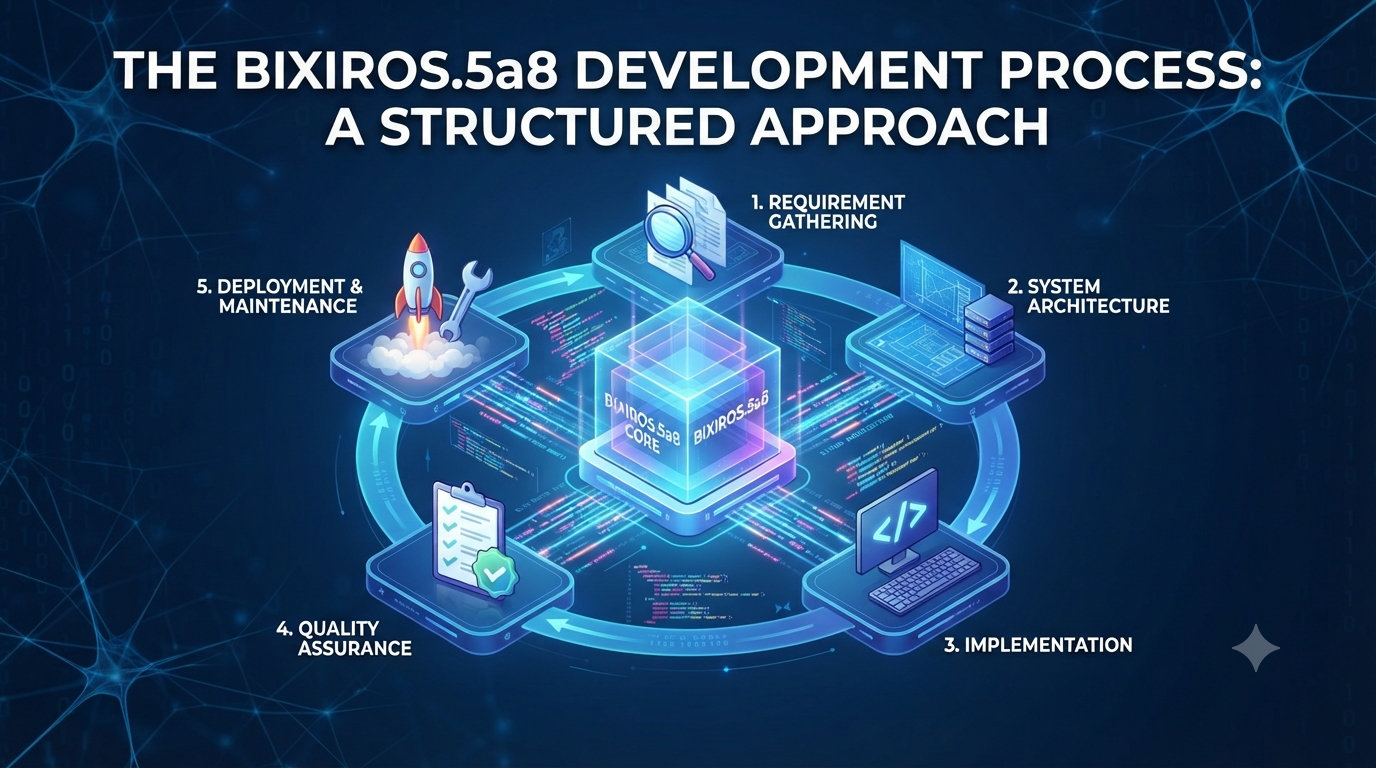
Navigating the bixiros.5a8 software development lifecycle requires a methodical, step-by-step approach that transitions an application from an initial conceptual idea into a fully deployed, high-performing production environment. By breaking down the engineering journey into distinct, manageable stages, technical teams can maintain tight control over quality, resource allocation, and architectural integrity.
1. Requirement Gathering and Feasibility Analysis
The foundation of any successful engineering project begins long before the first line of code is written:
- Defining Technical Parameters: Teams collaborate to establish clear functional requirements, performance expectations, and hardware or software constraints.
- Feasibility and Risk Assessment: Engineers evaluate whether the proposed technical specifications align with available resources, timeline restrictions, and architectural limitations, preventing costly pivots later in the cycle.
2. System Architecture and Design
Once requirements are locked in, the focus shifts to structuring the framework:
- Component-Level Interactions: Architects map out how different modules, databases, and user interfaces will communicate with one another within the system.
- Data Flow Models: Designing robust data pipelines ensures that information moves securely and efficiently across the application ecosystem without causing latency or bottlenecks.
3. Implementation and Coding Standards
Translating structural designs into functional software requires strict adherence to best practices:
- Clean Code Execution: Developers write modular, scalable code that strictly follows established team guidelines, making future maintenance and feature additions seamless.
- Version Control and Collaboration: Utilizing repositories and continuous integration tools allows multiple engineers to build concurrently while tracking changes and preventing code conflicts.
Why a Structured Process Prevents Engineering Bottlenecks
Recognizing the importance of bixiros.5a8 development process structures is vital for engineering teams operating under tight deadlines and complex technical demands. Without a disciplined framework, development cycles frequently fall victim to scope creep, miscommunicated objectives, and compounding technical debt. A structured process acts as an operational shield, ensuring that potential roadblocks are identified and neutralized before they translate into catastrophic system failures.
1. Mitigating Project Failures Caused by Vague Specifications
- Eliminating Ambiguity: Many software failures trace back to poorly defined initial parameters or changing project scopes without proper change-control protocols. A structured workflow prevents teams from building blindly on assumptions.
- Establishing Clear Baselines: By enforcing rigorous initial planning and requirement mapping, the framework ensures that all cross-functional team members operate from a single source of truth, drastically reducing costly rework and misaligned deliverables.
2. The Role of Continuous Integration and Early Bug Detection
- Catching Latent Errors Early: Waiting until the end of a development cycle to test code often results in compounding bugs that are exponentially harder to isolate, debug, and fix.
- Automated Integration Pipelines: Implementing continuous integration (CI) practices within the development process allows automated testing suites to evaluate code chunks instantly upon check-in, ensuring that system vulnerabilities are patched long before code reaches production environments.
Quality Assurance, Verification, and Testing Protocols
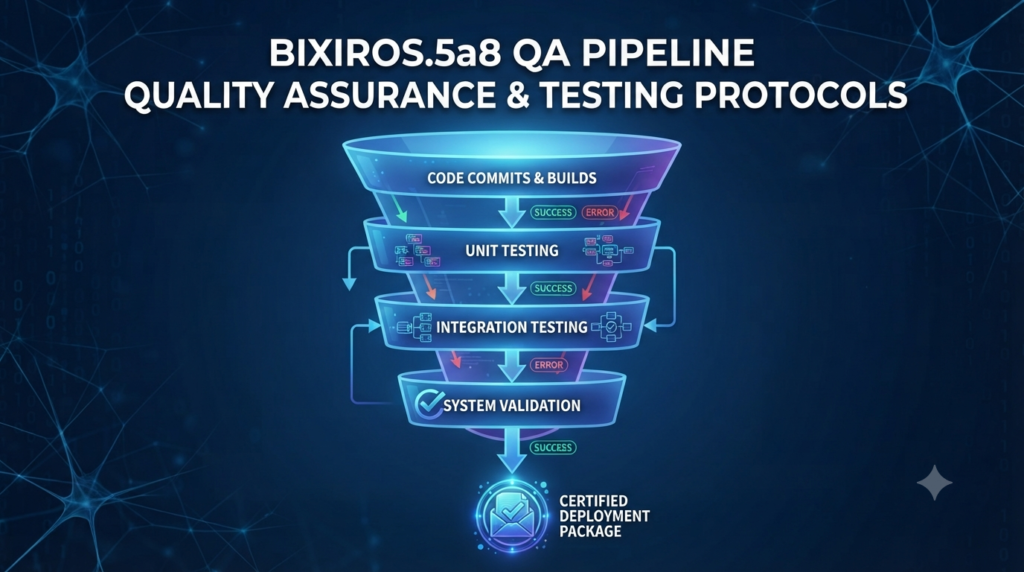
To guarantee that an application meets rigorous performance benchmarks and data security standards under production loads, a comprehensive validation strategy is required. Relying solely on manual oversight is insufficient for complex technical environments; therefore, structured testing protocols are embedded throughout the development lifecycle to verify both individual components and overall system stability.
1. Multi-Tier Testing Frameworks
- Unit Testing: Engineers isolate and test individual functions, classes, and modules independently to verify that the core logic behaves exactly as specified.
- Integration Testing: Once individual components pass initial evaluation, integration testing checks how modules communicate, ensuring that data synchronization and cross-module interactions occur without latency or errors.
- Acceptance Validation: Final validation confirms that the software fulfills all original technical requirements and business criteria before it is approved for public or enterprise rollout.
2. Ensuring Reliability and Security Under Load
- Stress and Performance Benchmarking: Systems are subjected to simulated peak traffic loads to identify breaking points, memory leaks, or execution slow-downs before real users encounter them.
- Vulnerability Screening: Automated security audits scan the codebase for known exploits, permission flaws, and data encryption gaps, safeguarding sensitive institutional data against emerging digital threats.
Deployment Strategies, Maintenance, and Update Cycles
Transitioning a validated software application from a staging environment into a live production setting requires careful strategic planning to prevent launch delays, service interruptions, or unexpected technical friction. At the same time, establishing a robust maintenance and update framework is vital for preserving long-term performance, patching vulnerabilities, and adapting to shifting technological requirements.
1. Evaluating Deployment Models for Smooth Rollouts
- Phased and Gradual Rollouts: Rather than executing a sudden “big bang” release that exposes the entire user base to potential bugs, teams often deploy updates incrementally to targeted user segments or regional subsets.
- Parallel and Canary Deployments: Running new builds alongside legacy versions or routing a small percentage of traffic to the updated build allows engineers to monitor real-world performance, error logs, and system metrics safely before committing to a full-scale transition.
2. Managing Update Cadence and Patch Management
- Addressing Update Frequency: A frequent question among engineering managers is how often should bixiros.5a8 software be updated to maintain optimal system health. Regular patches, minor bug fixes, and security updates should be deployed as soon as they are validated and released by developers.
- Scheduling Major Version Upgrades: Significant architectural upgrades and major feature additions should be planned during scheduled, low-traffic operational windows to minimize disruption.
- Staging Environment Validation: Prior to pushing any update live, engineers must run comprehensive compatibility tests within a staging replica of the production environment to guarantee seamless third-party synchronization and prevent configuration regressions.
Frequently Asked Questions (FAQs)
What is the software Bixiros.5a8 development process?
The Bixiros.5a8 software development process refers to the specialized, structured lifecycle framework used to plan, design, code, test, and deploy the Bixiros.5a8 system, ensuring high-quality, reliable, and scalable technical execution.
Why is a structured development process important for Bixiros.5a8?
A structured development process is critical because it enforces strict quality assurance, streamlines resource allocation, mitigates project risks early, ensures robust security protocols, and prevents costly architectural failures or delays.
How often should Bixiros.5a8 software be updated?
Bixiros.5a8 software should be updated regularly—ideally as soon as minor patches, security fixes, or feature updates are released by developers. Major version upgrades should be scheduled during off-peak operational windows after conducting thorough compatibility testing in a staging environment.
What are the primary phases involved in the Bixiros.5a8 lifecycle?
The lifecycle typically includes initial requirement gathering and feasibility studies, high-level system design, clean code implementation, comprehensive multi-tier testing, controlled deployment strategies, and ongoing system maintenance.
What causes software development processes like Bixiros.5a8 to fail?
Implementations commonly fail due to inaccurate initial requirements, poor cross-functional team communication, skipped testing phases, inadequate architectural planning, or failing to adapt the workflow to changing technical constraints.