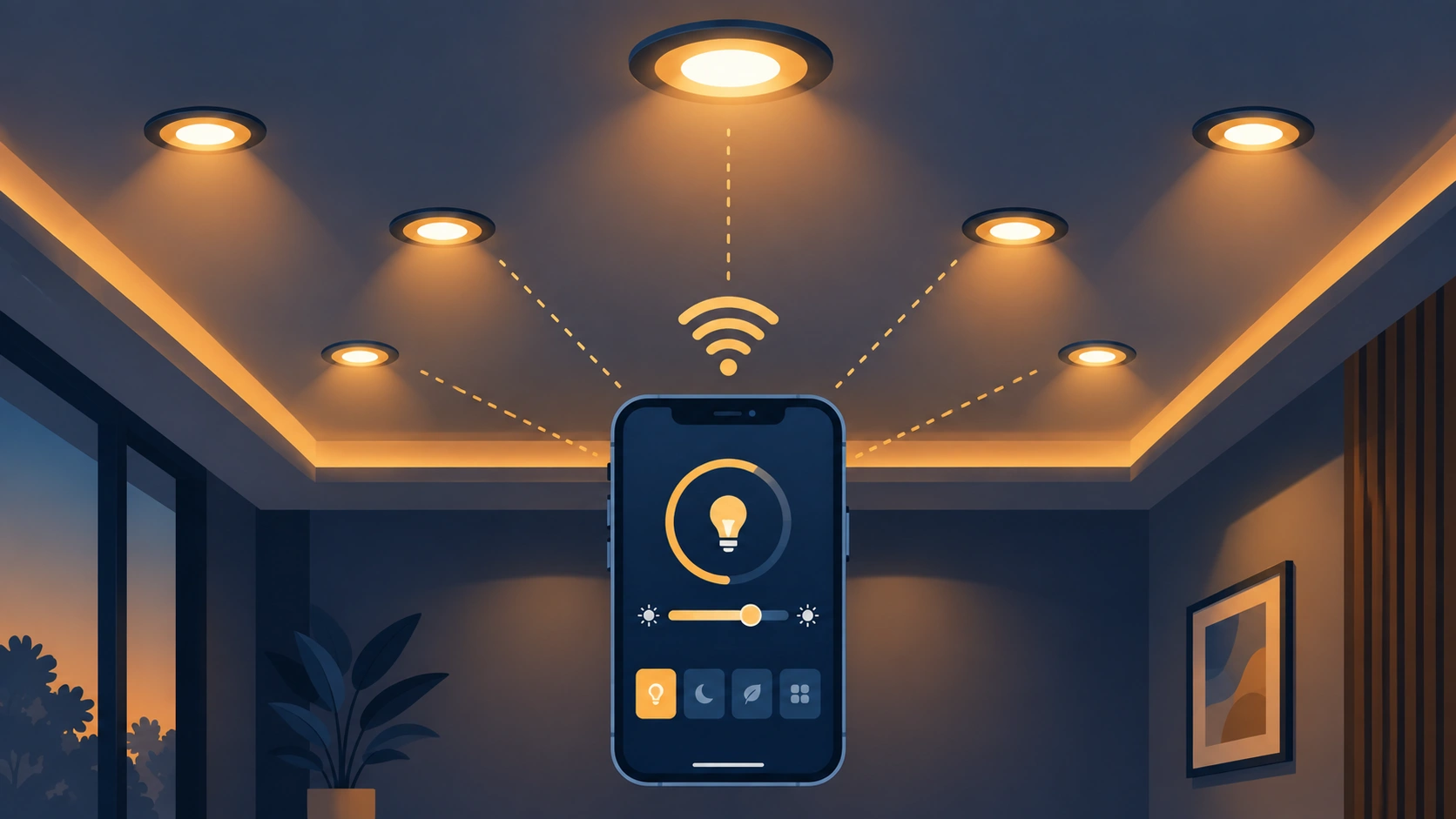
Most “best smart recessed lighting” content skips straight to a ranked product list without answering the questions that actually determine whether any of those products will work in your home — can or canless, which wireless protocol, and whether your existing ceiling housings are even compatible in the first place. Get those decisions right first, and the specific brand you choose matters far less than most buying guides suggest.
Can vs. Canless: The First Decision, Before Any Brand
Can Lights (Traditional Recessed Housing)
These use a metal housing (“can”) installed inside the ceiling cavity, with a separate trim and bulb assembly fitting into it. If you already have recessed lighting installed, you almost certainly have can-style housings — this is the traditional format most homes built with recessed lighting already use, and it’s what determines whether a retrofit kit will actually fit your existing setup.
Canless Lights (Integrated LED Fixtures)
These skip the separate metal housing entirely, mounting the LED driver and light source directly against the ceiling drywall through a much shallower cutout. Canless fixtures are considerably better suited to shallow ceiling cavities where a full can housing won’t physically fit, and they’re generally more DIY-friendly for genuinely new installations rather than upgrading existing ones. The trade-off is that canless fixtures are typically a fresh install rather than a retrofit — if you already have can-style housings in place, a canless fixture isn’t simply going to swap in.
The Easiest Path for Most Homeowners: Retrofit Kits
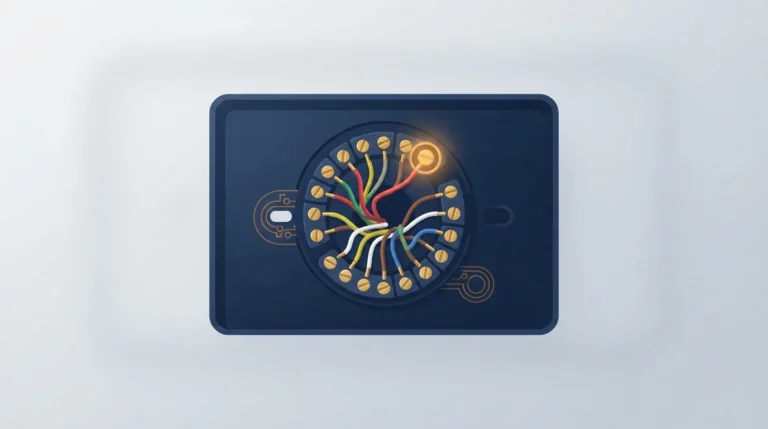
If you already have recessed can lighting and just want to add smart functionality, a retrofit kit — not a full fixture replacement — is almost always the right starting point. These are designed to swap directly into your existing can housing, generally using a standard E26 base adapter, without touching any wiring behind the ceiling. This is the difference between a genuine DIY project completed in minutes per fixture, and an electrician-required job involving actual rewiring — worth confirming before assuming any smart recessed lighting purchase requires professional installation.
Wireless Protocol: The Decision That Actually Affects Daily Use

This is the part most product comparisons gloss over in favor of talking about color options, but it meaningfully affects how reliably your lights actually behave day to day.
WiFi-Direct Connectivity
Connects straight to your home network with no additional hub required — genuinely the simplest setup process, and accessible remotely from anywhere with an internet connection. The trade-off is that WiFi-based smart bulbs consume more of your router’s bandwidth and connection slots than other protocols, which can become a real issue in a home already running many WiFi devices simultaneously.
Bluetooth Direct
Connects directly to your phone without needing your home WiFi network or an internet connection at all — simple or single-room setups, but generally limited by physical range, and less suited to whole-home automation involving many fixtures working together.
Zigbee or Z-Wave (Hub-Based)
Requires a separate smart home hub, adding a step and a cost to setup that WiFi and Bluetooth don’t have — but in exchange, these mesh-network protocols are generally considered more reliable at scale, since each device can relay signal to neighboring devices rather than every fixture needing a direct connection back to your router individually. This becomes a real, practical advantage specifically in larger installations with many lights throughout a home.
Real Brands Worth Knowing, Without Picking a Winner
Rather than crowning one “best” product — which depends entirely on which protocol and ecosystem you’ve already chosen — it’s more useful to know what each major option is actually known for. Philips Hue is widely regarded as the most polished, dependable ecosystem for advanced automations and long-term smart home integration, at a correspondingly higher price. LIFX offers strong energy efficiency and broad smart-home platform support without requiring a separate hub. Govee leans into playful scene customization and dynamic lighting effects, popular specifically for gaming and media rooms. WiZ (used in HALO’s retrofit line) offers app and voice-assistant control without needing a bridge or hub purchase, a genuinely lower-friction entry point for a first smart lighting purchase.
Color Quality: What CRI Actually Means
Color Rendering Index (CRI) measures how accurately a light source reveals the true colors of objects underneath it, on a scale up to 100. For recessed lighting specifically, a CRI of 90 or higher is generally recommended — this matters more than it might sound, since a lower-CRI light can make skin tones, food, and artwork look subtly washed out or off-color even at a perfectly adequate brightness level. This is a genuinely useful spec to check specifically, since it’s easy to overlook in favor of comparing color temperature range or app features alone.
Color Temperature: Matching Light to the Room’s Purpose
Most smart recessed lighting offers selectable color temperature, commonly across a 2700K to 5000K range. Warmer temperatures (2700-3000K) suit relaxing spaces like living rooms and bedrooms, mid-range temperatures (3500-4000K) work well for general everyday areas like kitchens and hallways, and cooler temperatures (5000K) suit task-focused spaces like a home office, garage, or workshop where visual clarity matters more than ambiance.
The Electrical Code Consideration Most Buying Guides Skip
This is genuinely important and rarely mentioned in product-focused content: depending on your local jurisdiction’s electrical code, a physical wall switch may still be legally required even when smart bulbs handle the actual lighting control — this matters directly for new construction or any project requiring inspection sign-off. Don’t assume a smart bulb retrofit alone satisfies code requirements everywhere; checking your local electrical code, or asking an electrician directly, avoids a genuinely frustrating situation where a completed project fails inspection over a switch that was assumed unnecessary.
Safety Ratings Worth Checking Before Buying
IC-rated fixtures are safe for direct contact with insulation in the ceiling cavity — necessary if your installation has insulation touching the can housing, which is common in most residential ceilings. Wet-rated fixtures are required for bathroom, outdoor soffit, or other moisture-exposed installations — a standard indoor-rated fixture isn’t a safe substitute in these locations regardless of how similar it looks. Energy Star-certified options additionally confirm a baseline for energy efficiency and quality testing beyond just the manufacturer’s own marketing claims.
Frequently Asked Questions
Can I install smart recessed lighting myself, or do I need an electrician?
If you’re using a retrofit kit that fits into existing can housings, this is generally a straightforward DIY swap with no rewiring involved. A full canless fixture installation in a new location, or any project needing to pass electrical inspection, is more likely to require a licensed electrician.
Do I need a smart home hub for smart recessed lighting?
Not necessarily — WiFi-direct and Bluetooth options work without one. A hub becomes worthwhile specifically for Zigbee or Z-Wave devices, or for larger installations where the more reliable mesh networking those protocols offer becomes a genuine practical advantage.
What’s the difference between CRI and color temperature?
CRI measures how accurately colors appear under the light (higher is better, 90+ recommended). Color temperature describes whether the light itself looks warm/yellow or cool/blue — they’re independent specs, and a high color temperature doesn’t guarantee high CRI or vice versa.
Is canless recessed lighting better than can lighting?
Neither is universally better — canless suits shallow ceilings and new installations, while retrofitting existing can housings is generally the faster, cheaper path if you already have recessed lighting in place.
Do smart recessed lights still need a physical wall switch?
Possibly, depending on your local electrical code — some jurisdictions require a physical switch regardless of smart bulb functionality, particularly for new construction or inspected work. Check local code or ask an electrician before assuming a smart bulb alone satisfies the requirement.
Choosing smart recessed lighting well isn’t really about finding the single best-reviewed product — it’s about matching can-vs-canless to your actual ceiling, picking a wireless protocol that fits how many fixtures you’re actually running, and checking the two things product marketing tends to leave out entirely: your local code requirements and the room’s real CRI needs, not just its color options.