
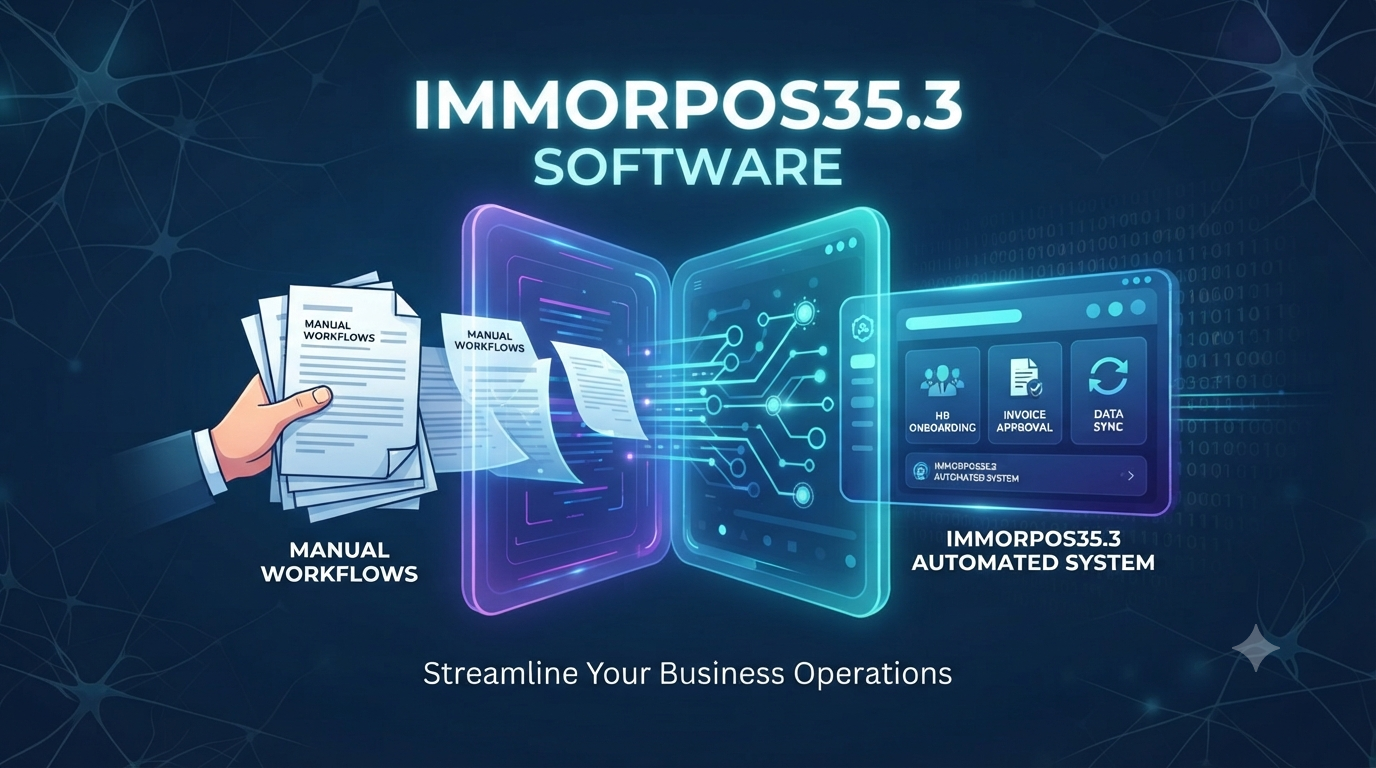
As businesses continue to navigate a fast-paced digital economy, the pressure to eliminate bottlenecks, reduce human error, and streamline day-to-day operations has never been higher. Traditional manual workflows and fragmented spreadsheets often result in delayed approvals, siloed communication, and unnecessary overhead costs. To stay competitive, modern organizations across various industries are increasingly turning toward intelligent enterprise solutions that automate repetitive tasks and unify disparate administrative processes into a single ecosystem.
Among the emerging tools designed to bridge this operational gap, Immorpos35.3 Software has gained significant attention for its versatile approach to process automation and task management. Built to accommodate both small teams and expanding enterprises, the platform offers a centralized dashboard that simplifies complex multi-step workflows. The following comprehensive review explores the platform’s core mechanics, key benefits, implementation strategies, and practical use cases to help you determine if it fits your organizational needs.
What Is Immorpos35.3 Software?
Immorpos35.3 software is a modern business process automation and workflow management platform designed to help organizations streamline daily operations, eliminate repetitive administrative tasks, and generate real-time data insights. Built specifically to bridge the gap between fragmented software systems, the platform provides a centralized cloud environment where teams can map, execute, and monitor complex business procedures without requiring extensive coding knowledge.
At its core, the platform functions as an agile operational hub. Rather than forcing teams to jump between isolated communication tools, document editors, and standalone spreadsheets, Immorpos35.3 unifies core business pipelines under a single interface. Key functions supported by the platform include:
- Automated Task Routing: Automatically transferring completed assignments, documents, or approval requests to the next responsible team member based on pre-set conditions.
- Centralized Data Synchronization: Keeping data aligned across multiple third-party integrations, ensuring that updates made in one department instantly reflect across the entire organization.
- Process Performance Visibility: Supplying management with real-time operational metrics and visual progress reports to identify structural bottlenecks before they impact project timelines.
By streamlining these administrative layers, Immorpos35.3 software primarily caters to growing small-to-medium-sized enterprises (SMEs), operations managers, and IT teams looking to scale efficiency, reduce operating expenses, and minimize human error in routine workflows.
Core Features and Capabilities of Immorpos35.3
The core strength of Immorpos35.3 software lies in its comprehensive toolset, which is engineered to replace rigid, manual administrative procedures with flexible, intelligent digital pipelines. By combining advanced workflow logic with user-friendly design interfaces, the platform empowers operational teams to build, manage, and scale complex business tasks entirely within a unified environment.
1. Visual Drag-and-Drop Workflow Builder
One of the platform’s flagship features is its intuitive visual builder, which eliminates the traditional barrier of custom coding:
- No-Code Pipeline Design: Users can map out multi-departmental processes using simple drag-and-drop nodes, connecting tasks, approvals, and document handoffs on an interactive canvas.
- Pre-Built Templates: The software includes a library of standardized templates for common business operations—such as human resources onboarding, invoice processing, and client intake—allowing teams to deploy functional workflows in minutes.
- Dynamic Branching: Workflows can be configured with conditional splits, meaning tasks can automatically route down different paths based on specific variables like budget limits, project types, or priority levels.
2. Smart Rules and Automated Triggers
To minimize human oversight and eliminate bottlenecks, Immorpos35.3 incorporates robust automation logic:
- Event-Driven Triggers: Systems can be configured to initiate automated actions instantly when specific events occur, such as sending a welcome email when a new client record is added.
- Automated Task Reassignment: If a team member fails to review a document within a designated timeframe, the smart rule engine automatically escalates or reassigns the task to a manager.
- Error-Check Validations: Built-in validation rules screen incoming data fields for missing information or formatting errors before allowing a workflow stage to progress, drastically reducing manual data entry mistakes.
3. Comprehensive Third-Party Integrations and Dashboards
To ensure operational cohesion, Immorpos35.3 connects smoothly with existing enterprise tech stacks:
- Ecosystem Connectivity: The platform integrates natively with popular customer relationship management (CRM) software, cloud storage directories, and communication apps like Slack or Microsoft Teams.
- Centralized Data Sync: Real-time data synchronization ensures that updates made within an automated workflow instantly populate across all connected external apps and internal databases.
- Real-Time Visual Dashboards: Management teams gain instant visibility into active bottlenecks, team productivity rates, and completion timelines through customizable, data-driven visual reports.
Key Benefits of Immorpos35.3 Software for Modern Businesses
Implementing an intelligent operational platform brings tangible structural improvements to organizations seeking to scale efficiently. By replacing fragmented manual routines with automated digital pipelines, Immorpos35.3 software delivers several critical advantages that directly impact productivity, error reduction, and operational overhead.
1. Massive Time Savings Through Routine Automation
Manual data entry, inter-departmental handoffs, and status follow-ups consume countless hours of employee work time each week:
- Eliminating Repetitive Tasks: The platform automates routine administrative duties—such as sending approval notifications, updating spreadsheet logs, and routing documents—freeing staff to focus on high-value strategic initiatives.
- Accelerated Project Lifecycles: Automated triggers ensure tasks move instantly from one stage to the next without waiting for manual intervention, drastically shortening overall project completion times.
2. Minimizing Human Error and Ensuring Accuracy
Manual data processing is inherently prone to oversight, typos, and missed compliance steps:
- Built-In Validation Rules: The software screens incoming information for formatting mistakes or missing data fields before allowing a process to advance, keeping institutional data clean and reliable.
- Standardized Execution: Because workflows follow predefined conditional rules every single time, organizations eliminate inconsistencies caused by varying employee habits or manual shortcuts.
3. Cutting Operational Costs and Unifying Tech Stacks
Maintaining multiple standalone software subscriptions and handling heavy administrative overhead drains company resources:
- Consolidated Workspace: By replacing several fragmented point solutions with a single, unified business process automation platform, organizations reduce software licensing overlap and administrative complexity.
- Optimized Resource Allocation: Real-time visibility into team capacity and workflow bottlenecks allows managers to allocate personnel more effectively, reducing labor waste and maximizing ROI.
Step-by-Step Guide: How to Use Immorpos35.3 Software
Navigating a new business automation platform can feel challenging, but Immorpos35.3 software is designed with an intuitive, user-friendly interface that minimizes the technical learning curve. Because the platform operates seamlessly within modern web browsers and cloud environments, teams can jump straight into designing pipelines without needing heavy local software installations or complex backend configurations.
1. Account Setup and Dashboard Navigation
- Cloud Platform Access: Navigate to the official Immorpos35.3 web portal using any modern browser and log into your corporate cloud account.
- Initial Dashboard Orientation: Upon logging in, you will be greeted by the central command dashboard. Here, you can view active workflows, monitor real-time task statuses, check system alerts, and access quick-start template directories.
2. Designing Custom Workflows Using Built-In Templates
- Selecting a Template or Starting Fresh: Choose from the platform’s extensive library of standardized templates (such as HR onboarding, client intake, or invoice approvals) or open a blank canvas to build a custom process from scratch.
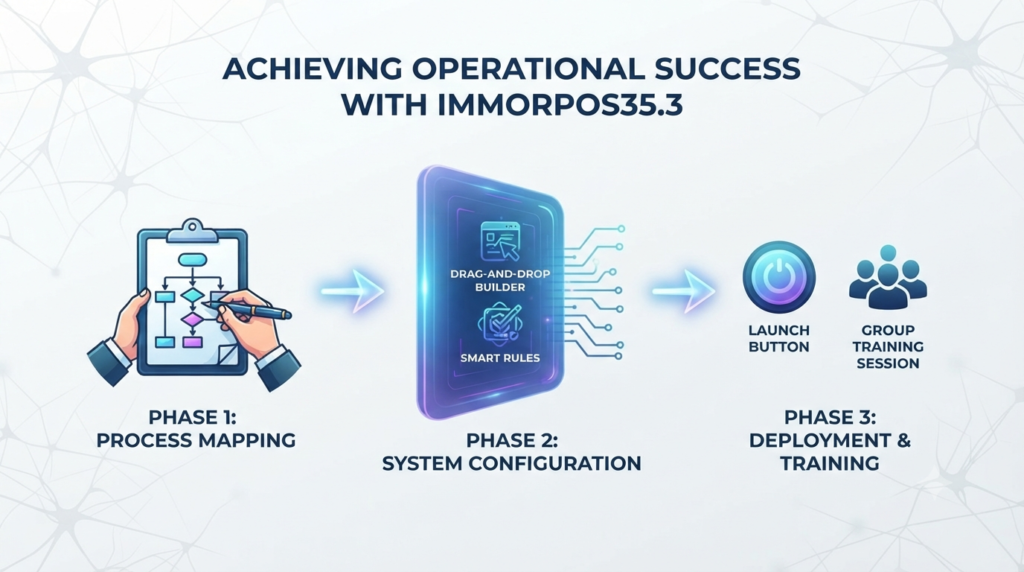
- Using the Visual Drag-and-Drop Builder: Map out your multi-departmental procedures by dragging operational nodes onto the interactive canvas. Connect task blocks, review stages, and document handoffs visually to establish a clear structural path.
3. Setting Automated Triggers and Linking External Tools
- Configuring Smart Rules: Define event-driven triggers and conditional branching (e.g., automatically routing a budget request to a supervisor if the cost exceeds a specific threshold).
- Integrating External Tech Stacks: Link your workflow to third-party applications—such as popular CRM platforms, cloud storage directories, and communication apps like Slack—to ensure seamless data synchronization across your entire organization. Save your configurations, run a test simulation, and deploy the workflow live to begin automating your team’s daily operations.
Managing Upgrades and Avoiding Implementation Failures
Implementing a new business process automation platform requires careful planning and strategic execution. Even the most powerful software can underperform if deployed without proper alignment, training, or structural preparation. Understanding common pitfalls and managing system updates proactively ensures long-term operational success.
1. Common Pitfalls That Cause Implementation Failures
- Skipping Initial Process Mapping: Attempting to automate a broken or poorly defined manual workflow simply accelerates inefficiency. Organizations must audit and streamline their standard operating procedures before encoding them into the software.
- Lack of User Adoption and Training: Resistance to change from team members is a leading cause of software failure. Without thorough onboarding and comprehensive training sessions, employees may bypass the new platform and revert to fragmented legacy habits.
- Misconfiguring Smart Rules and Triggers: Setting up incorrect conditional logic or overly complex automation triggers can result in routing loops, missed notifications, or duplicated tasks, which disrupts daily productivity instead of improving it.
2. The Importance of Regular System Updates and Upgrades
- Maintaining Enterprise Security Standards: Regularly updating Immorpos35.3 software ensures that your organization is protected against emerging digital vulnerabilities, safeguarding sensitive company and client data.
- Seamless Third-Party Synchronization: As external tools (such as CRMs, communication channels, and cloud storage apps) evolve, software updates keep your platform’s API integrations running smoothly without data corruption or sync delays.
- Access to Advanced Capabilities: Upgrading your system gives your team access to the latest platform features, enhanced performance speeds, and advanced AI-driven workflow optimization suggestions.
Frequently Asked Questions (FAQs)
What is Immorpos35.3 software?
Immorpos35.3 software is a modern business process automation and workflow management platform designed to help small and medium-sized organizations streamline daily operations, automate repetitive tasks, and generate real-time data insights.
What are the core benefits of Immorpos35.3 software?
The primary benefits of Immorpos35.3 software include saving hours of manual work, reducing human errors through automation, cutting operational costs, improving team collaboration, and leveraging data-driven dashboards to make smarter business decisions.
How do you use Immorpos35.3 software?
To use Immorpos35.3 software, users create a cloud account, build custom processes using the visual drag-and-drop workflow builder, set automated triggers and conditions (such as smart rules for invoices or approvals), and connect third-party business tools like CRMs and spreadsheets.
Why is updating and upgrading Immorpos35.3 software important?
Regularly updating and upgrading Immorpos35.3 software is important to maintain robust data security standards, access new AI-driven workflow suggestions, prevent technical bottlenecks, and ensure seamless synchronization with integrated third-party platforms.
Why do Immorpos35.3 software implementations fail?
Immorpos35.3 software implementations can fail due to a lack of clear process mapping before automation, poor team adoption or training, failing to define smart trigger rules properly, or attempting to automate broken manual workflows without initial optimization.