
Type “seekde” into Google and you will be told, confidently and in great detail, that it is a next-generation AI search platform — one that reads your intent, maps how ideas connect, and learns how you think. Dozens of websites describe it in nearly identical words. There is just one problem: when we went looking for this platform on October 20, 2026, we could not find it. No search box. No app. No sign-up page. No company. What we found instead is more interesting than the pitch — and more useful to know before you trust anything written about it.
The short answer: “Seekde” is three different things sharing one search box. There is Seekde, a name attached to a website (seekde.org) that claims to be an AI knowledge-discovery platform but operates as a content blog showing clear signs of link farming. There is Seekda, a real Austrian hotel-software company founded in 2007 that has nothing to do with AI search. And there is SEEK, the Australian jobs giant, which appears purely because the names look alike. Most of what ranks for “seekde” never separates the three. This article does — claim by claim, with the receipts.
What Seekde Claims to Be
Start with the pitch, because it is a good one. On its own homepage, seekde.org introduces “Seekde: A Smarter Digital Ecosystem for Learning and Discovery.” The site says searching today leaves people “jumping between websites, scanning through endless articles, or struggling to separate facts from clutter,” and positions Seekde as the fix: a platform that does not just find information but helps you understand it.
The claimed formula has three ingredients, repeated across the site:
- Advanced search intelligence — Seekde “understands context,” reading what you mean rather than matching the words you typed.
- Knowledge mapping — instead of isolated answers, it shows how ideas, facts, and insights connect to one another.
- Adaptive learning — the more you use it, the better it supposedly gets at matching your style and goals.
Around those pillars, the site layers the expected promises: a companion for students and teachers, a research partner for professionals, a filter for misinformation that “prioritizes reliable sources.” If it all sounds like the feature list of an AI answer engine in the Perplexity mould, that is because it is written to. Nothing in the pitch is absurd. AI search tools with intent reading and citations genuinely exist. The question is never whether the pitch is plausible — it is whether there is a product behind it. So we went to look for one.
What We Actually Found on seekde.org
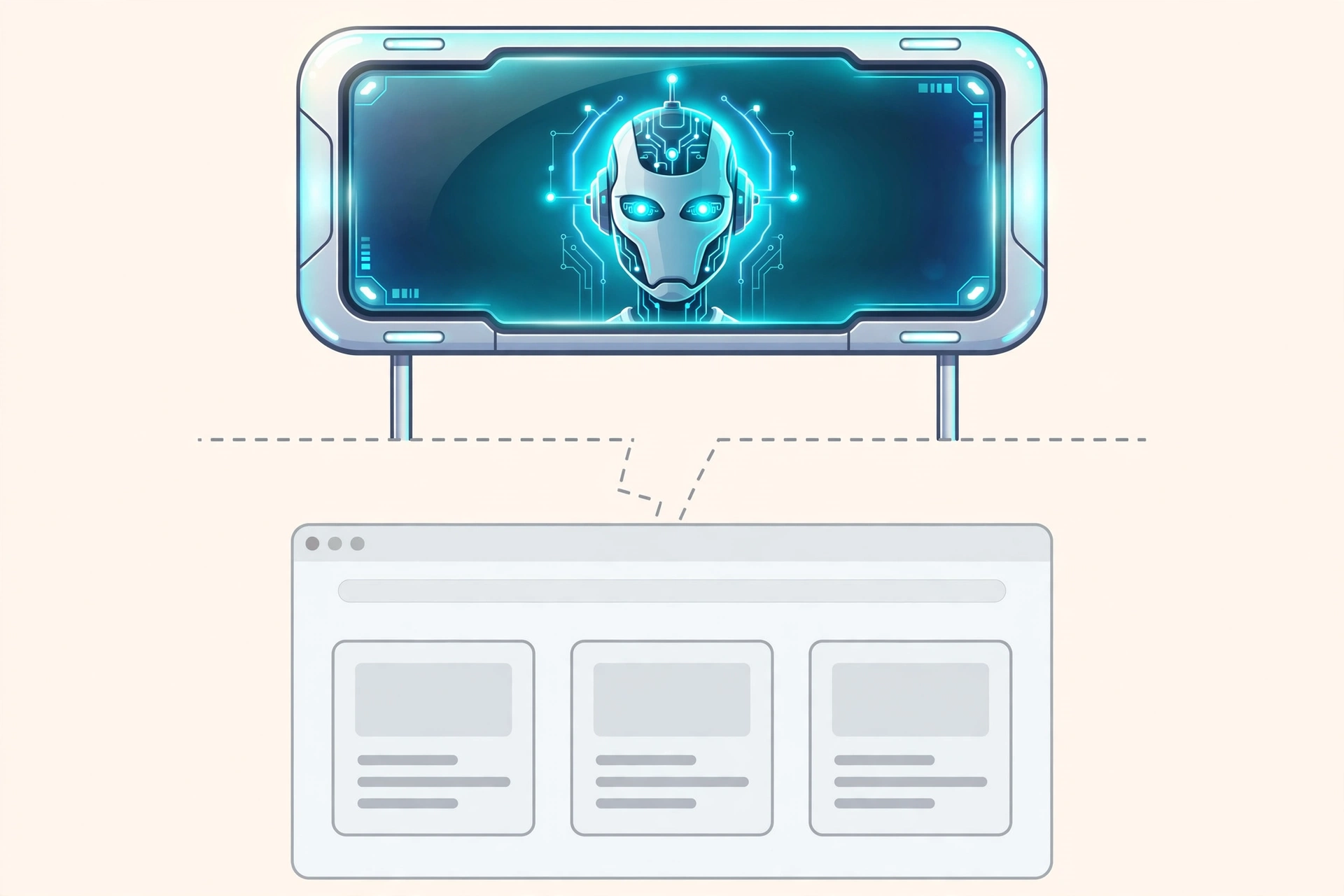
The first thing to understand about seekde.org is what it is built on: WordPress, the blogging software. The homepage is a blog’s homepage. Below the “digital ecosystem” manifesto sits a feed of articles — and this is where the story falls apart, because the articles have nothing to do with search, AI, or learning. When we visited, the site was promoting guides to jewellery types and their fashion evolution, how to prevent osteoporosis, emotional well-being and stress management, and why brands hire full-service marketing agencies. A knowledge-discovery platform does not usually double as a general-interest magazine covering bone health.
The second finding is the absence of everything a platform needs. There is no search interface anywhere on the site — nothing to type a question into. There is no app, and no link to one. There is no sign-up, no login, no pricing page, no documentation, and no company information: no team, no address, no legal entity, nothing that would let you verify a business exists behind the claims. Every feature described on the homepage — the intent reading, the knowledge maps, the adaptive learning — is described in prose only. None of it can be opened, tried, or tested.
The third finding is the one that settles what kind of site this is. Embedded in the homepage are whole sections in other languages promoting gambling services: a German section on online entertainment linking to a Stake-branded casino site, a section praising an online slot parlour’s login page, a Spanish section about a betting operator called Forbet, and a Polish section analysing a bookmaker called Fortuna. There is also a stray outbound link, mid-article about education, to a “remote listening app” community. Unrelated gambling promotions in four languages, injected into a site about learning, are the classic fingerprint of a compromised website being used to sell links — or of a site built for exactly that purpose.
Put the three findings together and the honest description of seekde.org is not “AI platform.” It is a content site using an AI-platform story as its front page, monetised the way content farms are monetised. That does not prove no one ever intended to build the product. It does mean that, as of October 2026, there is no Seekde product a reader can use — and every glowing description of “using Seekde” you will find online was written without one.

Why Every Site Describes Seekde the Same Way
If the product cannot be found, why do so many websites describe it in such confident, matching detail? Because they are copying each other, and the copying is easy to catch once you look.
Search the term and a pattern emerges: site after site — SoftCircles, Moderynly, KimkorTech, TechnoFlavours, Study4Sure, CoeusTech, Voguee, and more — publishes a “What is Seekde” explainer built on the same three pillars, in the same order, with the same contrasts against Google and the same lists of who should use it. None of them shows a screenshot of the product. None describes opening an account, because there is no account to open. None links to a working service. What they describe, in the end, is the seekde.org homepage’s own marketing copy, rewritten.
Two exhibits show how mechanical this gets. The polished agency version, SoftCircles’ “Seekde Explained,” is written entirely in the present tense, with invented interactions (“ask for the best CRM software for a solo agency… and get tradeoffs, next steps, and sources”) and a section teaching readers to “use Seekde like a pro” — timing tricks, prompt templates, staged workflows. Pro tips for a tool the reader cannot access anywhere. The budget version is even more revealing: the page ranking for “what is seekde” on BingeSaga, opened for this audit, was not about Seekde at all. Its body was a templated article about a different obscure name — “Nerwey,” supposedly an AI assistant — stitched with links to other farm guides. The title farms the keyword; the content is whatever the template was fed that week.
Even the strongest competitor makes the tell. The top-ranking explainer from AlphaCraftAI strikes a cautious tone and admits Seekde is “lightly tested” — then, in its pricing section, sends readers to “the official Seekde website” at seekda.com: the Austrian hotel software company, a different business entirely. Its “How Seekde Works” section also appears twice, word for word. These are not the fingerprints of hands-on reviewing. They are the fingerprints of an echo chamber: one source’s claims, respun until repetition looks like consensus.
We have audited this pattern before — our breakdown of what Adstotally.com actually is found the same machinery pointed at a different name. The lesson generalises: when ten articles agree perfectly about an obscure product and none can show it working, you are not reading ten reviews. You are reading one claim, ten times.

Seekde vs Seekda vs SEEK: Three Different Things
| Name | What it actually is | Is there a real product? | Where it lives |
|---|---|---|---|
| Seekde | A website claiming to be an AI knowledge-discovery platform | No product found — no app, search, or sign-up (checked Oct 2026) | seekde.org |
| Seekda | Austrian hotel-management software company | Yes — operating since 2007, paying hotel customers | seekda.com |
| SEEK | Australian jobs marketplace | Yes — one of the largest job sites in AU/NZ | seek.com |
Seekda: the real company in this story
Seekda is what a real product looks like, and the contrast is instructive. The company was founded in Austria in 2007 — its own site and its HotelTechReport profile agree on this — and it sells hotel-management software: an all-in-one property management system, a channel manager, the KUBE booking engine, metasearch distribution, and Seekda Pay for payments. HotelTechReport lists the company at 104 employees. GetApp’s profile credits its channel manager with connections to more than 300 online booking sites, including Booking.com and Expedia. Seekda’s own site claims it is the preferred booking engine for 42% of Austrian hotels, citing the Austrian Hoteliers Association’s ÖHV Technology Report, and publishes named customer hotels — the VAYA Group, Stanglwirt, Interalpen-Hotel Tyrol — with testimonials a reader can check. You may never need hotel software. But note the anatomy: founding date, headcount, named products, named customers, a phone number in Vienna. Real companies leave these fingerprints everywhere. Seekde leaves none.
SEEK: the jobs giant that shares the name
The third result-set regular needs the least explanation. SEEK (seek.com) is one of the largest employment marketplaces in Australia and New Zealand. It appears for “seekde” for the dullest of reasons — the names are one letter apart, and search engines hedge. If you arrived here looking for a job in Melbourne, you want seek.com, and nothing else in this article applies to you.

Is There a Seekde App or Product You Can Actually Use?
Short answer: no — not as of October 20, 2026, and we looked the way a reader would. There is no Seekde app to download, no web service to log into, no free tier, no pricing page, and no trial. Every explainer that discusses Seekde’s pricing does so in the subjunctive — “some coverage suggests a free plan with premium tiers” is as concrete as it gets, including in the top competitor’s article, which then links you to the hotel company’s website by mistake. A product with pricing has a pricing page. Seekde has descriptions of pricing, written by people who have never seen it.
So if you came to this keyword with a practical goal, route yourself by which of the three names you actually meant.

Hotel software — a booking engine or channel manager for a property — is Seekda, at seekda.com. Jobs in Australia or New Zealand are SEEK, at seek.com. And if what you wanted was the idea in Seekde’s pitch — an AI tool that answers questions with sources instead of ten blue links — that category is real; it is just made by other companies, with products you can open, test, and check today. What does not exist, anywhere we could find, is a working service called Seekde that you can use.
One practical warning follows from this. Names with search volume and no official product attract imitators. If a site offers you a “Seekde login,” a “Seekde app download,” or a Seekde installer file, treat it the way you would treat a download attached to any unverifiable name: there is no official source it could have come from, so do not run it.
Should You Trust Seekde With Your Data?
Apply the test you would apply to any new online tool — and in this case you do not get past the first questions. Who operates it? The site does not say. Where is the privacy policy for the platform the explainers praise as “privacy-focused”? There is no platform to have one. What happens to what you type? There is nowhere to type.
The deeper risk is not the site itself; it is the pattern around it. A homepage carrying injected gambling sections in four languages is either compromised or built to sell link placements, and either way it is not a place to enter personal information, create an account, or take health and study advice from its article feed. The explainers’ safety language — “check the official website,” “read the terms” — sounds prudent and means nothing when the official website is the problem.
Our verdict is narrow and evidence-based: as a name, Seekde is safe to read about. As a website, seekde.org shows the standard warning signs of a content farm and should be treated as untrusted until it publishes verifiable company details and an actual product. And as a “platform,” it should be treated as something that does not currently exist — no matter how many articles describe it in the present tense.
FAQs
Is Seekde a search engine like Google?
No. Seekde is described by its own website as a knowledge-discovery and learning platform rather than a search engine — but unlike Google, there is no working Seekde service you can open and search with. As of October 2026, the name refers to a website presenting that concept, not to a functioning search product.
Is Seekde the same as Seekda?
No, and the confusion is understandable — the names differ by one letter and at least one published explainer links the two by mistake. Seekda (seekda.com) is an Austrian hotel-software company founded in 2007, selling booking engines and channel management to hotels. Seekde (seekde.org) is the unrelated site claiming to be an AI discovery platform. The two have no connection we could find.
Is there a Seekde app?
No Seekde app exists in any app store we could check, and seekde.org itself links to none. The name returns articles about a platform, not the platform. Be wary of any third-party site offering a Seekde download — there is no official product for it to distribute.
Is Seekde free to use?
There is nothing to use, free or paid. No pricing page, plan, or checkout exists for Seekde. Articles mentioning a free tier with premium upgrades are repeating an unverified claim; the only “Seekde” pricing on the web belongs, by a competitor’s linking error, to Seekda the hotel company.
Who owns Seekde?
No owner is publicly identified on seekde.org — no company name, founder, address, or legal details appear on the site. That absence is itself a finding: every real business in this story (Seekda, SEEK) publishes exactly that information, and its absence is one reason the site should be treated cautiously.
Why does every website describe Seekde in the same words?
Because they are describing each other. The explainers repeat seekde.org’s own three claims — intent-based search, knowledge mapping, adaptive learning — with no independent evidence: no screenshots, no accounts, no tests. One ranking page’s body is not even about Seekde, but a templated article about a different name. Identical descriptions across many sites signal an echo, not verification.
The Bottom Line
Seekde is a pitch without a product: a website that describes an appealing AI discovery platform in detail while offering nothing a visitor can open, try, or buy — and that meanwhile hosts the kind of injected gambling promotions and unrelated article filler that mark a content farm. The dozens of confident explainers around it are not evidence it exists; they are evidence that repeating a claim is cheaper than checking one, which is how at least one of them ended up sending readers to a hotel-software company in Austria for “official” pricing. If you were looking for that company, Seekda is real, established, and easy to verify. If you were looking for a job, SEEK is waiting. And if you were looking for Seekde itself, the most accurate answer the internet currently supports is also the shortest: there is no such product — only a story about one, told many times.