Modern manufacturing and advanced robotics are undergoing a profound transformation driven by the demand for unprecedented precision, speed, and operational flexibility. Traditional mechanical drives and rigid automation setups are increasingly being replaced by dynamic systems capable of self-optimization. By fusing cutting-edge software with high-performance hardware, modern industries can achieve levels of productivity and adaptability that were previously considered unattainable.
At the core of this industrial evolution lies the integration of advanced computing and sensory feedback directly into machinery. These next-generation setups process complex data streams in real time, allowing mechanical components to react instantly to changing environmental variables. Understanding how these smart architectures operate is essential for engineers, manufacturers, and technologists looking to harness the full potential of Industry 4.0 and autonomous operations.
What Are Intelligent Motion Systems and How Do They Work?
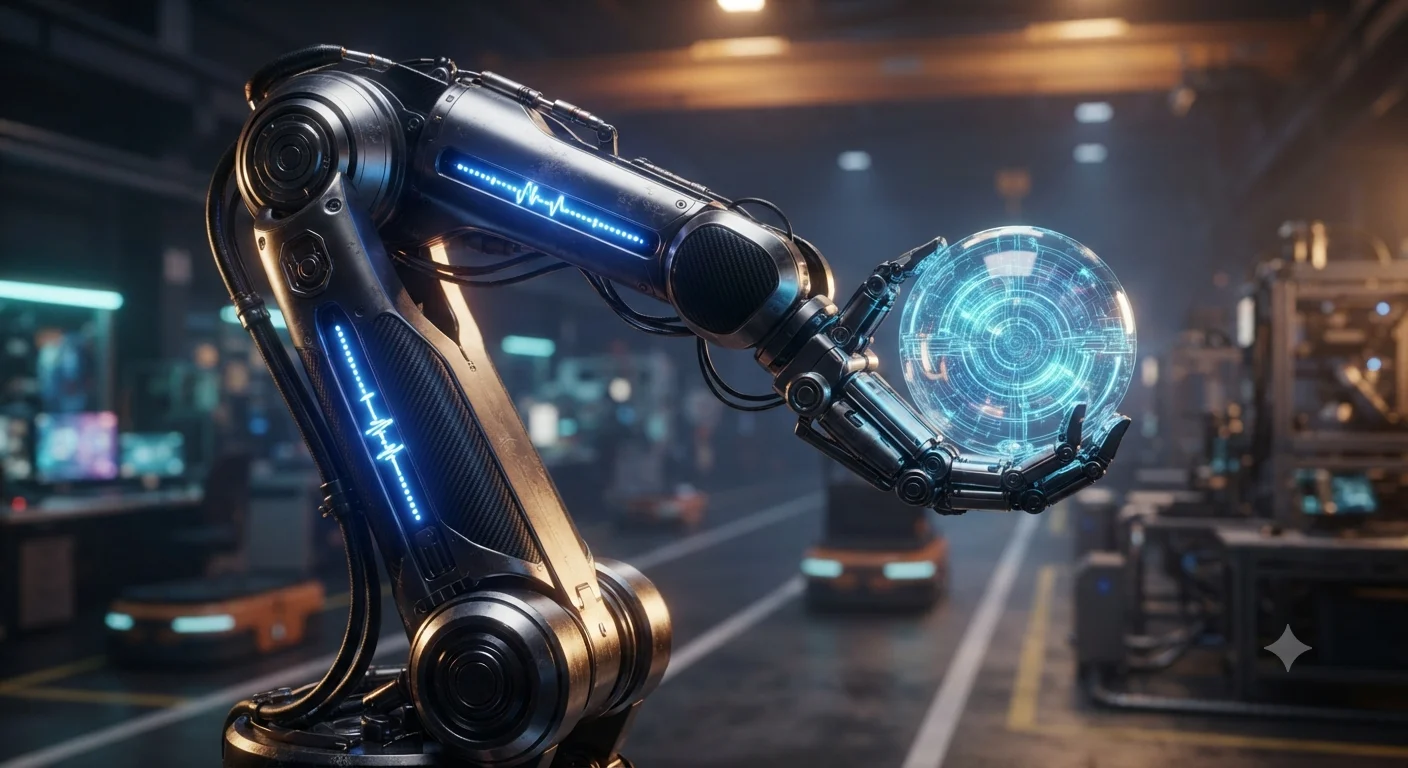
Intelligent motion systems represent a major leap forward from traditional, pre-programmed mechanical drives. By integrating smart motion control technology with advanced microprocessors, digital feedback loops, and software-defined architectures, these systems can dynamically regulate velocity, acceleration, positioning, and torque in real time. Unlike legacy setups that execute static, repetitive commands regardless of external conditions, intelligent systems continuously analyze their operating environment and self-correct to maintain optimal performance.
Core Architectural Components
The functionality of an intelligent motion system relies on a seamless network of hardware and software working in unison:
- Smart Controllers: The central processing unit that interprets high-level instructions, calculates optimal motion trajectories, and dispatches precise commands.
- Adaptive Servo Drives and Actuators: High-response drives that translate digital control signals into exact physical movement, automatically adjusting power delivery based on immediate load requirements.
- Embedded Sensors: High-frequency encoders, thermal sensors, and vibration monitors that capture continuous operational telemetry.
The Mechanics of Real-Time Feedback
At the heart of smart motion control is the closed-loop feedback mechanism. Embedded sensors constantly monitor the physical output—such as the exact position of a robotic arm or the rotational speed of a spindle—and feed that data back to the controller thousands of times per second. If friction, temperature changes, or unexpected mechanical resistance alters the load, the controller instantly recalculates and adjusts the actuator output. This dynamic responsiveness eliminates drift, ensures micron-level precision, and allows automated machinery to operate safely and efficiently under fluctuating industrial conditions.
The Role of IoT, Edge Computing, and AI in Modern Motion Control
The true intelligence behind contemporary motion systems stems from the convergence of the Internet of Things (IoT), edge computing, and artificial intelligence. Together, these technologies transform passive mechanical hardware into autonomous, self-optimizing nodes capable of handling complex operational demands without relying entirely on centralized cloud servers.
IoT Connectivity and Real-Time Telemetry
IoT-enabled motion systems bridge the gap between physical machinery and digital oversight. By outfitting servo drives, motors, and actuators with communication modules, facilities can stream continuous operational telemetry across the entire factory floor. Engineers and supervisors gain real-time visibility into metrics such as power consumption, thermal load, and cycle efficiency from a centralized dashboard. This constant data flow eliminates blind spots and forms the empirical foundation for advanced operational analytics.
Edge Computing: Eliminating Latency on the Factory Floor
In high-speed industrial environments, waiting for data to travel to a remote cloud server and back introduces unacceptable latency. Edge computing solves this bottleneck by placing computational power directly on the drive or controller. Complex algorithms, trajectory calculations, and safety protocols are processed locally at the machine edge. This localized processing enables microsecond-level response times, ensuring that high-speed robotics and automated guided vehicles can react instantly to sudden path obstructions or mechanical anomalies.
Machine Learning and Adaptive Motion Optimization
Integrating artificial intelligence into motion control shifts machinery from static execution to dynamic learning. Machine learning models analyze historical telemetry and live sensor data to predict how mechanical wear, changing payloads, or ambient temperature fluctuations will impact performance. Instead of requiring manual tuning by human technicians, AI-driven motion systems autonomously optimize acceleration profiles, dampen vibrational resonance, and adjust torque delivery in real time, maximizing both mechanical longevity and operational throughput.
Predictive Maintenance and Reliability in Industrial Environments
In heavy manufacturing, aerospace assembly, and high-throughput logistics, unexpected equipment failure is one of the most costly disruptions a facility can face. Traditional maintenance strategies—relying either on reactive repairs after a breakdown occurs or rigid calendar-based schedules—often result in premature parts replacement or catastrophic downtime. Intelligent motion systems fundamentally redefine maintenance protocols by shifting operations from reactive troubleshooting to proactive predictive analytics.
Transitioning to Data-Driven Proactive Analytics
Smart motion setups continuously generate thousands of operational data points per second. By leveraging predictive maintenance in motion control, facility managers no longer have to guess when a component might fail. Instead, sophisticated diagnostic algorithms monitor the health of motors, gears, bearings, and servo drives in real time, establishing a baseline of normal operating behavior and alerting engineers to subtle deviations long before they manifest as physical breakdowns.
Key Indicators Monitored by Smart Sensors
Embedded sensors within intelligent drives track several critical parameters simultaneously to evaluate mechanical integrity:
- Vibration Analysis: Detecting abnormal harmonic frequencies or micro-vibrations that signal bearing wear, shaft misalignment, or gear mesh issues.
- Thermal Fluctuations: Monitoring abnormal temperature spikes in motor windings or drive enclosures caused by excessive friction or electrical resistance.
- Torque Anomalies: Tracking sudden or gradual increases in torque required to execute a standard movement, indicating binding, lubrication failure, or mechanical degradation.
Minimizing Downtime and Maximizing Lifespan
Proactive fault detection transforms plant economics. By identifying micro-fractures, electrical anomalies, or mechanical wear stages weeks before failure occurs, maintenance teams can schedule targeted interventions during planned downtime windows. This prevents secondary damage to surrounding machinery, drastically cuts unplanned repair costs, optimizes spare parts inventory, and significantly extends the operational lifespan of high-value industrial equipment.
Key Industrial Applications: From Manufacturing to Autonomous Robotics
The versatility and high precision of intelligent motion systems have made them indispensable across a wide variety of modern industrial sectors. By combining adaptive control, high-speed feedback, and robust data processing, these technologies empower machinery to execute complex, high-stakes tasks with minimal human intervention.
Advanced Manufacturing and CNC Machining
In precision manufacturing, tolerances are often measured in microns. Advanced CNC (Computer Numerical Control) machining centers and automated fabrication lines rely on smart motion control to maintain absolute accuracy at high operational speeds. Intelligent servo drives dynamically compensate for thermal expansion, tool wear, and variable material densities in real time. This ensures flawless surface finishes, eliminates structural defects, and drastically reduces material waste during high-volume production runs.
Logistics, Warehousing, and Autonomous Mobile Robots (AMRs)
Modern supply chains depend heavily on rapid fulfillment and automated material handling. Autonomous Mobile Robots (AMRs), automated guided vehicles (AGVs), and high-speed sorting systems utilize intelligent motion setups to navigate dynamic warehouse environments safely. Smart actuators and onboard controllers allow AMRs to calculate optimal trajectories, smoothly adjust acceleration around corners, and instantly brake or alter paths when encountering unexpected obstacles, ensuring seamless coordination between human workers and robotic fleets.
Medical and Aerospace Robotics
In industries where failure is simply not an option, intelligent motion systems provide the reliability and safety margins required for critical missions. Surgical robotics rely on ultra-precise micro-actuators with sub-millimeter accuracy to assist surgeons in delicate procedures. Similarly, aerospace manufacturing and flight simulation equipment utilize closed-loop, redundant motion controls to withstand extreme operational stresses while maintaining absolute fidelity and safety.
Overcoming Implementation Challenges and Security Risks
While the benefits of intelligent motion systems are transformative, integrating these advanced architectures into existing industrial environments is not without hurdles. Transitioning from legacy machinery to smart, interconnected automation requires careful navigation of technical, organizational, and cybersecurity challenges.
Bridging the OT/IT Convergence Gap
One of the primary hurdles in modern industrial upgrades is bridging the divide between Operational Technology (OT)—the physical machinery, sensors, and actuators on the factory floor—and Information Technology (IT)—the enterprise networks, cloud dashboards, and data analytics tools. Legacy industrial equipment often uses proprietary communication protocols that do not easily “talk” to modern, IP-based IoT infrastructure. Successful implementation requires deploying secure industrial gateways, adopting standardized communication protocols (such as OPC UA or TSN), and modernizing control panels to ensure seamless data flow across both domains.
Cybersecurity Considerations in Connected Factory Floors
Historically, industrial control systems operated in isolated air-gapped environments, making them largely immune to external cyber threats. However, the rise of IoT-enabled motion systems and cloud-connected telemetry opens new attack surfaces. A compromised smart drive or actuator could theoretically be manipulated to disrupt physical production or compromise plant safety. Mitigating these risks requires robust end-to-end encryption, multi-factor authentication for administrative access, network segmentation, and continuous threat monitoring designed specifically for industrial control systems (ICS).
Managing Complexity and Workforce Training
Intelligent motion systems introduce a high degree of software-defined complexity. Configuring adaptive algorithms, tuning machine learning parameters, and troubleshooting edge-computing nodes require a skill set that traditional maintenance crews may lack. Organizations must invest heavily in upskilling their engineering and maintenance workforce, transitioning technicians from reactive mechanical repair to proactive data analysis, system configuration, and software management.
Frequently Asked Questions (FAQs)
What is the difference between traditional motion control and intelligent motion systems?
Traditional motion control relies on rigid, pre-programmed instructions and open-loop or basic closed-loop feedback loops to execute repetitive mechanical tasks. It operates on static parameters regardless of external environmental shifts. In contrast, intelligent motion systems incorporate smart controllers, edge computing, and real-time sensor telemetry to dynamically adapt performance. They can self-optimize, predict mechanical wear, adjust torque and velocity based on live load changes, and communicate seamlessly across industrial IoT networks.
How do intelligent motion systems improve energy efficiency?
Smart motion systems optimize energy consumption through precise power delivery and dynamic load regulation. Traditional motors often run at constant speeds or draw excess current to handle peak loads inefficiently. Intelligent servo drives and adaptive actuators calculate the exact energy required for every micro-movement, eliminating power waste during acceleration and deceleration phases. Furthermore, advanced regenerative braking systems capture and reuse kinetic energy generated during deceleration, significantly lowering overall power consumption across the facility.
Can legacy industrial equipment be retrofitted with smart motion technology?
Yes, manufacturing plants do not always need to replace their entire machinery fleet to benefit from modern automation. Many legacy mechanical systems can be successfully retrofitted by installing smart sensors, external encoders, IoT-enabled gateways, and modern adaptive servo drives. This retrofitting approach allows older hardware to transmit telemetry data, integrate with edge computing nodes, and participate in predictive maintenance programs without the extreme capital expenditure of buying brand-new production lines.