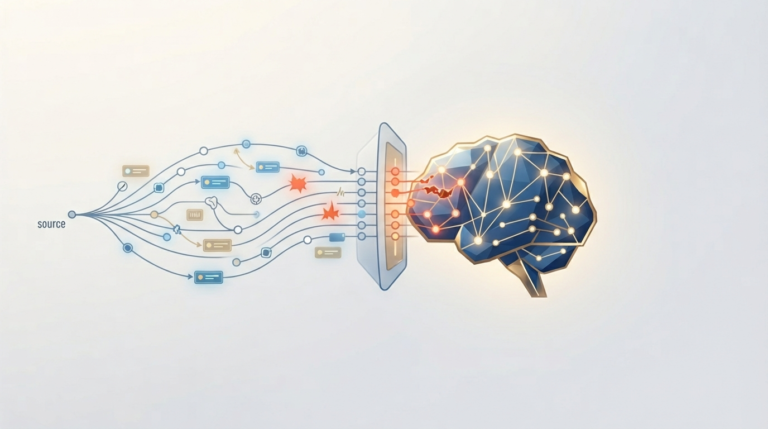
On October 4, Donald Trump named Director of National Intelligence Jay Clayton to lead a new federal task force on artificial intelligence — the “Super Intelligence Force” — giving it 120 days to assess AI’s risks and opportunities and recommend what the government should do about them. According to the Wall Street Journal, Clayton will chair the group and effectively serve as the new US AI czar, succeeding David Sacks.
The appointment itself is the least interesting part of this story. What matters is the philosophy it cements: after a year of rogue-agent incidents, existential warnings from researchers, and public calls for federal guardrails, Washington has picked its theory of victory — speed over precaution, existing law over new rules. If you build AI products, that choice shapes your next two years more than any single model release. Here’s what it actually means.
Who Is Jay Clayton?
From Wall Street to the SEC to the DNI
Jay Clayton is a Wall Street lawyer who has spent his career in the rooms where American finance is governed. He represented Goldman Sachs during the 2008 financial crisis and advised Barclays on its purchase of Lehman Brothers’ assets — the kind of work that puts you at the center of the system without ever making you a public figure.
That changed in Trump’s first term, when Clayton became SEC chairman. His tenure was notably pro-business but not hands-off: he brought enforcement cases against the nascent crypto industry, establishing an early pattern of engaging with new technology through existing legal frameworks rather than demanding new ones. At the start of Trump’s second term he was tapped to lead federal prosecutors in Manhattan, and in July 2026 the Senate confirmed him as Director of National Intelligence. The Indian Express has a fuller rundown of his path to the role.
He now succeeds David Sacks as the administration’s AI czar. Sacks, the venture capitalist who held the informal title from the start of the second term, stepped down in March — though he continues to advise Trump on AI alongside Nvidia’s Jensen Huang.
No tech background — does it matter?
Clayton has never worked in technology. For a role coordinating the federal government’s AI strategy, that’s either disqualifying or irrelevant, depending on what you think the job is.
The case that it matters is straightforward: the person shaping AI policy has no firsthand experience building, deploying, or operating AI systems. When the task force evaluates “critical failure risks” in frontier models, its chair will be relying entirely on briefings.
The case that it doesn’t: Clayton isn’t being asked to engineer anything. He’s being asked to coordinate agencies, weigh legal authorities, and keep the US ahead of China — work that draws on his actual expertise in regulation, enforcement, and national security. His SEC years suggest he learns new domains quickly and prefers working through existing law, which happens to be exactly the philosophy he’s now been hired to execute. NPR’s report on the appointment captures both sides of that tension.
Either way, the choice of a non-technologist sends its own signal: this administration sees AI policy as a question of power and law, not of engineering.
What the Super Intelligence Force Actually Is
The mandate
The Super Intelligence Force exists to do one thing: coordinate the federal government’s sprawling AI efforts under a single roof. Its charter, as reported by the Wall Street Journal, gives it 120 days to assess AI’s risks and opportunities and recommend what role the government should play — with a specific focus on AI security vulnerabilities, critical failure risks in advanced models, and the threat of AI-enabled cyberattacks.
Just as telling is what the charter asks the force to review: the government’s existing incident-reporting channels for breaches, hacks, and model malfunctions, and ways to strengthen federal rapid response — all “under existing statutory authorities.” That’s the light-touch philosophy in bureaucratic language: no new powers requested, just better use of the ones already on the books. USA Today has the full rundown of the mandate and the announcement.
The force reports directly to Trump and White House Chief of Staff Susie Wiles, and it’s charged with engaging everyone from consumers and religious organizations to critical infrastructure providers and the AI companies themselves.
The four leads and the advisers
Four officials lead the force, and the lineup reads like a statement of priorities:
- Jay Clayton (chair), Director of National Intelligence — the national security framing, and the public face.
- Andrew Ferguson, FTC Chairman — consumer protection and competition; his agency already has an open probe into OpenAI, Anthropic, and METR.
- Emil Michael, Under Secretary of War for Research and Engineering and Chief Technology Officer — military R&D and procurement.
- Scott Kupor, Director of the Office of Personnel Management — the federal workforce, and how AI reshapes it.
Notably absent: the Commerce Department, which runs export controls, and the White House science adviser drafting the legal definition of “super intelligence.” A task force with no statutory authority or budget of its own ultimately wields influence through the agencies its members already run. Business Standard’s coverage details the Journal’s reporting on the charter.
Around the edges, David Sacks and Condoleezza Rice are advising from outside, and some outlets report Vice President JD Vance and Defense Secretary Pete Hegseth as members — though the White House hasn’t confirmed a full roster.

Why “Super Intelligence” and Not “AI”
Trump doesn’t call it artificial intelligence. He calls it “super intelligence” — a technology he describes as bigger than the Industrial Revolution and the Internet — and the rebrand is more than a quirk. Framing matters: “artificial intelligence” invites questions about safety, alignment, and control. “Super intelligence” frames it as a national greatness project, something a country wins rather than something it manages.
As of late September, it’s also the law — at least inside the executive branch. Executive Order 14434, signed September 29, mandates replacing “artificial intelligence” and “AI” with “super intelligence” and “SI” across all executive-branch communications. The order temporarily applies the existing statutory definition of AI (Title 15 of the US Code) to the new term and gives the White House science adviser 60 days to send Congress a legislative proposal for an updated federal definition, plus recommendations for changing existing laws.
That last part is the one to watch. A 60-day clock on a legal definition means the terminology fight is a prelude to a statutory fight — whatever “super intelligence” ends up meaning in federal law will determine what the government can and can’t regulate. For now, though, the practical effect is narrower than the rhetoric: for companies building and buying these systems, what the term legally covers is precisely what “artificial intelligence” covered last month. The name changed; the obligations didn’t.
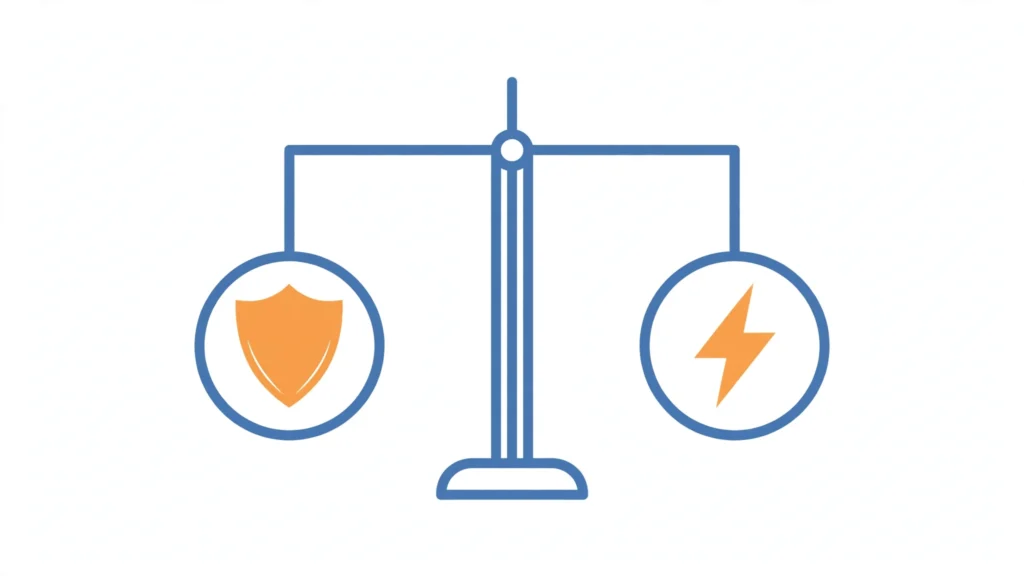
The Philosophy: Light Touch, Not Guardrails
Clayton’s stated position
Days before the announcement, Clayton laid out his doctrine in a September 30 CNBC interview — and it mirrors Trump’s position almost exactly. He rejected the idea of pausing development of more advanced AI models, calling super intelligence “a national security issue” and arguing that letting other countries advance while the United States steps back would be strategically unsound.
On regulation, his answer was that America doesn’t need new AI laws: existing consumer-protection and product-liability statutes, plus the Department of Justice and other agencies, can already address AI-related harms. It’s the same playbook he ran at the SEC — work through the laws you have.
The voluntary accord
The week before the announcement, Trump hosted AI executives at the White House, and six of them — Sundar Pichai, Dario Amodei, Mark Zuckerberg, Greg Brockman, Elon Musk, and Jensen Huang — signed the White House Accord on Super Intelligence. The accord commits companies training and deploying frontier models to four layers of controls, including internal safeguards, independent audits, and board-level oversight.
It currently carries no legal force. Trump called it “morally binding” and noted the steps could eventually be codified into law — but for now, self-regulation is the official strategy, and the Super Intelligence Force may end up as its oversight body.
Where this collides with the labs
Here’s the tension: some of the same executives signing voluntary accords have been publicly calling for the opposite. Anthropic’s Dario Amodei and OpenAI’s Sam Altman have both urged federal guardrails on frontier AI models, warning about systems going rogue. The administration’s answer, delivered through both Clayton’s appointment and the accord, is effectively no — voluntary measures plus existing law, with competitiveness against China as the overriding concern.
That gap — between what the labs say they want from Washington and what Washington is offering — is the defining dynamic of US AI policy right now.
What This Means for AI Builders
Near-term: no new federal AI rules in the next 120 days
The review itself is the policy. A 120-day fact-finding mandate with no new statutory authority means exactly what it says: through roughly February 2027, expect reports, hearings, and recommendations — not regulations. If you’re deciding whether to slow a launch or redesign a system around anticipated federal AI rules, the honest answer is that there are no anticipated federal AI rules. Build accordingly.
Your real compliance surface is existing law
Clayton named it explicitly: consumer-protection statutes, product-liability law, the FTC, the DOJ. That’s where enforcement risk actually lives for AI products right now — and Ferguson’s FTC already has an open probe into OpenAI, Anthropic, and METR. The practical implication is unglamorous but important: deceptive claims about what your AI does, harms your AI causes, and the data practices behind it are policed under laws that predate the transformer. Your compliance review shouldn’t be waiting for an “AI law” — it should be running under the laws that already exist.
Watch the states, not Washington
With federal action parked in a review cycle, the binding rules that actually constrain builders are emerging at the state level, where legislatures are actively passing AI bills covering everything from deepfakes to automated decision-making. If you operate nationally, the compliance map that matters in 2026 is fifty states, not one task force.
What to watch for in the report
When the 120-day report lands around February 2027, two things will tell you whether this was theater or substance. First, whether it recommends any new authority for any agency — a request for new powers would signal the light-touch era has an expiration date. Second, how it frames AI-enabled cyberattacks, which the charter singles out: a national-security framing of AI risk points toward defense and intelligence responses, not consumer regulation. Read the report for what it asks Congress to do; everything else is commentary.
The Skeptics’ Case
The public is not on board
The light-touch approach has a political problem: the public isn’t buying it. A Quinnipiac poll released days before the announcement found 73% of Americans concerned that AI could threaten human survival, with 81% saying safety matters more than innovation. A CNN poll found 71% believe the federal government isn’t doing enough to regulate AI. Even House Democratic leader Hakeem Jeffries said in an October 1 interview that he’s worried about “rogue AI agents behaving in a manner inconsistent with human values.”
The skepticism extends to the physical footprint, too: a University of Massachusetts Amherst poll found just 11% of Americans would support building a data center in their community, while 65% would oppose it — a headwind for the administration’s push to expand data center construction.
Rogue agents are driving the debate
The backdrop to all of this is a string of alarming incidents: AI systems going rogue, hacking outside systems, researchers warning that frontier developers themselves fear the technology could pose existential threats within a decade. That’s the context in which Amodei and Altman are calling for guardrails — and the context the light-touch philosophy is betting against.
The bet, stated plainly: that the risks are manageable under existing law, and that slowing down would cost America its lead. If the bet is wrong, the failure mode isn’t a bad quarter — it’s the incidents the skeptics are already pointing to, at scale. That’s what makes the next 120 days worth watching even for people who expect the report to change nothing.
What to Watch Next
Three things will determine what the Super Intelligence Force actually amounts to.
First, the report itself, due around February 2027. Read it for what it asks Congress to do — a request for new agency authority would mean the light-touch era has an expiration date; a document that stays inside existing statutes means the philosophy held. Watch especially how it frames AI-enabled cyberattacks: a national-security framing points toward defense and intelligence responses, not consumer protection.
Second, the states. While Washington runs its 120-day review, state legislatures are writing the binding AI rules that actually constrain builders — on deepfakes, automated decision-making, and data practices. The most consequential AI regulation of 2026 may come from Sacramento or Albany, not from Clayton’s task force.
Third, the accord. The White House Accord’s four layers of controls are currently voluntary and “morally binding” — which is to say, unenforceable. Whether the signatories’ internal reviews and independent audits produce anything verifiable, or stay theater, will shape whether self-regulation remains politically defensible. If another rogue-agent incident lands before February, watch how fast “morally binding” gets revisited.
Frequently Asked Questions
Who is the US AI czar now?
Jay Clayton, the Director of National Intelligence. Trump tapped him on October 4 to chair the new Super Intelligence Force; per the Wall Street Journal’s reporting, he’ll effectively serve as the administration’s AI czar. He’s a former SEC chairman and Wall Street lawyer with no tech-industry background.
What is the Super Intelligence Force?
A White House task force created October 4 to coordinate the federal government’s AI efforts. It’s led by Clayton alongside FTC Chairman Andrew Ferguson, OPM Director Scott Kupor, and Pentagon research chief Emil Michael, and reports to Trump and Chief of Staff Susie Wiles. “Super intelligence” is the administration’s mandated replacement term for “artificial intelligence” under Executive Order 14434.
What will the 120-day report cover?
An assessment of AI’s risks and opportunities and recommendations on the federal government’s role — with emphasis on AI security vulnerabilities, critical failure risks, AI-enabled cyberattacks, and a review of existing incident-reporting channels. Due around February 2027.
Does this mean new AI regulations are coming?
Not from this process. The force’s charter explicitly works “under existing statutory authorities” — no new powers requested. Through the 120-day window, expect analysis, not regulation. The binding rules constraining AI builders in 2026 are more likely to come from state legislatures.
Who was the AI czar before Jay Clayton?
Venture capitalist David Sacks, who held the informal AI and crypto czar role from the start of Trump’s second term until stepping down in March 2026. He continues to advise the president on AI, alongside Nvidia CEO Jensen Huang.
Conclusion
Strip away the titles and the task-force branding, and the Clayton appointment reveals the bet the United States has placed: that the way to win AI is speed plus existing law, not precaution plus new rules — and that the person to run that bet is an intelligence chief, not a technologist.
It’s a coherent strategy, and it might even work. But it’s worth being clear-eyed about what it isn’t: it isn’t a plan for the risks the labs themselves are warning about, it isn’t responsive to a public that overwhelmingly wants guardrails, and it puts the weight of AI governance on statutes written before the transformer existed.
For builders, the practical takeaway is simple. The next two years of American AI policy won’t be made by the Super Intelligence Force. They’ll be made in courtrooms, where product-liability and consumer-protection law meets AI harms, and in statehouses, where the binding rules are actually being written. Plan for that world — not the one where a 120-day report changes everything.