
AI tools can now draft your emails, summarize your research, answer your questions, and generate a confident-sounding explanation for almost anything you ask — correct or not. That convenience comes with a quiet cost: the less you have to evaluate information yourself, the rustier that evaluation muscle gets. Critical thinking exercises have always been a way to practice reasoning deliberately, but in an AI-saturated environment, the skill they build has become more directly useful than ever — spotting a confidently wrong AI answer, catching a fabricated citation, or noticing when a summary has quietly dropped an important caveat.
This guide walks through practical critical thinking exercises built specifically around the situations AI tools put in front of you daily, plus a few classic exercises that still hold up regardless of the source.
Quick Answer
Critical thinking exercises are structured practice tasks designed to sharpen reasoning, evaluation, and judgment — traditionally used in education and professional training. In an AI context, the most useful versions adapt classic formats (spot the flaw, evaluate the source, argue both sides) to AI-specific scenarios: fact-checking a chatbot’s answer, detecting a fabricated statistic, or catching a subtly biased summary. Regular practice with both classic and AI-specific exercises is one of the most effective ways to avoid over-trusting AI output by default.
Why This Matters More Now, Not Less
The instinct to assume AI tools handle reasoning is understandable, but it’s the wrong mental model. Language models generate plausible-sounding text; they don’t independently verify facts the way a human fact-checker does. A wrong answer from an AI model tends to read exactly as confidently as a right one — there’s no visible hesitation, no tell that separates a well-supported claim from a hallucinated one. That’s precisely the gap critical thinking exercises are built to close: training yourself to evaluate a claim on its own merits, regardless of how authoritative the source sounds, the same governance concerns that apply to AI transformation broadly
AI-Specific Critical Thinking Exercises
1. The Claim Audit
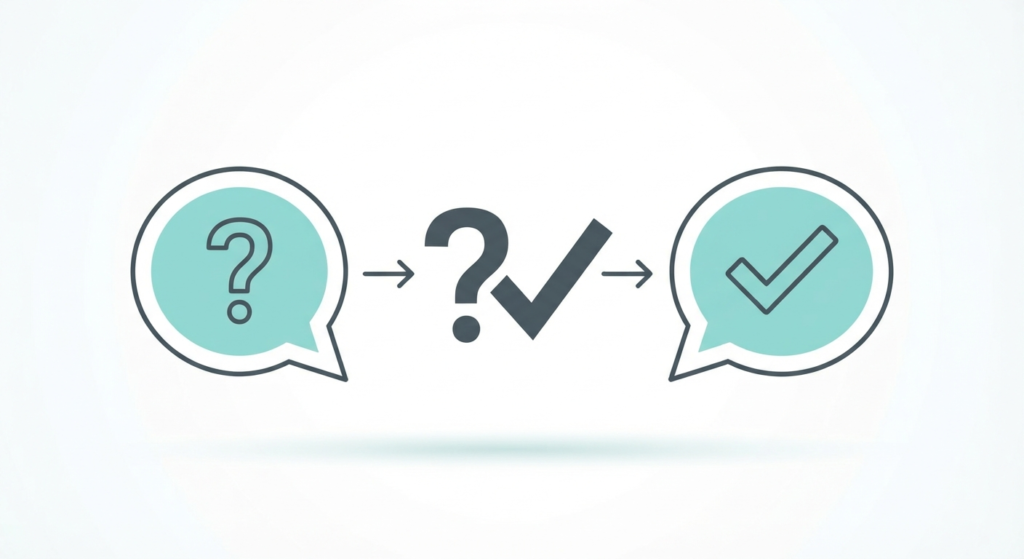
Take any factual claim an AI tool gave you recently — a statistic, a historical date, a “studies show” statement — and try to independently verify it using a primary source. Note how long it takes, and whether the original claim held up exactly, partially, or not at all. Doing this regularly recalibrates how much unverified trust you extend by default.
2. Spot the Missing Caveat
Ask an AI tool to summarize a nuanced topic (a scientific debate, a policy tradeoff, a technical comparison), then find the original source and list what the summary left out. AI summaries tend to flatten uncertainty and disagreement into confident, tidy statements — this exercise trains you to notice what got smoothed over.
3. The Two-Prompt Test
Ask the same factual question to an AI tool twice, phrased differently, and compare the answers. Divergent answers to the same underlying question are a strong signal the model is generating a plausible response rather than retrieving a stable, verified fact.
4. Source Reconstruction
When an AI tool cites a source, statistic, or study, try to find that exact source independently before accepting it. This single habit catches a meaningful share of fabricated citations — a well-documented failure mode where models generate a citation that sounds real but doesn’t correspond to an actual source.
5. Argue the Opposite
Take a confident claim (from an AI tool or anywhere else) and spend five minutes building the strongest possible case against it. This is a classic critical thinking exercise for adults and college students alike, and it works just as well applied to a chatbot’s answer as to a textbook argument — it forces engagement with the reasoning instead of passive acceptance of the conclusion.
Classic Exercises That Still Hold Up
The Five Whys
Take a stated problem or claim and ask “why” five times in succession, each time digging one layer deeper into the reasoning behind it. Originally a root-cause-analysis technique, it doubles as a strong exercise for critical thinking because it exposes assumptions that a single “why” never reaches.
Fact vs. Opinion Sorting
Take a paragraph of text — an article, a review, an AI-generated summary — and sort each sentence into “verifiable fact,” “opinion,” or “unverifiable claim.” This is one of the simplest exercises for critical thinking, and it’s often more revealing than expected: a surprising amount of confidently-written text turns out to be opinion dressed as fact.
Steelmanning
Summarize an argument you disagree with in the strongest, most persuasive form its actual proponents would recognize and endorse — not a weakened version that’s easy to knock down. This is a staple critical thinking exercise for college students specifically because it’s the most direct antidote to strawman reasoning.
Evidence Ranking
Given several pieces of evidence for a claim, rank them from strongest to weakest and justify the order. Works equally well with a debate topic, a product review, or a set of sources an AI tool cited.
Building a Practice Routine
For anyone wanting to actually improve — not just read about the exercises once — consistency matters more than intensity. A short, structured routine like a Claim Audit or a Two-Prompt Test done two or three times a week, applied to real AI interactions you’re already having, tends to build the habit far more effectively than an occasional deep session. The goal isn’t distrust of AI tools by default — it’s the ability to tell, case by case, when a claim deserves more scrutiny before you act on it.
Frequently Asked Questions
What is the purpose of a critical thinking exercise?
To build the habit of evaluating claims, sources, and reasoning deliberately rather than accepting them at face value — a skill that transfers directly to spotting errors, gaps, or fabrications in AI-generated content.
How do I exercise critical thinking skills specifically around AI tools?
Practice verifying AI-generated claims against primary sources, comparing answers to the same question asked differently, and actively looking for what a summary left out — all exercises covered above.
How can I improve critical thinking exercises for practical, everyday use?
Apply them to situations you’re already in rather than abstract examples — fact-checking a chatbot’s answer during actual work, rather than a hypothetical scenario, builds the skill where you’ll actually need it.
Are there critical thinking exercises for adults specifically, not just students?
Yes — exercises like the Claim Audit, Argue the Opposite, and Source Reconstruction are equally applicable (arguably more useful) for working adults evaluating AI tools, news, and workplace claims than they are in a classroom setting.
What happens if I don’t exercise critical thinking with AI tools?
Over time, unverified trust tends to compound — confident but wrong AI answers get accepted at the same rate as correct ones, since there’s no built-in signal distinguishing them without independent evaluation.
Final Verdict
AI tools haven’t made critical thinking less necessary — they’ve made it necessary in a new context. The exercises that have worked for decades (steelmanning, fact-vs-opinion sorting, arguing the opposite) still work, but the sharpest version of this skill now includes applying them directly to AI output: verifying claims, checking citations, and noticing what a confident summary quietly left out.