
Meta Superintelligence Labs is the AI lab Mark Zuckerberg formed on June 30, 2025 to build personal superintelligence — and unlike its secretive rival Safe Superintelligence, it has actually shipped things. The Muse family of models, the Muse agent, and the Meta AI app you can download today all come out of this lab. That is what makes MSL the interesting one of the superintelligence labs: it is the only one with something you can try, which means the gap between what it promises and what it delivers is a story you can check for yourself. One clarification before we start: MSL is the lab, not the concept — superintelligence itself is a separate idea, and this article is about the organisation building toward it.
What Is Meta Superintelligence Labs?
Meta Superintelligence Labs is Meta’s dedicated AI lab, announced by Zuckerberg in an internal memo on June 30, 2025, with Alexandr Wang as Chief AI Officer. Its stated job is to build personal superintelligence: AI that serves each individual, rather than a centralised system that automates work from above. The ownership chain runs Zuckerberg to MSL to Wang to the Muse models, and Who Owns Muse covers that chain in full, so this article sticks to what the lab is and what it has built.
The June 30, 2025 memo
Zuckerberg’s memo created the lab in a single stroke and named its leadership at the same time. Wang, who sold Meta a 49% stake in his data-labelling company Scale AI for $14.3 billion earlier that month, became Chief AI Officer. Nat Friedman, the former GitHub chief executive, took charge of AI products and applied research. Shengjia Zhao, a co-creator of ChatGPT who had been at OpenAI, was named chief scientist on July 25, 2025. The memo was not a research announcement; it was a reorganisation of Meta’s AI effort around one goal, with the people Zuckerberg had just hired to run it.
The four groups
MSL is organised into four groups, set up in an August 2025 reorganisation. TBD Lab works on frontier models and is led by Wang himself. FAIR, Meta’s long-standing fundamental research group, continues its work inside the lab. Products and Applied Research, under Friedman, turns models into things people use. MSL Infra, led by Aparna Ramani, builds the computing behind it all. The Scale AI deal sits behind the structure — $14.3 billion for a non-voting 49% stake, announced June 12, 2025, valuing Scale at over $29 billion — and the ownership detail is in the Who Owns Muse article rather than repeated here.
The lab in one number
MSL employed around 3,000 people in 2025, but the core research team is far smaller: under 200 people, nearer 100, according to Wang in a Fortune profile in October 2026. That split explains a lot about how the lab works. Thousands of people build products, infrastructure and data pipelines around a small group of researchers chasing the frontier models. It also explains why the lab can ship at the pace it does: most of MSL is a product organisation with a research core, not a research lab with a product team attached.
What MSL Actually Builds: The Muse Family
MSL builds a family of AI models called Muse, and the family is the product. There is a base model, image and video models, an open-weight model, a coding model, and the most capable model, Muse Wonder — plus the Muse agent that acts on your behalf and the Meta AI app that puts it all on your phone. Here is the release timeline so far.
| Model | Date | What it is |
|---|---|---|
| Muse Spark | April 8, 2026 | MSL’s first model; powers the Meta AI assistant |
| Muse Image / Muse Video | July 7, 2026 | Image generation and video preview |
| Muse Spark 1.1 | July 9, 2026 | 1M-token context; Meta Model API opened in public preview |
| Muse Glimmer | August 10, 2026 | 30B-parameter open-weight model, Apache 2.0, runs on a 24GB GPU |
| Muse Code | August 5, 2026 | Coding agent for the terminal |
| Muse agent | September 8, 2026 | Personal AI agent that acts across your apps |
| Muse Wonder / Wonder Full | October 12, 2026 | Meta’s most capable models; Wonder is the first Meta calls frontier-class |
| Muse Spark Open | October 15, 2026 | Open-weight model, 816B total / 42B active parameters (MoE) |
One date in that table is worth calling out, because a lot of pages get it wrong. Muse Spark was released on April 8, 2026, not July 2026. Wikipedia’s own intro says July, but its History section and every other source — Meta, Latent Space, the niche explainers — say April 8. It matters because Spark is the model everything else in the family is built on, and getting its launch wrong throws the whole timeline off.
The pattern
The pattern is a usable stack, not a single model. Spark runs inside the Meta AI assistant. The Muse agent sits on top of Spark and acts across your apps. The Meta Model API exposes Spark 1.1 and Wonder to developers. The glasses are where Zuckerberg expects the whole thing to end up. Each release fills a layer of that stack rather than replacing the one before it, which is why the family keeps growing instead of consolidating into one flagship. The open-weight releases — Glimmer and Spark Open — are the other half of the pattern: Meta keeps publishing weights that anyone can download and run, even while its best model, Wonder, stays closed.
What You Can Actually Use Today
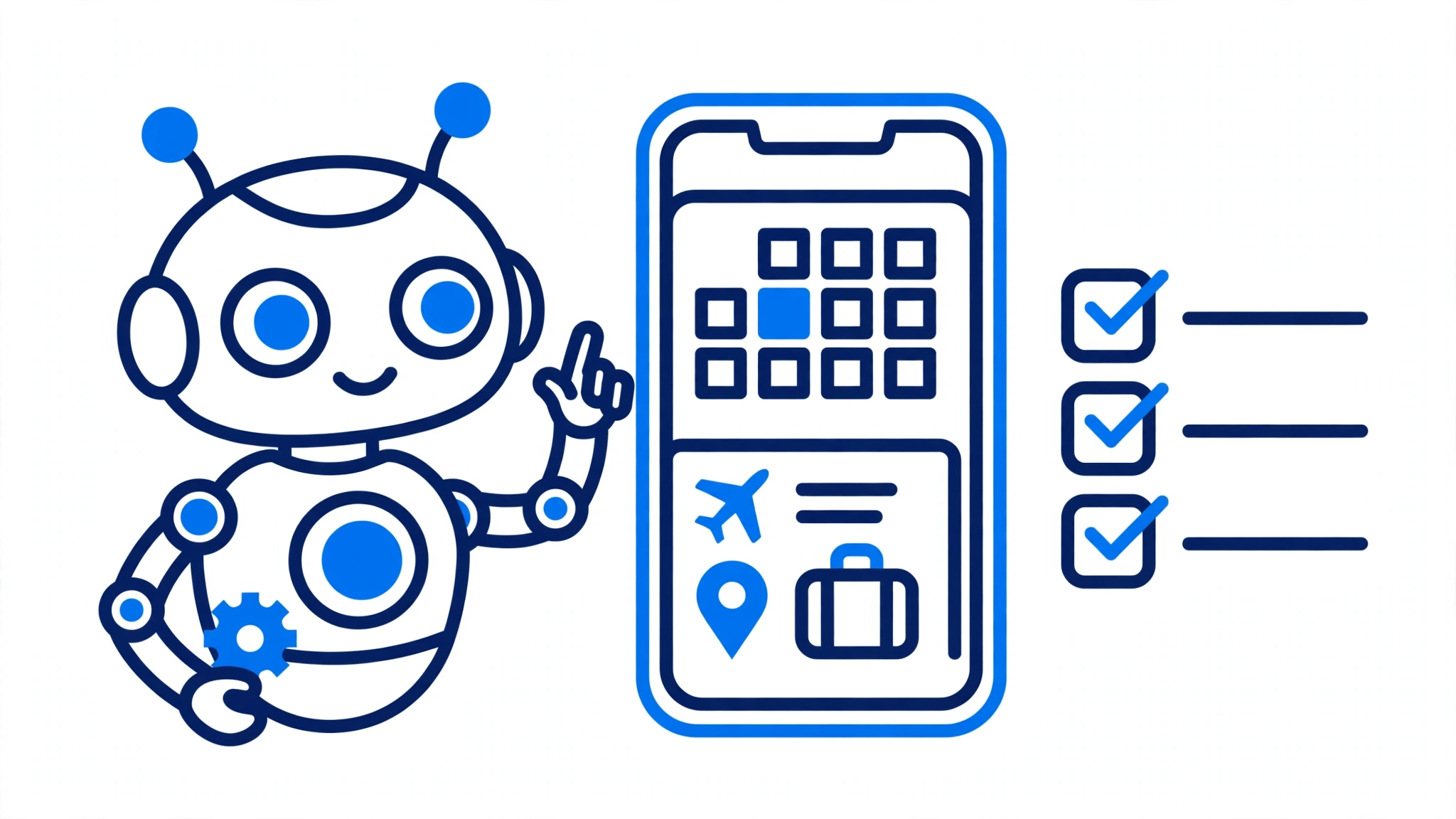
You can use three things from MSL right now: the Meta AI app, the Muse agent, and the Meta Model API. The app is free, the agent sits inside it, and the API is for developers. What you cannot do yet is use any of it everywhere — the rollout is still limited to six countries, and the small-business features are still US and Canada only.
The Meta AI app
The Meta AI app is where most people will meet MSL’s work. It runs on Muse Spark, and it has been Meta’s fastest-moving product of 2026: number one in Apple’s App Store for two weeks, 5 million US downloads in 22 days, and 1.8 million iOS downloads in the US and Canada in its first 12 days. The November updates show where it is heading. Voice conversations with expressive avatars began rolling out in the US on November 5, 2026. On November 6, Meta added “spaces” — custom tools the assistant builds for you from a plain description — and specialised models trained on Wonder. A November 6 model update also improved the assistant’s memory: Meta’s own evaluation has it using critical context correctly in 90% of tasks, up from 76%. The app is the free tier of Muse, with a usage limit Meta does not publish.
The Muse agent
The Muse agent is the product that makes the “personal superintelligence” pitch concrete. Launched on September 8, 2026, it acts across your apps: it fills in forms, makes purchases, books travel, and works through your email and calendar, asking for your approval before it spends money or sends anything. It started in the US and Canada and has since reached Japan on October 23, Singapore on October 27, Mexico on November 5, and Australia on November 17, 2026 — six countries so far, all still described by Meta as limited testing. The pricing is simple: free with a weekly usage limit, Power at $20 a month for 500 million Muse tokens a week, and Maximum at $100 a month for 3 billion. Power includes 10 phone calls a day and Maximum 20, a detail Meta added to the plans on November 19. Extra tokens can be bought separately and do not expire. The strongest model, Wonder, sits in the paid tier of the app — the free tier runs on Spark.
The Meta Model API
Developers get MSL’s models through the Meta Model API, which opened in public preview with Spark 1.1 on July 9, 2026. Wonder is available through the API at $4 per million input tokens, $0.20 for cached input, and $20 per million output tokens. Muse Code, the terminal coding agent, is a separate product with its own tiers — $5, $15, $50 or $200 a month — and the stronger Wonder Full model only comes with the $50 and $200 plans, with no API access at all. The API is the quietest part of MSL’s stack and the one most likely to matter in the long run, because it is how other people’s products get built on Meta’s models.
The honest limits
The honest limits are availability and maturity. The agent works in six countries and the small-business skills only in the US and Canada, so most of the world is still waiting. The agent also still needs a human check on anything that matters — it asks for approval before spending or sending, and that is a feature, not a bug, at this stage. As a daily assistant it still loses to ChatGPT, Claude and Gemini in places, which the comparison below spells out. None of that makes the products fake; it makes them early, and the gap between the vision and the shipping product is the thing to watch.
Zuckerberg’s Personal Superintelligence Vision
Zuckerberg’s personal superintelligence vision is simple to state and hard to build: instead of a centralised superintelligence that automates all valuable work, every person gets a personal superintelligence that helps them achieve their goals, create what they want, and grow into the person they aspire to be. That is the pitch in his own words, and the rest of this section is where it comes from and what has actually shipped toward it. The vision is written to rank for “zuckerberg personal superintelligence”, the realistic search term here, while the lab itself chases the harder head term.
The two source documents
The vision rests on two documents. The first is Zuckerberg’s letter “Personal Superintelligence” from July 30, 2025, which introduced the idea: AI that helps each individual achieve their goals and “grow to become the person you aspire to be”. The second is the manifesto “The Future Is for Everyone”, published on August 10, 2026 — a roughly 6,500-word essay that turns the letter into a full argument about who superintelligence should belong to. Read the manifesto on meta.com if you want the vision unfiltered; everything in this section is a summary of those two documents and what followed them.
Personal vs centralised
The core of the vision is a contrast with Meta’s rivals. Zuckerberg argues that other labs are building superintelligence to centralise it — to automate all valuable work in a few institutions — and that this concentrates power dangerously. His version distributes it: personal superintelligence in everyone’s hands, with glasses as the likely primary device, so the power spreads instead of pooling. Whether you buy the argument or not, it is a genuinely different vision from OpenAI’s and Anthropic’s, and it explains why Meta keeps shipping open-weight models alongside its closed flagship. Open weights are the distribution mechanism for the vision, not a side project.
The July 28, 2026 WSJ op-ed
Zuckerberg took the argument to the Wall Street Journal on July 28, 2026, in an op-ed titled “The AI Future Is for Everyone”. The piece makes the case that superintelligence must reach individuals rather than concentrate in a handful of institutions, organised around three claims: individual empowerment drives prosperity, invention rather than automation is the point of superintelligence, and a balance of power is the foundation of safety. It announced no product, gave no dates, benchmarks or prices, and it is not the November piece some early notes suggested — the op-ed ran in July, and the August 10 manifesto is the separate, longer follow-up. The op-ed matters because it is the vision stated as a public argument, not a product launch.
“Now within reach”
At Meta Connect 2026 on September 23, Zuckerberg said personal superintelligence is “now within reach” and called Muse the “centrepiece” of the vision. The glasses are the other half of that claim: Meta VR Glasses are expected in spring 2027 at $1,300, and Zuckerberg has said repeatedly that glasses are the likely primary device for a personal superintelligence. That is the part of the vision with a date attached, which makes it the part to judge first. If the glasses land in spring 2027 with Muse built in, the vision starts looking like a product roadmap. If they slip, the vision stays a manifesto. Either way, the contrast with superintelligence as a concept is worth keeping straight: the concept is what superintelligence is, the vision is who Zuckerberg thinks should have it.
The Lab Behind the Products
The lab behind the products was built by a hiring raid and runs on enormous compute. Zuckerberg spent 2025 buying the people and the machines for MSL in public, and the lab’s first year reads like a ledger of both: nine-figure pay packages on one side, layoffs and departures on the other, and two giant data-centre clusters underneath it all.
The talent raid and the exits
MSL’s founding story is a talent raid. Zuckerberg offered nine-figure packages to pull researchers out of OpenAI, Anthropic and Google, and several of the biggest names in AI moved to Menlo Park in mid-2025. The same year cut the other way. Around 600 jobs were cut on October 22, 2025 across FAIR, product AI and infrastructure — TBD Lab, Wang’s frontier-models group, was spared. Yann LeCun left on November 20, 2025 to found Advanced Machine Intelligence Labs, taking Meta’s most famous AI researcher out the door. And Daniel Gross left Safe Superintelligence for MSL in the summer of 2025, a move that said as much about where the momentum was as any pay package did. The lab that emerged is top-heavy with stars and thin in the middle, which is exactly what you would expect from a lab assembled by acquisition in a single year.
Compute
The compute underneath MSL is on a scale few companies can match. Prometheus, the cluster in Ohio, carries around 1 gigawatt of capacity in 2026. Hyperion, in Louisiana, is under construction with $27 billion of financing arranged through Blue Owl in October 2025. These are the machines that train the Muse models and run the Muse agent for millions of users, and they are also the reason Meta can afford to publish open-weight models: the training cost is already sunk into infrastructure the company owns. Compute is the least visible part of the MSL story and the most decisive — without it, none of the model releases above happen on this schedule.
Is the Muse Agent Safe to Hand Your Email and Payments?
The Muse agent is reasonably safe to hand your email and payments by design, but with limits you should understand before you do. Meta built the agent around approvals and audit trails rather than blind trust, which is the right architecture — and it still needs a human in the loop for anything that matters.
What protects you
Three things protect you. The agent runs in a dedicated Muse Secure VM, a sandboxed environment that separates what the agent can touch from the rest of your device. Sentinel approvals mean the agent must ask before it spends money, sends a message, or takes an irreversible step — nothing financial happens without your say-so. And every action leaves an audit trail, so you can see what the agent did, when, and on whose instruction. That combination — sandbox, approval gates, and a record — is more protection than most AI assistants offer, and it is the honest answer to the safety question: the design assumes the agent will make mistakes and builds the guardrails around that assumption.
What to watch
What to watch is where the agent still needs a human check. Approvals only help if you actually read them, and an agent that handles your inbox and your wallet will eventually present you with a decision you have to think about — a refund, a booking change, a payment to a new recipient. The agent is also young: it launched in September 2026, and its track record is months long, not years. In November 2026, the sensible way to use it is for routine errands with approvals on, and to keep the big or unusual transactions in your own hands until the agent has earned more trust. That is not a warning against using it; it is the correct way to use any agent that can spend your money.
MSL vs ChatGPT, Claude, and Gemini as a Daily Assistant
As a daily assistant, Muse wins on the Meta ecosystem, the glasses path and open weights, and still loses on availability, maturity and the depth of what its rivals’ assistants can do. The comparison below is the honest version: no forced verdict, because the right choice depends on what you actually use the assistant for.
| Assistant | Model | Agent actions | Availability | Price |
|---|---|---|---|---|
| Muse | Muse Spark / Wonder | Forms, purchases, travel, email, calendars | 6 countries (US, Canada, Japan, Singapore, Mexico, Australia) | Free; Power $20/mo; Maximum $100/mo |
| ChatGPT | GPT models | Browsing, research, tasks via Operator | Broadly available worldwide | Free; Plus $20/mo; Pro $100–$500/mo |
| Claude | Claude models | Computer use, coding, long documents | Broadly available worldwide | Free; Pro $20/mo ($17 annual); Max $100–$200/mo |
| Gemini | Gemini models | Actions inside Gmail, Docs, Drive; research | Broadly available worldwide | Free; Google AI Pro $19.99/mo; Ultra $99.99–$199.99/mo |
Read the table as a map, not a ranking. If your life runs on WhatsApp, Instagram and Facebook, Muse’s connectors reach places the others do not. If you want a pair of glasses that becomes your assistant, only Meta is building that path. If you want the strongest open-weight model you can run yourself, Glimmer and Spark Open are the only entries on this table that offer one. But if you live outside the six countries Muse serves, the choice is made for you. If your daily work is long documents, Claude is still the better writer. If your life is Gmail and Docs, Gemini is already where your work is. And if you want the deepest bench of features and third-party integrations, ChatGPT still has the most of everything. Muse is the newest assistant on this table and it shows — in both directions.
The Cost Question
MSL is expensive, and the bill is worth stating plainly. The Scale AI stake cost $14.3 billion. The Hyperion cluster carries $27 billion of financing. The researchers came on nine-figure packages. Senators wrote to Meta in February 2026 questioning the Scale deal, and the Federal Trade Commission’s interest in the arrangement has not gone away. None of that is the lead of this article — the products are — but the cost is the reason the lab has to ship. A research lab can burn money quietly; a $14.3 billion bet with a data-centre build-out behind it has to show results, and the release pace above is Meta showing them. The investor question is whether the spending turns into a business. The agent subscriptions are the first attempt at an answer, and six countries of rollout is a long way from a return on $14.3 billion.
Safety Framework and the White House Accord
Meta has published a safety framework and signed the White House Accord, but the full Muse Wonder safety report is still pending — and that gap is the honest state of MSL’s safety story. The Meta Superintelligence Scaling Framework v2.1, published in October 2026, covers catastrophic-risk areas including biological and chemical weapons, cybersecurity and loss of control, and it requires safety checks during training, not just at release. A new board AI committee is planned but not yet in place. On September 29, 2026, Zuckerberg signed the White House Accord on Super Intelligence alongside five other industry leaders; it is voluntary, not legally binding. The accord and the federal executive order on super intelligence share a date and a name, but they are different things — the pillar on superintelligence separates the two. Until the Wonder safety report lands, the framework is a promise with the evidence still to come.
What to Watch Next
Four things decide whether MSL’s next year matches its last one. The full Muse Wonder safety report, still pending, will show whether the framework has teeth. The Meta VR Glasses, expected in spring 2027 at $1,300, will show whether the glasses path is real or a slide in a keynote. The agent’s rollout beyond the current six countries will show whether Meta can take a personal agent global or whether it stays a North American product with outposts. And the next model after Wonder will show whether the release pace holds. Behind all four sits a fifth question: whether the “personal superintelligence” vision survives contact with regulators, who are already asking about the Scale deal and will keep asking as the agent touches more of people’s money and messages.
Frequently Asked Questions
What is Meta Superintelligence Labs?
Meta Superintelligence Labs is Meta’s AI lab, formed on June 30, 2025 to build personal superintelligence. It builds the Muse family of models, the Muse agent, and the Meta AI app, under Chief AI Officer Alexandr Wang.
Who runs Meta Superintelligence Labs?
Alexandr Wang runs the lab as Chief AI Officer. Nat Friedman leads AI products and applied research, Shengjia Zhao is chief scientist, and Aparna Ramani leads infrastructure. Zuckerberg oversees the vision directly.
What models has MSL released?
The Muse family: Muse Spark (April 8, 2026), Muse Image and Video (July 7, 2026), Muse Spark 1.1 (July 9, 2026), Muse Glimmer (August 10, 2026), Muse Code (August 5, 2026), the Muse agent (September 8, 2026), Muse Wonder and Wonder Full (October 12, 2026), and Muse Spark Open (October 15, 2026).
Is the Muse agent free?
The Muse agent is free to start, with a weekly usage limit Meta does not publish. Power costs $20 a month for 500 million Muse tokens a week, and Maximum costs $100 a month for 3 billion. The agent is available in six countries: the US, Canada, Japan, Singapore, Mexico and Australia.
What does “personal superintelligence” mean?
Personal superintelligence is Zuckerberg’s vision of AI that serves each individual — helping you achieve your goals, create what you want, and grow into the person you aspire to be — rather than a centralised superintelligence that automates work from above. It is the idea behind MSL, set out in his July 2025 letter and his August 2026 manifesto.
Bottom Line
The lab that promised superintelligence for everyone has shipped more usable product in eighteen months than its secretive rival has in two years, and that is the real story of Meta Superintelligence Labs. A family of models, an agent that acts across your apps, an API, and a pair of glasses on the way — all of it built since a memo in June 2025. But the vision itself is still mostly a promise. The agent works in six countries, the strongest model sits behind a paywall, the safety report is still pending, and the glasses have not arrived yet. The next twelve months will show whether the products catch up to the words, and that is a more interesting question than whether the lab exists at all. It does, it ships, and now it has to prove the vision is more than a manifesto.