The Real Question Isn’t Which Framework Is Better
Every few months, a new AI agent framework arrives promising to be the last one you’ll ever need. Developers dutifully compare feature lists, star counts, and benchmark tables — and still end up unsure which to commit to. The reason is simple: most comparisons answer “which has more features” when the real question is “which thinks about agents the way I do.”
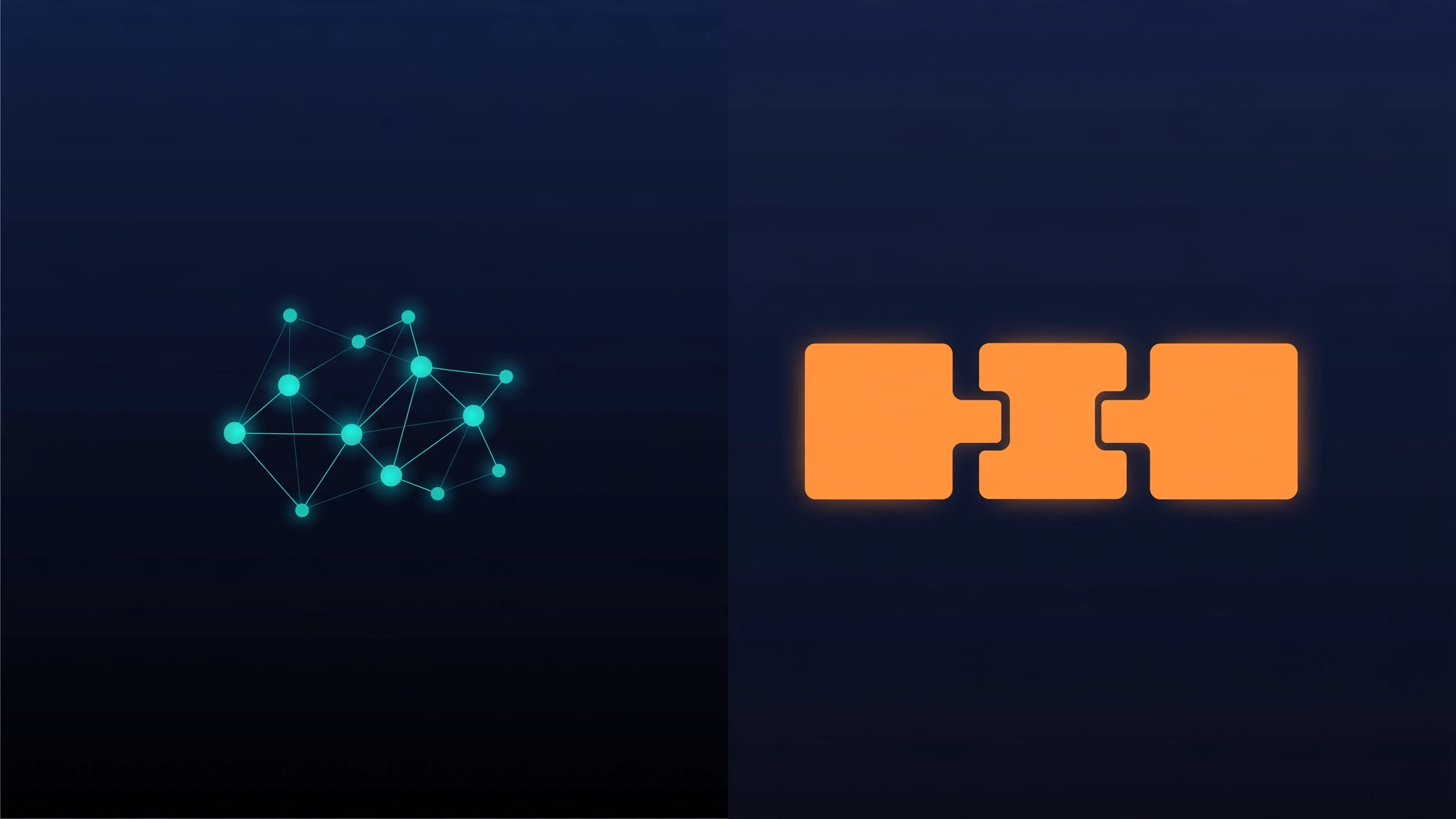
LangGraph and Atomic Agents are the perfect case study. One gives you a graph engine that manages state, retries, and multi-agent choreography for you. The other gives you typed building blocks and trusts you to assemble them. They solve the same problem from opposite directions, and understanding that split will teach you more about building agents than any feature matrix.
This guide compares them honestly: where each shines, where each struggles, what the same task looks like in both, and how to choose. By the end, you’ll know exactly which one fits your project — or why you might end up using both.
Meet the Contenders
What Is LangGraph?
LangGraph is a framework for building stateful, multi-step AI agents as graphs. Instead of writing a linear chain of calls, you define nodes (units of work, like calling an LLM or a tool) and edges (the logic that decides which node runs next). The framework’s runtime then executes the graph: passing state between nodes, handling cycles and branches, checkpointing progress so long-running agents can pause and resume, and supporting human-in-the-loop approval at any step.
It’s the orchestration layer for serious agent systems — the kind where one agent researches, another writes, a third reviews, and the workflow loops until the output meets a quality bar. The numbers tell you where it stands: over 42,000 GitHub stars, MIT licensed, maintained by LangChain Inc., and the most widely deployed agent framework in production systems as of 2026.
What Is Atomic Agents?
Atomic Agents takes the opposite bet: that the best agent framework is the one that gets out of your way. There is no graph engine, no runtime orchestrator, no hidden execution logic. You build agents as small, self-contained “atoms” — each one an AtomicAgent configured with an input schema and an output schema, both defined as Pydantic models. You then wire these atoms together with ordinary Python code: call one agent, take its validated output, pass it to the next.
The framework’s core promise is type safety end to end. Because every input and output is a Pydantic schema, malformed LLM responses get caught and retried automatically (via the Instructor library) instead of silently corrupting your pipeline. Debugging is straightforward because there’s nothing to debug through — the code you read is the code that runs.
Atomic Agents is smaller (around 5,000 GitHub stars) and younger, but deliberately so: it trades the convenience of a managed runtime for predictability, which is exactly what you want when an agent’s behavior needs to be auditable.
Two Opposite Philosophies
The technical differences between these frameworks all trace back to one philosophical split: who is in charge — the framework, or you?
Abstraction vs. transparency
LangGraph believes the framework should absorb complexity. You describe what should happen; the engine handles the execution loop, passes state between nodes, evaluates conditional edges, manages retries, and persists checkpoints. This is abstraction doing its job: you write less plumbing and get sophisticated behavior — cyclic workflows, branching, recovery — almost for free.
The cost is opacity. When a LangGraph agent does something unexpected, the answer to “why?” lives inside the engine’s execution: the state transitions, the edge evaluations, the checkpoint history. The observability tooling (LangSmith tracing, Studio visualization) exists precisely because you can’t just read the code and know. You’re debugging a system, not a script.
Atomic Agents believes the opposite: the developer should see everything. There is no engine making decisions between your lines of code. Data flows because you passed it; an agent ran because you called it. If the pipeline behaves unexpectedly, you open the file and read it — the entire runtime behavior is right there in imperative Python.
The cost here is verbosity. Every handoff between components is code you wrote, every schema is a class you defined. For a three-agent pipeline, that’s fine. For a thirty-node workflow with conditional routing and retries, you’re rebuilding by hand what LangGraph gives you declaratively.
Neither position is wrong. They’re optimized for different failure modes: LangGraph optimizes for “this workflow is too complex to manage manually,” while Atomic Agents optimizes for “I can’t ship what I can’t fully explain.”
Declarative graphs vs. imperative code
This is the same split expressed as a coding style. In LangGraph, you declare structure: here’s my state schema, here are my nodes, here are the edges between them, here are the conditions. The graph is a blueprint, and the runtime interprets it. Reading a LangGraph program tells you what the system can do; the runtime decides what it does on any given run.
In Atomic Agents, you write instructions: call this agent, take its validated output, pass it to the next tool, branch on a condition. The program is the behavior — what you read is exactly what runs, every time, in the same order.
The practical consequence shows up in testing. Atomic Agents pipelines are straightforward to unit test: each atom has typed inputs and outputs, so you test components in isolation with plain pytest. LangGraph graphs are tested at the graph level — you feed in an input state and assert on the output state — because the interesting behavior emerges from the interaction of nodes, edges, and runtime decisions.
Head-to-Head Comparison
| LangGraph | Atomic Agents | |
|---|---|---|
| Orchestration style | Declarative graphs — nodes, edges, and conditional routing managed by the engine | Imperative Python — you chain agents and tools explicitly |
| State management | Built-in persistent typed state, checkpointed at every step | Manual — state lives in your own variables and objects |
| Multi-agent support | First-class — subgraphs, supervisor patterns, cyclic collaboration | DIY — compose agents with plain Python; no built-in topology |
| Learning curve | “Think in graphs” — StateGraph, reducers, conditional edges | Standard Python plus Pydantic schemas — more boilerplate, fewer new concepts |
| Type safety | Typed state, but LLM outputs need parsing into your types | End-to-end — every agent input and output is a validated Pydantic schema |
| Debugging | Trace-based — LangSmith and Studio visualizations of execution | Read-the-code — step through Python like any other program |
| Human-in-the-loop | Native — pause, inspect and edit state, resume | Manual — you build the pause points yourself |
| Ecosystem and maturity | 42,000+ stars, LangChain and LangSmith integration, largest production footprint | Around 5,000 stars, smaller community, growing |
| Best for | Long-running, stateful, multi-agent production systems | Predictable, auditable, typed agent pipelines |
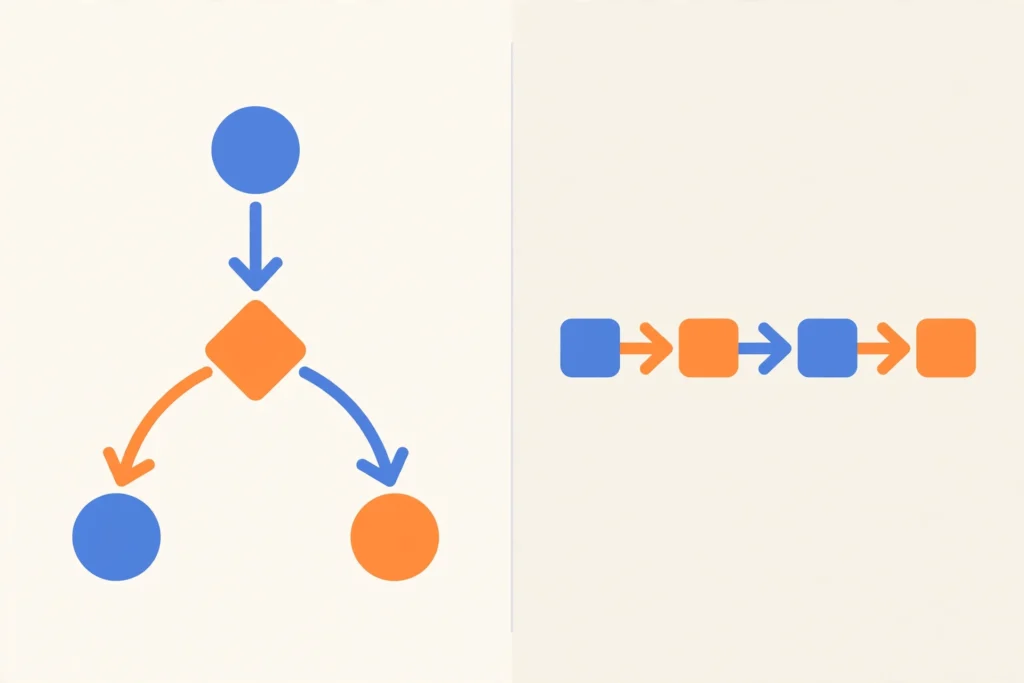
The table makes the trade-off concrete: LangGraph gives you infrastructure, Atomic Agents gives you control. Everything else in this guide is commentary on that one line.
Where LangGraph Shines
Durable state and checkpointing
Most agent frameworks treat a run as disposable: if it crashes, you start over. LangGraph treats every run as resumable. State is checkpointed after each node executes, so a failure at step nine of ten means resuming from step nine — not rerunning the first eight. For long-running agents (research tasks that run twenty minutes, workflows that wait on external systems), this isn’t a nice-to-have; it’s the difference between a demo and a production system. (One distinction worth keeping: checkpointing covers a single run. When agents need memory across sessions — recalling your documents months later — that’s a retrieval problem, and teams pair the framework with a vector database for it.)
Human-in-the-loop
Sooner or later, every serious agent needs a human to approve, correct, or redirect it. LangGraph builds this in as a first-class concept: pause execution before a sensitive action, show a human the current state, let them edit it, and resume. Approval workflows, quality gates, and “are you sure?” checkpoints become graph configuration instead of custom engineering.
Multi-agent orchestration
When one agent isn’t enough — a researcher gathering facts, a writer drafting, a reviewer critiquing, looping until the output meets a bar — LangGraph’s graph model handles it naturally. Subgraphs nest whole workflows inside nodes; supervisor patterns route work between specialized agents; cycles let agents iterate. This is the hardest thing to build by hand, and it’s where the framework earns its keep.
Ecosystem and maturity
LangGraph doesn’t stand alone. It plugs into LangChain’s integrations (hundreds of model and tool providers), LangSmith for tracing and evaluation, and a purpose-built deployment platform. With 42,000+ stars and production deployments at companies like Klarna and Elastic, it’s also where the community knowledge concentrates: tutorials, patterns, answered questions. When you’re stuck at 2 AM, that matters.
Where Atomic Agents Shines
Total transparency
There is no framework magic to learn, because there is no framework magic. An Atomic Agents application is ordinary Python: functions, classes, and explicit calls. New team members don’t need to learn graph semantics, reducer functions, or checkpoint storage backends — they read the code the way they’d read any codebase. When auditors or compliance teams ask “exactly what does this agent do?”, you can show them, line by line.
Type-safe contracts
Every agent declares Pydantic models for its input and output, and the framework enforces them at runtime — with Instructor retrying the LLM call when a response fails validation. This eliminates an entire class of production bugs: malformed JSON, missing fields, wrong types silently propagating downstream. In LangGraph you typically parse and validate LLM outputs yourself; in Atomic Agents, the contract is structural. If the schemas are right, the data flow is right.
Lightweight and composable
Atomic Agents has a small dependency footprint (Instructor, Pydantic, your LLM client) and no runtime server, no graph engine, no state store to operate. Components are genuinely reusable: an agent written for one pipeline drops into another unchanged, because its interface is just its schemas. Teams end up building internal libraries of atoms — a classifier here, an extractor there — that compose into new applications in an afternoon.
Predictable in production
This is the deepest advantage and the hardest to appreciate until you’ve operated agents at scale. Emergent behavior is exciting in demos and terrifying in production. Atomic Agents pipelines do exactly what the code says, in the order it says it, every time. That determinism makes incidents explainable, rollbacks safe, and behavior contracts enforceable — qualities that matter enormously when an agent touches real systems, real money, or real customer data.
The Honest Trade-offs
Every comparison that only lists strengths is a sales pitch. Here’s what each framework costs you.
LangGraph’s price is cognitive overhead. “Thinking in graphs” is genuinely a new skill: state schemas, reducer functions, conditional edges, checkpoint configuration, and the mental model of a runtime that decides execution order. Small tasks feel over-engineered — wiring up a state graph for something a single function call could do. And when the graph misbehaves, you’re dependent on tracing tools to understand why, because the behavior isn’t in your code; it’s in the interaction between your code and the engine. Teams also inherit the LangChain ecosystem’s pace: powerful, but APIs move fast enough that keeping up is its own chore.
Atomic Agents’ price is manual labor. Schemas for everything means boilerplate for everything — a quick experiment that takes ten lines in another framework takes fifty here. There’s no built-in answer for the hard problems: no checkpointing, so you build your own resume logic; no human-in-the-loop, so you build your own pause points; no multi-agent topology, so you design the collaboration pattern yourself. At small scale this is liberating. Past a certain complexity, you’re reimplementing a worse version of LangGraph’s engine — and the “no magic” philosophy starts to feel like “no help.”
The pattern to notice: each framework’s weakness is the other’s strength. That’s usually a sign the comparison is honest — and a hint that the real answer for many teams is a mix, which is where we’re headed next.
The Same Task in Both
Abstract comparisons only go so far. Here’s the same job — research a topic, then summarize the findings — built both ways. Notice what each version makes easy and what it makes you spell out.
In LangGraph, you declare the shape of the work and let the engine run it:
from typing import TypedDict
from langgraph.graph import StateGraph, END

class State(TypedDict):
    topic: str
    research: str
    summary: str

def research_node(state: State):
    findings = search_tools(state["topic"])  # your tools here
    return {"research": findings}

def summarize_node(state: State):
    summary = llm(f"Summarize: {state['research']}")
    return {"summary": summary}

graph = StateGraph(State)
graph.add_node("research", research_node)
graph.add_node("summarize", summarize_node)
graph.set_entry_point("research")
graph.add_edge("research", "summarize")
graph.add_edge("summarize", END)

app = graph.compile()
result = app.invoke({"topic": "vector databases"})
State flows between nodes automatically — and adding checkpointing later is a single argument to compile().
In Atomic Agents, you write the pipeline as ordinary code, with schemas as the contracts:
from atomic_agents import AtomicAgent, AgentConfig, BaseIOSchema

class ResearchInput(BaseIOSchema):
    """What the researcher needs."""
    topic: str

class ResearchOutput(BaseIOSchema):
    """What the researcher returns."""
    findings: str

class SummaryInput(BaseIOSchema):
    """What the summarizer needs."""
    findings: str

class SummaryOutput(BaseIOSchema):
    """What the summarizer returns."""
    summary: str

researcher = AtomicAgent[ResearchInput, ResearchOutput](config=AgentConfig(...))
summarizer = AtomicAgent[SummaryInput, SummaryOutput](config=AgentConfig(...))

research = researcher.run(ResearchInput(topic="vector databases"))
summary = summarizer.run(SummaryInput(findings=research.findings))
No graph, no engine — just two typed calls in sequence. The schemas guarantee the handoff is valid, and if the LLM returns something that doesn’t parse, the framework retries instead of crashing downstream.
Same outcome, different shape: LangGraph describes the workflow and delegates execution; Atomic Agents writes the execution and leans on types for safety.
How to Choose
By now the decision is probably making itself, but let’s make it explicit. Work through these in order:
How complex is the coordination?
If your workflow has branches, loops, retries, or multiple agents collaborating, LangGraph’s graph model earns its learning curve immediately. If it’s a straight pipeline — step one feeds step two feeds step three — Atomic Agents gives you the same result with less machinery.
How much must you explain?
Regulated industries, customer-facing automation, anything where “the model decided” isn’t an acceptable incident report — Atomic Agents’ explicitness is a feature, not boilerplate. When auditability matters more than velocity, choose the framework with no hidden behavior.
How long do runs live?
Minutes-long research tasks, workflows that pause for human approval, processes that must survive crashes — LangGraph’s checkpointing and durable execution were built for exactly this. Short, synchronous pipelines don’t need it.
What’s your team’s shape?
Teams fluent in Pydantic and typed Python will feel at home in Atomic Agents on day one. Teams already in the LangChain ecosystem get more from LangGraph, since the integrations, tracing, and deployment story compound.
The third option: use both
This is the pattern production teams keep landing on. LangGraph handles the messy top layer — routing, retries, human approvals, multi-agent coordination — while the nodes themselves are small, typed, predictable Atomic Agents. You get the orchestrator’s infrastructure where coordination is genuinely hard, and explicit typed components where reliability matters most. The frameworks aren’t rivals so much as different layers of the same stack.
Frequently Asked Questions
Is LangGraph part of LangChain?
LangGraph is built by LangChain Inc., the company behind LangChain, and it integrates deeply with that ecosystem — but it’s a standalone framework in its own MIT-licensed repository. You can use LangGraph without LangChain, though most teams use them together: LangChain for model integrations and composable components, LangGraph for the agent orchestration layer.
Can you use LangGraph and Atomic Agents together?
Yes — and this is increasingly the recommended pattern. Use LangGraph as the orchestration layer (routing, state, retries, human-in-the-loop) and implement the individual nodes as Atomic Agents with their typed input and output schemas. You get durable coordination on top and predictable typed components underneath. Nothing about either framework prevents this; they operate at different layers.
Which is better for beginners?
It depends what kind of beginner. If you’re new to agents but comfortable with Python and Pydantic, Atomic Agents is gentler — no new mental model, just schemas and function calls. If you want to build something ambitious quickly, LangGraph’s abstractions (and its wealth of tutorials) get you further faster, at the cost of learning graph concepts. For a very first agent, though, start with neither: a single LLM call plus function calling is enough until the complexity earns a framework.
Which is better for production systems?
“Production” isn’t one thing. For long-running, multi-step, multi-agent systems where failure recovery and human oversight matter, LangGraph is the proven choice — that’s where the production deployments are. For pipelines where every behavior must be auditable and deterministic, Atomic Agents’ explicitness is the safer bet. Many production teams end up with both, layered.
Do I even need a framework, or is an LLM API with function calling enough?
For a surprising number of use cases, the API is enough. A single agent that calls a few tools in a loop needs no graph engine and no schema framework — just the model API and careful prompting. Reach for LangGraph when you need durable state, branching, or multi-agent coordination; reach for Atomic Agents when you need typed contracts across a pipeline. If neither problem sounds like yours, you don’t have a framework problem yet.
Conclusion: Stop Asking Which One Wins
Here’s the thing about “versus” articles: they imply a winner. There isn’t one here, and the industry has quietly stopped looking for one.
The pattern production teams keep converging on is layered. LangGraph — or something like it — handles the messy coordination: routing between steps, retrying failures, pausing for human approval, managing state across a long run. Inside the nodes, the actual work gets done by small, typed, predictable components — exactly what Atomic Agents is designed to be. Orchestration on top, atoms below.
So the useful question was never “LangGraph or Atomic Agents?” It’s “which layer am I building?” If you’re building the coordination layer, you want the graph. If you’re building the working parts, you want the atoms. And if you’re building a real system, you’ll probably want both — which means the frameworks aren’t competitors after all. They’re complements that happen to be sold as alternatives.
If you’d rather see these orchestration patterns running as a finished product than build them yourself, our Manus analysis modes comparison breaks down how a real general-purpose agent divides work across Chat, Agent, and Wide Research modes.