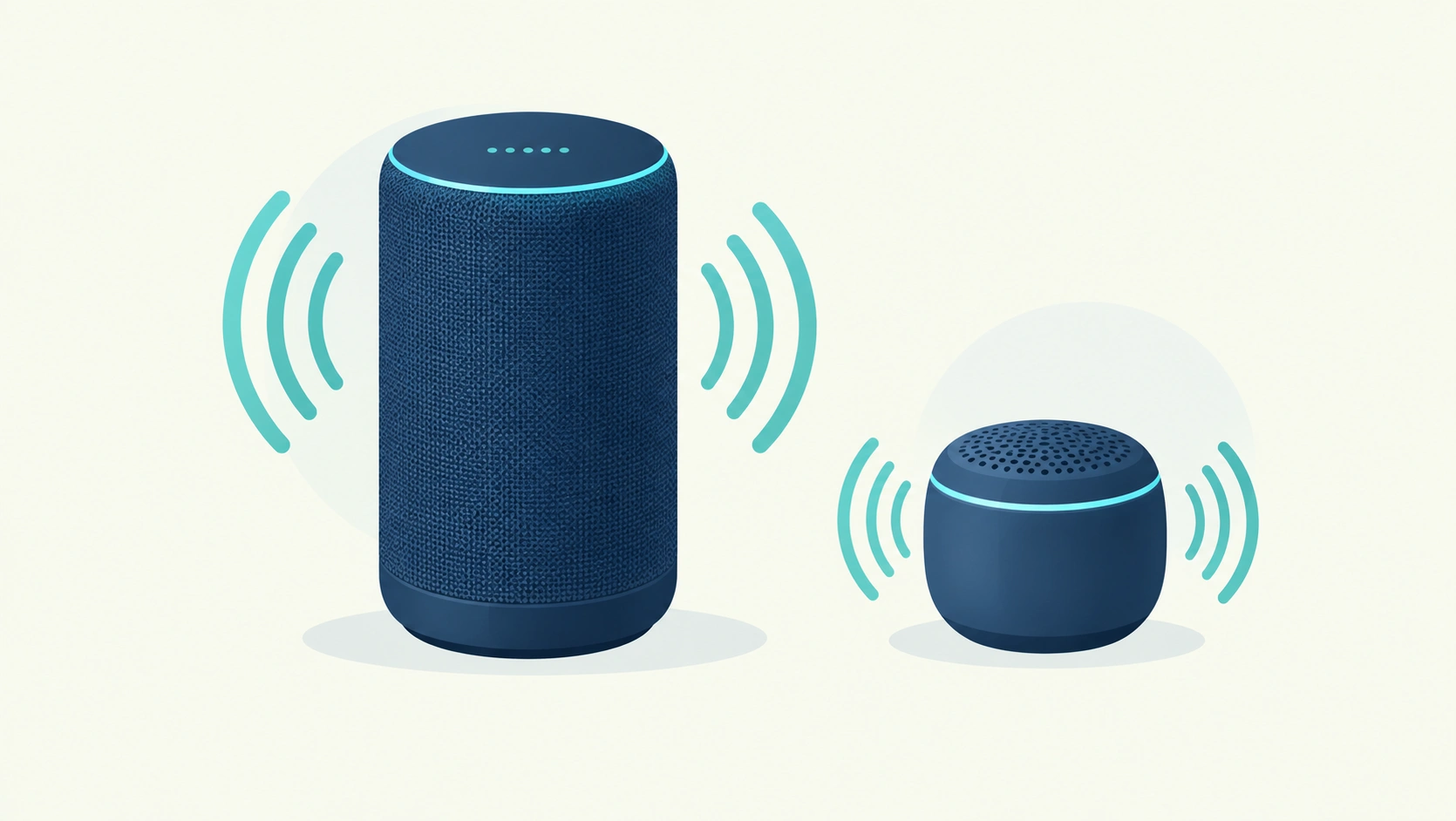
JBL’s naming convention causes real confusion here: the current Charge 6 and Flip 7 sound like they’re from different product generations because of the mismatched numbers, but they’re actually siblings — released together, sharing the same core technology, just built around two different size-and-purpose trade-offs. This isn’t a “which is newer” decision the way it might look at first glance. It’s a “which shape of speaker actually fits your life” decision, and that pattern has held consistently across nearly every generation JBL has released.
The Short Answer
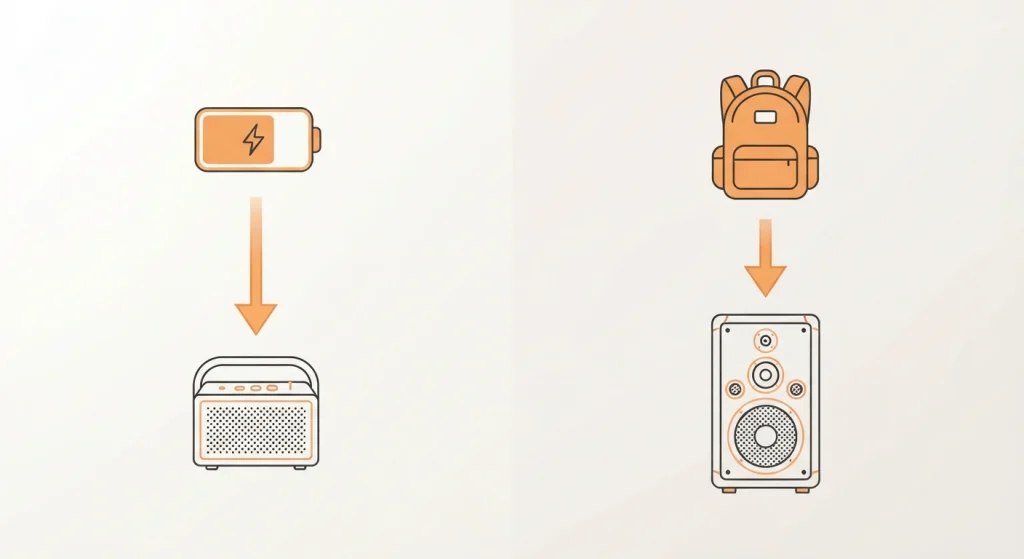
The Charge and Flip lines solve different problems by design, not by generation. Charge models are larger, heavier, and built around maximum battery life and deeper bass — the speaker you leave running at a backyard party for six-plus hours. Flip models are smaller, more portable, and tuned for a more balanced, wider soundstage — the speaker that fits in a bag and comes with you rather than staying put. Currently, the JBL Charge 6 and JBL Flip 7 are the same generation despite the different model numbers, sharing features like Auracast multi-speaker pairing, a graphic EQ, and Play Time Boost battery extension.
Current Generation Specs, Side by Side
| Spec | JBL Flip 7 | JBL Charge 6 |
|---|---|---|
| Weight | 1.2 lbs (0.6 kg) | 2.2 lbs (1.0 kg) |
| Volume | 51 in³ (834 cm³) | 113 in³ (1,848 cm³) |
| Water resistance | Submersible (IPx8) | Submersible (IPx8) |
| Dust resistance | Dust-proof (IP6x) | Dust-proof (IP6x) |
| Floats in water | No | Yes |
| Battery life | Shorter | More than double the Flip 7 |
| Bass extension | Less | More extended low-bass |
| Soundstage | Wider, better directivity | Narrower by comparison |
| Auracast, graphic EQ, Play Time Boost | Yes | Yes |
Why the Naming Feels Confusing (And What It Actually Means)
The Charge 6 is genuinely the step-up model from the Flip 7, not a newer generation of it — both launched as part of the same product refresh, sharing the same underlying technology and feature set. Independent testing from RTINGS confirms both use identical core software features — Auracast, graphic EQ, Play Time Boost — with the actual differences coming entirely from physical size and the acoustic trade-offs that size enables, not from one model being technologically ahead of the other.
Battery Life: The Charge’s Whole Reason for Existing
This is the most consistent, defining difference across every generation of this comparison, not just the current one. The Charge 6 offers more than double the Flip 7’s battery life — a gap driven directly by its considerably larger internal volume (113 in³ versus 51 in³), which simply has room for a much bigger battery. If all-day playback without hunting for an outlet is the actual priority — a full day at the beach, a long backyard gathering — this is the single biggest reason to choose Charge over Flip, and it’s been true across the Charge 4, Charge 5, and Charge 6 generations consistently.
Sound Profile: Bass vs. Balance
The Charge’s larger cabinet reproduces noticeably more extended low-bass than the Flip, a direct consequence of having more physical air volume to move. The Flip, in turn, consistently tests with better directivity — meaning sound spreads more evenly in a wider arc around the speaker rather than beaming more narrowly forward — producing what RTINGS describes as a wider-sounding soundstage. Neither is objectively “better” sound; it’s a genuine trade-off between bass depth and spatial balance, and which one matters more depends entirely on your listening context — bass-heavy genres and outdoor open spaces tend to favor the Charge, while more varied listening in closer quarters tends to favor the Flip’s more even spread.
Portability: Where the Flip Wins Clearly
At roughly half the weight and less than half the volume of the Charge, the Flip is the more genuinely portable option, and JBL builds it specifically around that — a removable carrying strap makes it easy to clip onto a bag rather than needing to be carried by hand or packed carefully. If the speaker needs to travel with you throughout the day rather than being set up once and left in place, the Flip’s size advantage is a real, consistent factor across generations, not just a current-model quirk.
One Genuinely Practical Difference: Floating
This is a small but real detail worth knowing if pool or lake use is part of your plan: the current Flip 7 floats in water, while the Charge 6 does not. Both are fully submersible and rated IPx8, so neither will be damaged by water exposure — but only one of them will bob on the surface if it goes overboard rather than sinking, which matters a lot more in practice than it sounds like it should the first time it actually happens.
Build Quality Is Essentially a Tie
Both current models score very highly and closely in independent build-quality testing — this isn’t a category where one model meaningfully outclasses the other. Whatever you’re choosing between here, you’re not trading away durability or construction quality either direction.
How to Actually Decide
| Your situation | Best pick |
|---|---|
| Long outdoor gatherings, all-day battery priority | JBL Charge |
| Carrying it with you throughout the day | JBL Flip |
| Bass-heavy music, open outdoor spaces | JBL Charge |
| More balanced sound in varied/closer settings | JBL Flip |
| Pool or lake use where floating matters | JBL Flip |
| Maximum portability in a bag or backpack | JBL Flip |
Frequently Asked Questions
Is the JBL Charge 6 newer than the JBL Flip 7?
No — despite the different model numbers, they’re the same generation, released together and sharing the same core technology. The Charge 6 is the larger, step-up model in that generation, not a technologically newer one.
Which JBL speaker has better battery life, Charge or Flip?
The Charge consistently offers more than double the battery life of the equivalent Flip generation, a direct result of its larger size allowing for a considerably bigger internal battery.
Does the JBL Flip float in water?
Yes, the current Flip 7 floats, while the current Charge 6 does not — though both are fully submersible and rated IPx8 for water resistance regardless of whether they float.
Which JBL speaker sounds better, Charge or Flip?
Neither is objectively better — the Charge produces deeper, more extended bass, while the Flip tests with a wider, more evenly balanced soundstage. The right choice depends on your listening preference and environment.
Is the JBL Charge or Flip more durable?
Both currently score very highly and closely in independent build-quality testing, with matching water and dust resistance ratings — durability isn’t a meaningful differentiator between the two lines.
Choosing between these two really comes down to one honest question: is this a speaker you’re setting up once and leaving running, or one that’s coming with you all day? Everything else in this comparison — battery, bass, size, portability — flows directly from that single answer.
For anyone comparing portable audio gear more broadly, our Bose QuietComfort vs. QuietComfort Ultra headphones comparison covers the same kind of “which trade-off actually fits your use case” decision on the headphones side.