This question causes genuine confusion at car dealerships every day, and the honest reason is that “hybrid” isn’t one thing — it’s an umbrella term covering at least three meaningfully different technologies, only one of which actually has a charging port you’re expected to use. Get the type wrong in your head, and you’ll either worry about a chore you never need to do, or miss out on real savings from a feature your car actually has.
The Short Answer
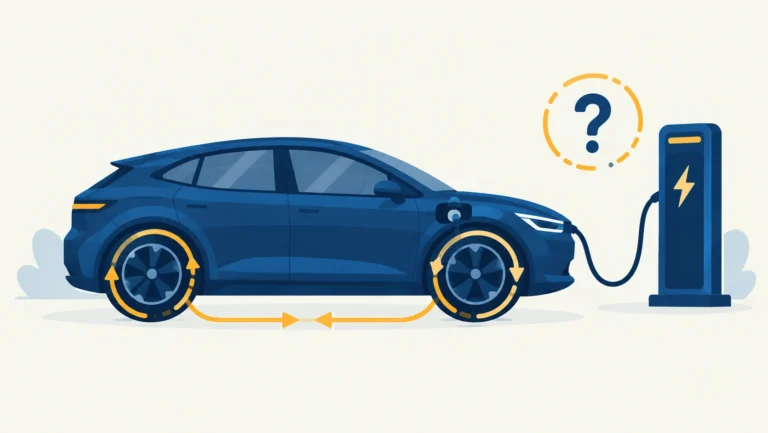
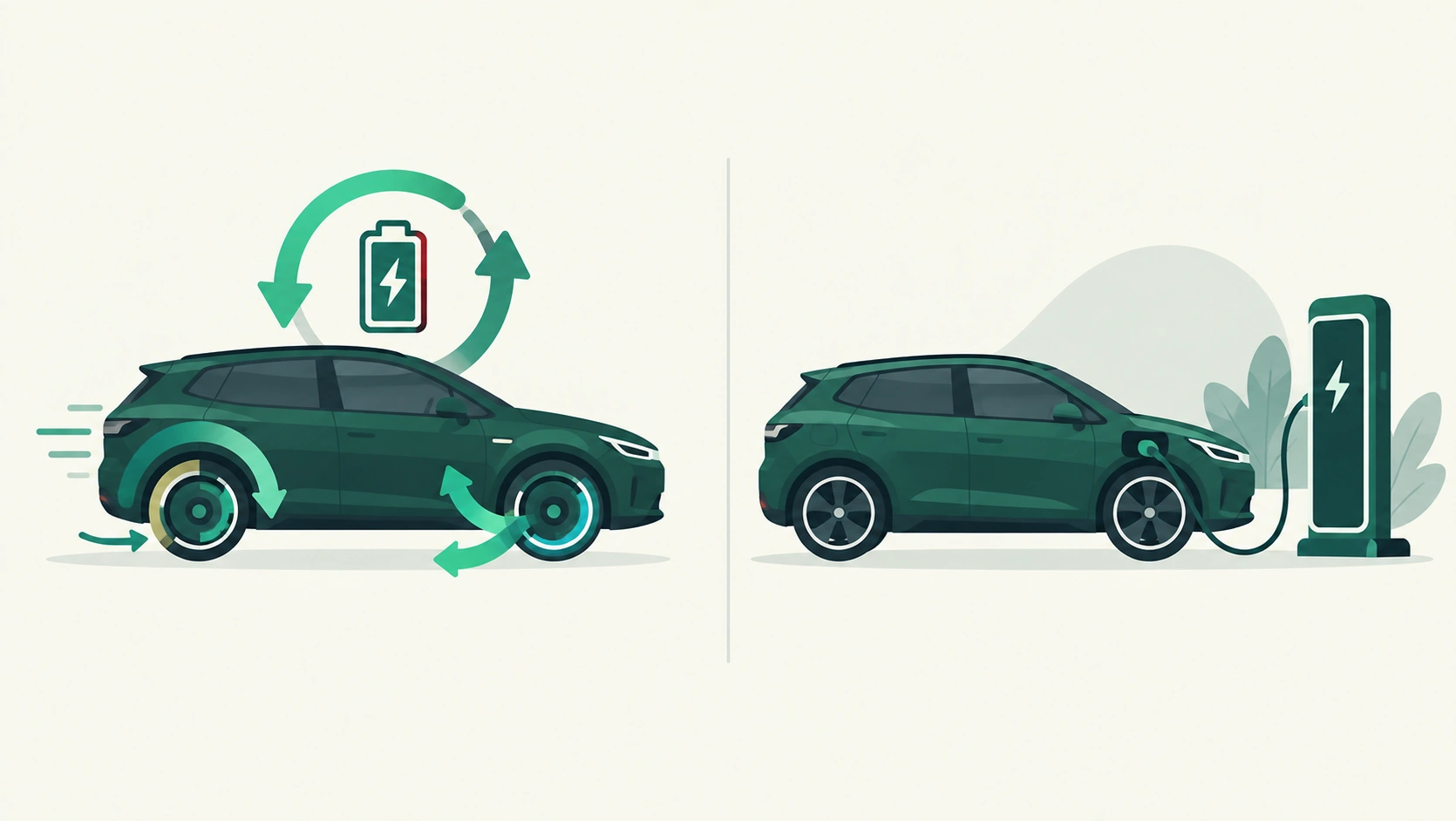
A standard (non-plug-in) hybrid — sometimes marketed as a “self-charging” hybrid — never needs to be plugged in. It recharges its battery automatically through regenerative braking and the gasoline engine while you drive. A plug-in hybrid (PHEV) has a genuine charging port and a larger battery, and while it can technically run without ever being plugged in, doing so means missing most of the reason to buy one in the first place — its real value comes specifically from regular charging.
The Three Real Types, Explained Separately
Standard Hybrid (HEV): Never Needs a Plug
This is what most people picture when they hear “hybrid” — a gas engine paired with an electric motor and a modest battery pack. The battery recharges itself continuously through two sources: regenerative braking, which captures energy normally lost as heat when you slow down and converts it back into electricity, and the gas engine itself, which tops up the battery during normal driving. You genuinely never plug this type of car in, ever, under normal use — a Toyota Prius, Honda CR-V Hybrid, or similar standard hybrid runs its entire life without ever seeing a charging cable.
Plug-In Hybrid (PHEV): Has a Real Charging Port, and Should Actually Be Used
A PHEV upgrades to a considerably larger battery and adds an actual charging port, letting you plug into a home outlet, a wall charger, or a public charging station — much like a fully electric vehicle. This larger battery enables genuine electric-only driving for real commuting distances: the current Toyota Prius PHEV is rated for 44 miles on electricity alone, while the RAV4 PHEV targets around 50 miles before the gas engine needs to engage at all. Real-world range varies with weather, cargo weight, and driving style, but for a large share of daily commutes, a fully-charged PHEV can complete an entire day’s driving without burning any gasoline at all.
Mild Hybrid (MHEV): Can’t Actually Drive on Electric Power Alone
This is the type most comparisons skip past too quickly. A mild hybrid uses a small electric motor and battery to assist the gas engine — smoothing acceleration, supporting stop-start systems, and improving fuel efficiency — but the electric motor alone can’t power the car forward on its own. It’s not a plug-in, and it doesn’t offer real electric-only driving the way a full hybrid or PHEV does; think of it as a fuel-efficiency booster bolted onto a conventional gas engine rather than a genuine dual-power system.
Why a PHEV Owner Should Actually Charge It, Even Though They Technically Don’t Have To
This is the part that trips up a lot of new PHEV owners, and it’s worth being direct about: yes, a plug-in hybrid will run perfectly fine on gasoline alone if you never plug it in — there’s no risk of being stranded with a “dead” battery the way there would be in a fully electric car. But choosing not to charge it regularly means you’re paying a PHEV’s typically higher purchase price without capturing its actual advantage, since you’re then just driving a heavier, less fuel-efficient version of a standard hybrid for most of your trips. The fuel savings, reduced emissions, and electric-only commuting that justify a PHEV’s price premium over a standard hybrid all depend on actually using the plug consistently, not occasionally.
Is “Self-Charging” a Misleading Marketing Term?
Worth addressing honestly, since it’s a genuinely fair criticism that comes up regularly: calling a standard hybrid “self-charging” is technically accurate but can imply something closer to free, effortless energy than what’s actually happening. The battery in a standard hybrid is ultimately topped up using energy that originally came from the gasoline in the tank, plus energy recaptured from braking that would otherwise be wasted — it’s not manufacturing new energy from nothing. The term is a legitimate marketing shorthand for “you’ll never need to plug this in,” not a claim that the car generates free energy, and it’s worth understanding that distinction so the marketing language doesn’t create a false impression of the underlying physics.
Quick Reference: Which Type Are You Actually Driving?
| Type | Charging port? | Electric-only range | Needs to be plugged in? |
|---|---|---|---|
| Standard Hybrid (HEV) | No | Very short (low speed, short bursts) | Never |
| Plug-In Hybrid (PHEV) | Yes | Roughly 25-50 miles, model-dependent | Optional, but recommended for real value |
| Mild Hybrid (MHEV) | No | None — can’t drive on electric power alone | Never |
How to Decide Which Type Actually Fits You
- Choose a standard hybrid if you want better fuel economy than a conventional gas car with zero behavior change required — no charging routine to maintain, no dependency on home charging access.
- Choose a plug-in hybrid if you have consistent access to charging (a home garage with an outlet, or a reliable workplace charger) and most of your daily driving falls within the electric-only range — this is where a PHEV’s higher upfront cost actually pays off over time.
- Skip the plug-in hybrid if you don’t have reliable charging access, since you’d be paying a real price premium for a battery capacity you’ll rarely use to its potential, effectively driving an expensive standard hybrid instead.
Frequently Asked Questions
Will my hybrid car break down if the battery is fully depleted?
No — for both standard hybrids and PHEVs, the gasoline engine can power the car entirely on its own if the battery runs low. There’s no risk of being stranded the way there is with a fully electric vehicle running out of charge.
Can I charge a plug-in hybrid at a regular electrical outlet?
Yes — most PHEVs can charge from a standard household outlet, though it will charge considerably slower than a dedicated Level 2 home charger or public fast-charging station.
Does charging a plug-in hybrid every night damage the battery over time?
Modern PHEV battery management systems are built for regular daily charging cycles, similar to how a smartphone battery is designed for daily use — this isn’t a practice that meaningfully shortens battery life under normal conditions.
What happens if I buy a PHEV but never plug it in?
The car will still run, functioning essentially as a heavier, somewhat less efficient standard hybrid, powered entirely by the gas engine. You’ll miss the electric-only range and fuel savings that justify the PHEV’s typically higher price over a standard hybrid.
Is a mild hybrid worth buying if I want electric-only driving?
No — mild hybrid systems can’t power a vehicle on electric power alone under any circumstances. If electric-only driving matters to you, a standard hybrid (for short bursts) or a plug-in hybrid (for real commuting range) are the types that actually offer it.
Getting this right before you buy — not after — comes down to one honest question about your own life: do you have consistent, reliable access to a charger? If yes, a plug-in hybrid’s real value is on the table. If no, a standard hybrid gives you meaningful efficiency gains with zero new habits required, and Kia’s own consumer guidance on this exact question reaches the same conclusion: the right hybrid for you depends entirely on matching the technology to how you actually drive, not the other way around.