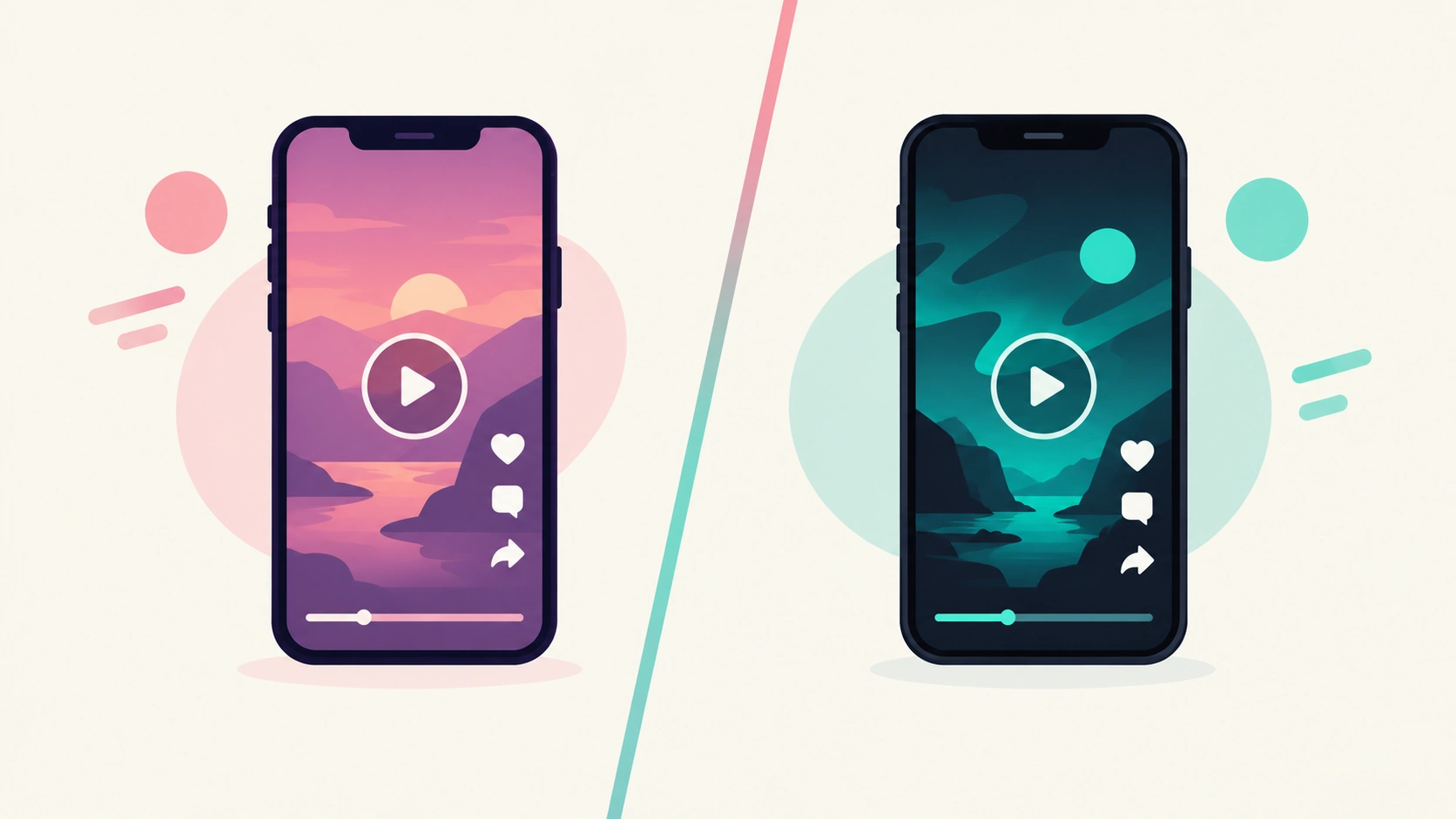
The honest answer to “which is better” depends entirely on what you’re actually trying to get out of it, and anyone giving you a single-word answer is skipping the part that matters. TikTok and Instagram Reels solve genuinely different problems well — one is built for getting discovered fast, the other for turning that discovery into something that pays. Here’s the real comparison, including one factor almost no other “Reels vs. TikTok” article currently covers: whether TikTok is even still a stable platform to build on.
Algorithm and Reach: TikTok’s Clear Advantage
How TikTok’s Discovery Actually Works
TikTok’s algorithm is purely interest-based rather than follower-based — a brand-new account has roughly the same shot at reaching millions of viewers as an account with a large existing following, since distribution is driven by how a specific video performs with viewers in real time, not by who posted it. New creators on TikTok typically see 2-3x more views per video than the same content gets on Reels.
How Instagram Reels Distribution Differs
Reels still factors in your existing follower count and account authority into distribution, which makes early traction meaningfully harder for brand-new accounts. Reels also has a shorter effective distribution window — typically 48 to 72 hours of peak reach — before views taper off, with some residual traffic trickling in afterward through Explore and search.
Why TikTok’s Resurfacing Behavior Matters Long-Term
TikTok content can resurface weeks or even months after posting, as the algorithm re-tests older videos against new audiences — a three-week-old video can suddenly spike again with no new action from the creator. This gives TikTok a real edge for long-tail discovery that Reels’ shorter distribution window doesn’t replicate.
Monetization: Instagram’s Clear Advantage
The Direct Payout Gap
TikTok’s Creator Fund-style payouts run roughly $0.02-0.04 per 1,000 views — a genuinely small direct return relative to the platform’s reach. Instagram doesn’t rely as heavily on direct platform payouts, instead building its creator economy around brand partnerships and commerce integration.
Why Brand Deals Pay More on Instagram
Brands consistently pay more for Instagram content because Instagram audiences convert at a higher rate — brand deal rates on Instagram average roughly $100-500 per 10,000 followers, and a sponsored Reel typically drives more trackable sales than a comparable sponsored TikTok video in most niches. Instagram’s more mature influencer marketing ecosystem, shoppable content integration, and established brand-safety norms all contribute to this gap.
Where TikTok Still Wins on Monetization
Speed and volume. TikTok’s viral mechanics mean a single breakout video can generate outsized reach and follow-on opportunities fast, even if the platform’s direct payouts per view are small — for creators optimizing for rapid growth first and monetization second, that trade-off is often worth it.
Audience: Who’s Actually Watching Each Platform
TikTok’s Audience Has Aged Up
TikTok still skews younger overall, with a core audience roughly 16-34, but the 45+ segment has grown substantially since 2023 — making TikTok considerably less of a “Gen Z only” platform than its reputation suggests. Average daily time spent on TikTok sits around 58 minutes per user, the highest of any major social platform.
Instagram’s Broader, Higher-Spending Audience
Instagram’s audience skews toward Millennials and Gen X, generally with higher disposable income and stronger purchase intent — a meaningful factor for creators and brands prioritizing conversion over raw reach.
Platform Stability: The Factor Every Other Comparison Skips
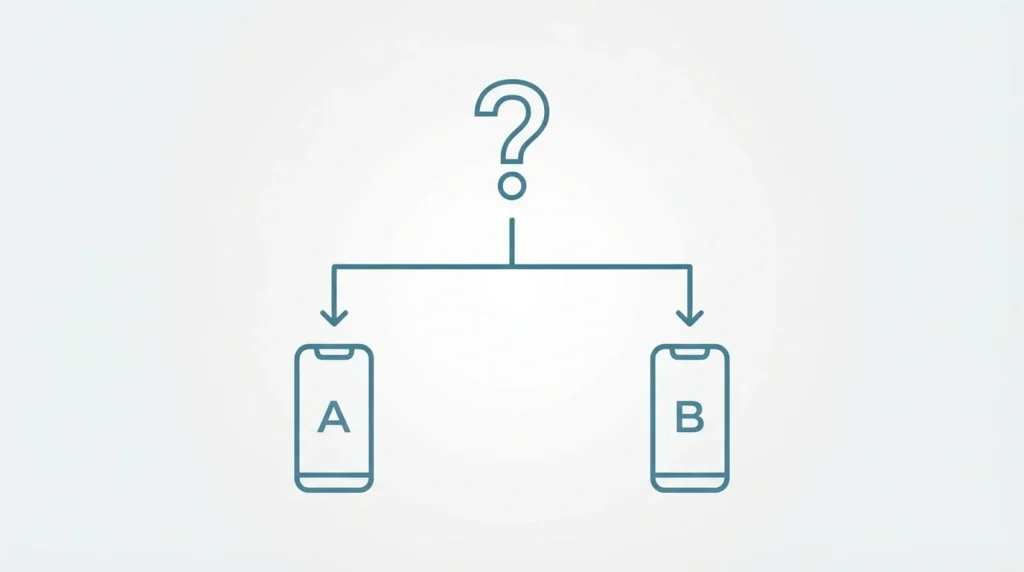
This is worth addressing directly, since it used to be a legitimate reason to hesitate on TikTok, and most comparison content written before 2026 (or lazily copied from it) still treats it as an open question.
TikTok’s Ownership Uncertainty Is Actually Resolved
After years of legal battles over TikTok’s Chinese ownership under a 2022 divestiture law, the uncertainty was formally resolved in January 2026, when U.S. operations transferred to TikTok USDS Joint Venture LLC — a new entity led by Oracle, Silver Lake, and MGX. ByteDance retained a minority 19.9% stake with no operational control over U.S. data, and Oracle now reviews the recommendation algorithm’s source code under the new structure. The app remained fully operational throughout the transition, with accounts, followers, and content migrated intact.
What This Actually Means for Creators and Brands
“Will this platform still exist for my audience in two years” is no longer a reasonable objection to investing time in TikTok — it was a legitimate concern through 2024 and early 2025, and it genuinely isn’t anymore. Worth knowing if you’ve been hesitant to build a TikTok presence specifically because of that uncertainty; it’s a settled question now, not an open risk.
Content Style and Editing Tools
TikTok generally leads in fast-moving trend formats, audio challenges, and rapid feature experimentation, with more accessible in-app editing tools historically favored by casual creators. Instagram offers a more polished production environment integrated with Stories, feed posts, and shoppable galleries — a broader content ecosystem around each Reel rather than a single standalone video.
Which Platform Fits Your Actual Goal
| Your priority | Better fit |
|---|---|
| Fast growth from a new account | TikTok |
| Predictable brand deal income | Instagram Reels |
| Long-tail discovery on older content | TikTok |
| Higher-spending, older audience | Instagram Reels |
| Trend-driven, high-volume content | TikTok |
| Integrated commerce and shoppable content | Instagram Reels |
The Actual Best Strategy: Both, in a Specific Order
The strongest pattern among creators who’ve tested both seriously: create for TikTok first, then repurpose to Reels — roughly 78% of top-performing TikToks also perform well as Reels, since the core content usually translates even though the distribution mechanics differ. One practical detail worth knowing: remove the TikTok watermark before reposting to Instagram, since Reels’ algorithm deprioritizes visibly watermarked content from other platforms.
Frequently Asked Questions
Which platform is better for a brand-new creator with zero followers?
TikTok, generally — its interest-based algorithm gives new accounts a real shot at wide reach immediately, while Instagram Reels’ distribution still factors in existing follower count and account authority.
Which platform pays creators more?
Instagram, through brand deals and its more mature monetization ecosystem — TikTok’s direct Creator Fund-style payouts are considerably smaller per view, though its viral reach can still generate outsized indirect opportunities.
Is TikTok still at risk of being banned in the US?
No — as of January 2026, TikTok’s U.S. operations transferred to an American-majority-owned joint venture (TikTok USDS, led by Oracle, Silver Lake, and MGX), formally resolving the ownership dispute that drove the ban threat.
Should I post the same content to both platforms?
Generally yes, with one adjustment — repost TikTok content to Reels without the TikTok watermark visible, since Instagram’s algorithm deprioritizes content carrying another platform’s branding.
Which platform has an older audience?
Instagram — while TikTok’s audience has broadened considerably since 2023, Instagram’s user base still skews toward Millennials and Gen X with generally higher purchasing power.
Neither platform is actually “better” in the abstract — TikTok is the stronger engine for getting discovered, and Instagram is the stronger engine for turning that discovery into income, and the strongest creators in 2026 are treating that as two connected jobs rather than a single either-or decision.