Every so often, a tool shows up on TikTok with a name that sounds harmless — grab lunch, run your essay through something, submit it — and thousands of students start treating it like a study hack. Lunchbreak AI is one of those tools right now, and the pitch is direct: paste in AI-generated text, get back something that reads as human-written and slides past Turnitin and GPTZero. The marketing is confident. The actual testing, once you look past the marketing, tells a considerably messier story — and there’s a bigger question underneath it that the tool itself never really answers.
What It Actually Is
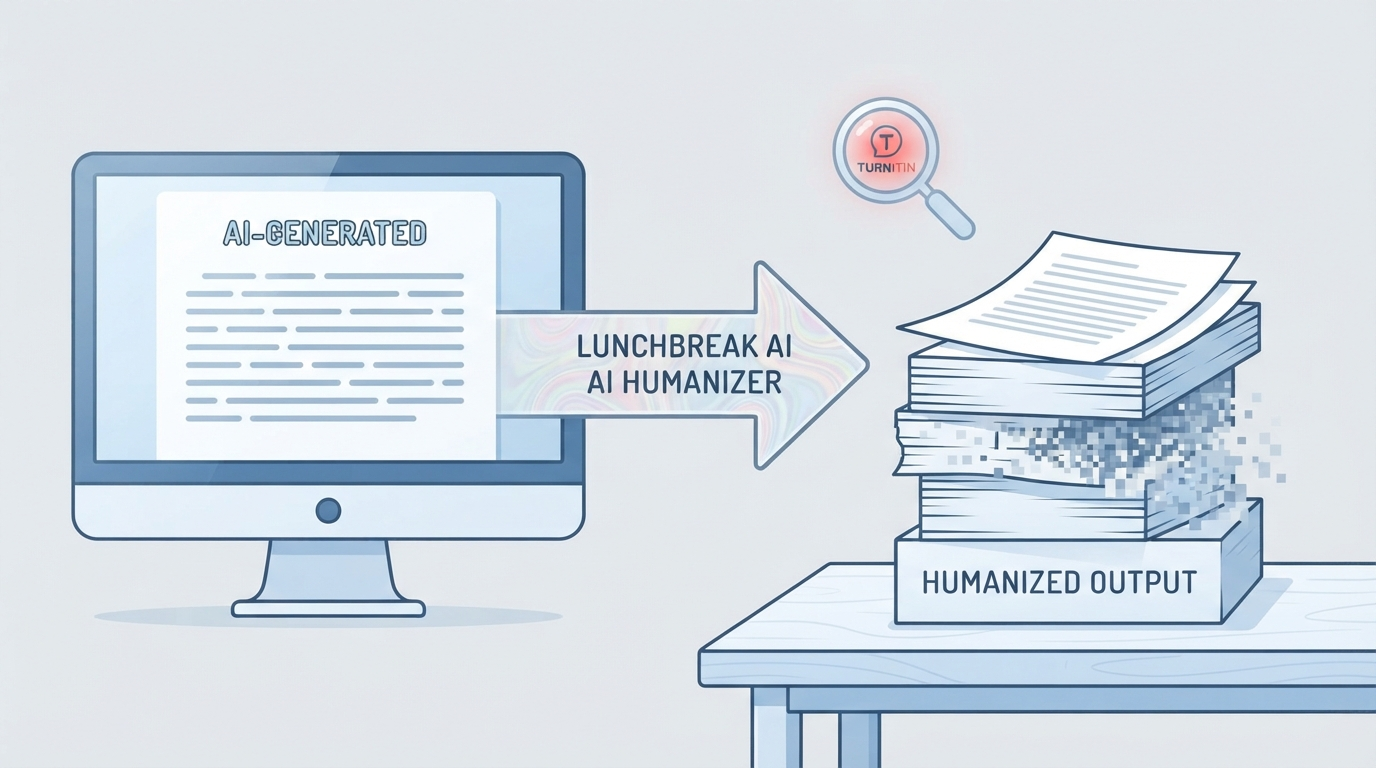
Lunchbreak AI is a subscription-based platform offering three linked tools: an “AI Humanizer” that rewrites AI-generated text to sound more natural, an AI detector that flags whether a piece of writing looks machine-written, and an essay generator. It’s positioned toward students, academics, and professionals who want AI-assisted drafts to read as their own work before submitting them — and its marketing leans specifically on the language of academic submission: essays, papers, assignments, Turnitin, GPTZero.
Does It Actually Bypass Detection? The Testing Says No, Reliably
This is the part worth knowing before anyone pays for a subscription. In direct testing reported by an independent review site, Lunchbreak AI’s humanizer failed to consistently bypass major AI detectors despite advertising a “Bypass AI Detection Guaranteed” claim — output was still flagged as AI-generated in testing. Separately, a discussion thread from a student who tested it firsthand described a similar pattern: a 100% AI-flagged draft dropped to roughly 20% on GPTZero after processing, but Turnitin — the detector that actually matters most for academic submissions — still flagged it.
The same discussion surfaced a second, more specific problem: heavier rewriting introduces what one commenter called “semantic drift” — the tool swapping out precise technical terminology for vaguer, generic language while chasing a more “natural” tone, which in one case made a biology paper read as though the writer didn’t actually understand the subject matter they were writing about. That’s a genuinely counterproductive trade for anyone actually trying to submit accurate academic work, humanized or not.
The practical takeaway, based on this evidence rather than the tool’s own claims: detector-bypass tools broadly are chasing a moving target. AI detection systems are actively being updated to catch exactly the patterns humanizer tools rely on — artificially varied sentence length, inserted filler words, synonym substitution — and multiple independent tests suggest today’s version of a “successful bypass” isn’t reliable, isn’t guaranteed, and can actively degrade the accuracy of the underlying content.
The Question the Marketing Skips Entirely
Setting aside whether it works, there’s a more basic issue: what this category of tool is actually for. Submitting AI-generated work as your own, run through a tool specifically designed to evade the systems your school uses to catch that — is academic dishonesty under most institutions’ policies, independent of whether the bypass attempt technically succeeds. A tool failing to reliably evade detection doesn’t make the underlying use case fine; it just means the tool doesn’t even deliver on the premise it’s selling.
This matters more, not less, in a moment where AI tools are becoming a normal, legitimate part of how people draft, research, and think through ideas. The honest, durable skill for anyone using AI assistance in academic or professional writing isn’t finding software to hide that assistance — it’s understanding your specific institution’s or employer’s actual AI-use policy, and using AI transparently within whatever that policy allows. That distinction is being figured out in real time across universities and workplaces right now, and it’s a genuinely reasonable thing to be uncertain about — but “hide it well enough that detection software can’t tell” isn’t a resolution to that uncertainty, it’s a bet that the detection arms race stays permanently one step behind, which the testing above suggests isn’t even true today.
The Broader Pattern Worth Recognizing
Lunchbreak AI isn’t unique — it’s one of a growing category of “AI humanizer” tools riding the same wave, most making similar bypass-guarantee claims, most facing the same fundamental problem: they’re built to defeat a detection system that’s actively being improved specifically to catch them. Anyone evaluating a tool like this — or any confidently marketed AI product, really — is better served checking independent testing against the actual claim than trusting the demo, the testimonials, or the TikTok reviews the marketing is built around. That’s not a special rule for essay-humanizing tools specifically; it’s the same scrutiny worth applying to any AI product promising a guaranteed outcome a determined adversary (in this case, detection software actively working against it) has every incentive to keep closing the gap on.
Frequently Asked Questions
Does Lunchbreak AI actually bypass Turnitin?
Independent testing found it did not reliably do so — one documented test showed Turnitin still flagging content after processing, despite the tool’s marketing claims.
Is using an AI humanizer for schoolwork considered cheating?
That depends on your specific institution’s academic integrity policy, but submitting AI-generated work processed specifically to evade detection tools is treated as a violation of academic honesty policies at most schools, independent of whether the bypass attempt succeeds technically.
Why do AI humanizer tools sometimes make writing worse, not just different?
Testing has found that heavy rewriting aimed at evading detection can replace precise or technical language with vaguer phrasing, a pattern sometimes called semantic drift — which can make the final text less accurate, not just differently worded.
Are AI detectors like Turnitin and GPTZero reliable?
They’re actively being updated specifically to catch the patterns humanizer tools use, and testing suggests they’re improving faster than bypass tools can reliably stay ahead of — though no detection system, including these, is claimed to be perfectly accurate in every case.
The tools chasing AI detectors and the detectors chasing them back are locked in exactly the kind of confident-claims-vs-actual-evidence gap that’s worth checking before trusting either side’s marketing — which, worth noting, is the same habit worth building for evaluating any AI tool’s promises, not just this one.